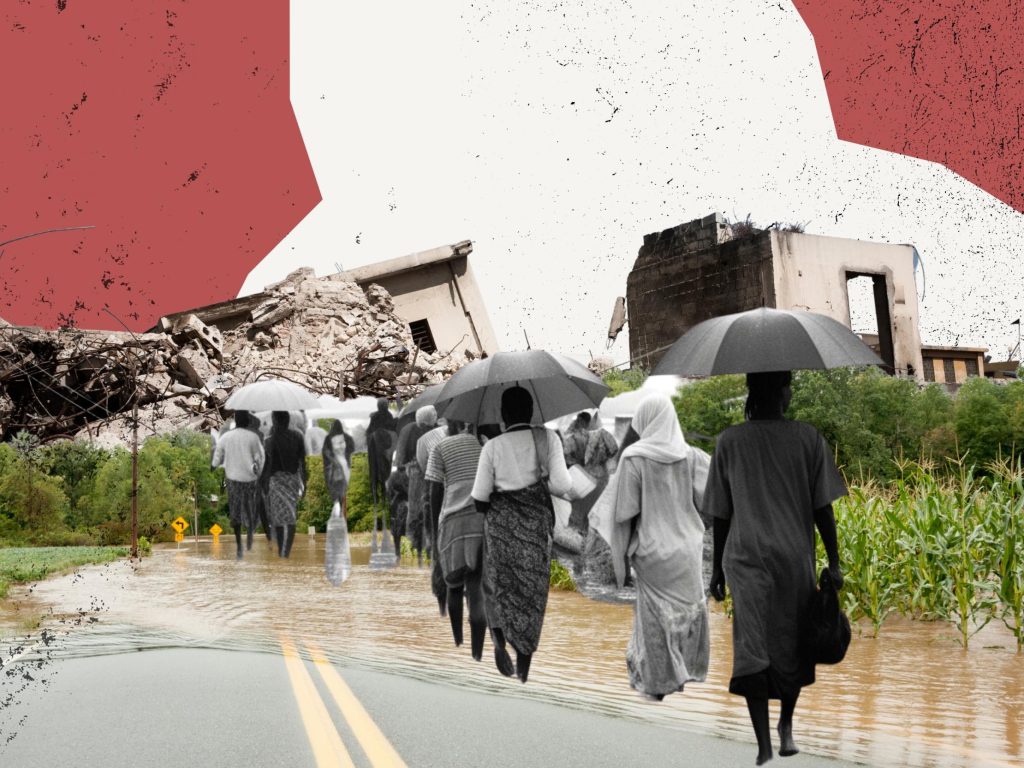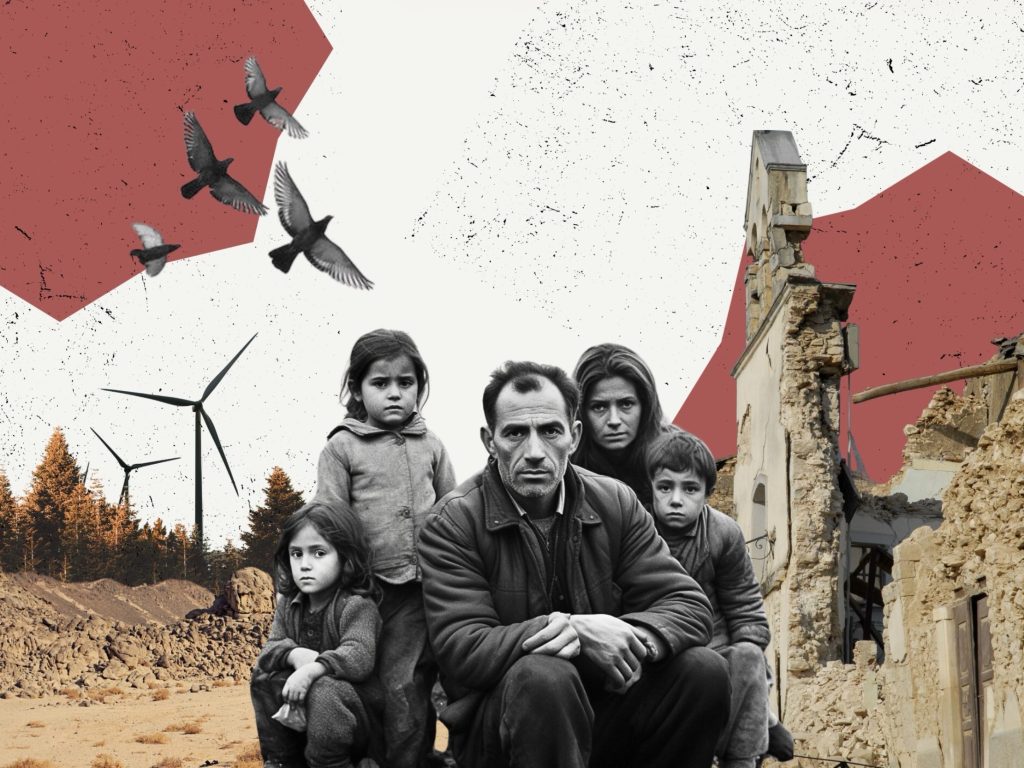
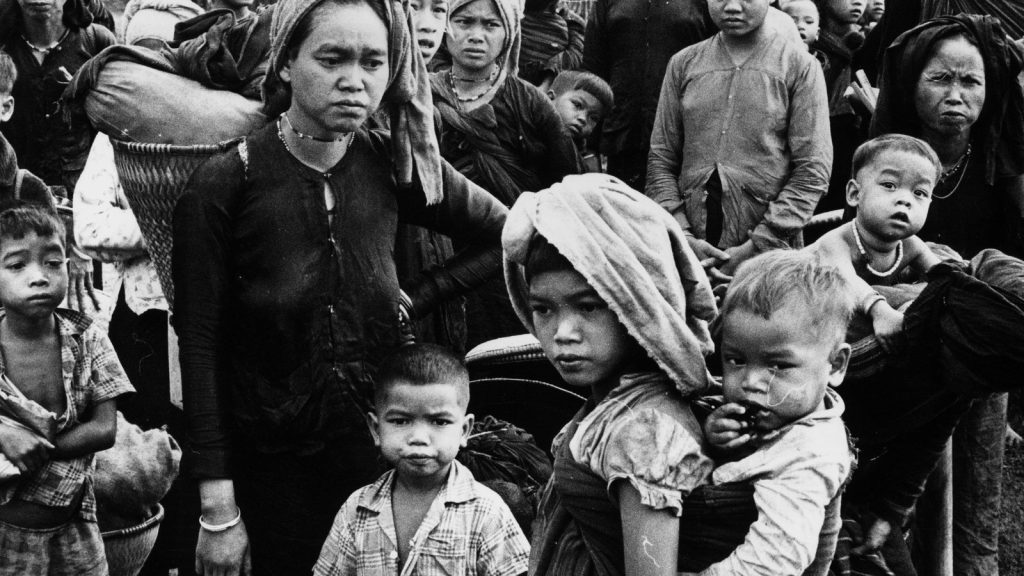
To write about displacement in Africa is not only to assemble humanitarian indicators or review policy instruments. It is to confront the limits of empirical description, the narrowness of existing legal frameworks, and the fatigue of the vocabulary of universal rights. Displacement sits at the intersection of life and death, territory and movement, governance and abandonment. What is routinely labelled a “displacement crisis” is less a temporary emergency than a structural feature of a global order in which political authority, territorial borders, and human security are being reconfigured in real time.
By the end of 2023 at least thirty five million people were internally displaced across African states, roughly three times the figure recorded fifteen years earlier. This expansion is not simply a function of better counting. It is an indicator of a deeper process in which state capacity, social contracts, and environmental baselines are eroding together. Camps, informal settlements, and constantly shifting routes of flight are the visible surface of a transformation that is simultaneously institutional, demographic, and conceptual.
Beneath the statistics of camp populations, aid budgets, and border crossings lies a set of governing logics that shape how displacement is produced and managed. Biopolitical management of populations, the progressive weakening of the territorial state, and practices that can be described as necropolitical together define the space in which African mobility is regulated. Displacement brings into view both the fragility of the African state and the fragility of the human subject as conventionally understood in international law: a rights-bearing, territorially anchored individual whose protection is guaranteed by a state.
In this context, the displaced person is not simply a victim of discrete policy failures. As Giorgio Agamben suggests, this figure has become emblematic of a broader shift in which exposure and conditional belonging increasingly define political existence. The management of African mobility operates as an instrument through which the international system negotiates its own anxieties over borders, legitimacy, and security. The inability or unwillingness to resolve displacement is not only a regional failure; it is a sign of the limitations of sovereignty everywhere.
Biopolitical Management and the Regime of Exception
The contemporary humanitarian system is a large and technically sophisticated apparatus for the administration of vulnerable populations. Michel Foucault’s concept of biopolitics captures the basic dynamic: power operates through the regulation of bodies and populations rather than solely through law and territory. In African displacement contexts, this is visible in the dense infrastructure of camps, checkpoints, registration systems, ration cards, and health surveillance.
Where states have failed or refused to provide security, justice, and basic economic opportunity, they frequently reassert a residual authority through the intimate management of displaced people. Calories, shelter, and medical care are allocated through systems that count, classify, and supervise. The act of being registered as an internally displaced person or a refugee confers access to assistance, but at the same time places individuals within tightly controlled regimes of visibility.
Agamben’s distinction between politically qualified life and “bare life” is useful here. Displaced people are often kept alive in circumstances where their political claims are suspended. Humanitarian mechanisms preserve life but cannot fully reconstitute political belonging. Camps and transit sites function as spaces of exception in which normal legal protections are weakened and rights are contingent on administrative discretion.
Displacement therefore should not be understood only as a sign of the breakdown of state power. It can also represent a particular intensification of that power. The displaced become legible and governable as populations, rather than as citizens with enforceable claims. Their dependence on aid structures produces new forms of hierarchy and debt at the margins of national political communities. The acceptance of minimum standards of care in lieu of meaningful political inclusion allows governments and international actors to stabilise the management of movement without addressing its underlying causes.
Recent patterns validate this reading. Disaster-related displacement in Africa has risen sharply over the past decade and a half, while conflict-related movements remain high. Early warning and disaster risk reduction systems have improved and do save lives, as seen for example in Mozambique after major cyclones. Yet large numbers of people continue to be displaced and remain displaced for prolonged periods. The policy system has become more effective at limiting immediate mortality, but it has not altered the structural conditions that make displacement recurrent. Biopolitical management has been refined; the political economy that sustains forced movement remains largely intact.
Deterritorialization and Exile as a Durable Condition
Conventional migration policy still assumes a clear point of origin, a path of movement, and a possible return. This grammar is organised around the state and its territory. In practice, African displacement increasingly undermines these assumptions.
Gilles Deleuze and Félix Guattari’s account of flows and deterritorialization offers one way to think about this shift. Displacement in many African settings is no longer a single crossing but an extended process in which previous anchors of identity, community, and political agency are destabilised. People move through multiple sites, often across several borders, and inhabit intermediate spaces that are neither fully temporary nor fully integrated.
Protracted camps, informal settlements on the edges of major cities, and networks of labour migration all host this kind of deterritorialized existence. In these spaces, families reconstruct livelihoods through informal work, trade, and extended kin networks. Religious institutions, local protection arrangements, and improvised governance systems emerge. Exile becomes not a brief interruption but a durable condition in which new forms of social organisation and political imagination appear.
Persistent conflict in the eastern Democratic Republic of Congo, recurrent violence in the Central Sahel, and long-term crises in the Horn of Africa illustrate how repeated displacements make the paradigm of return increasingly implausible. When the areas of origin remain insecure or economically unviable for years, the idea that people will eventually go back functions more as a justification for delaying integration than as a realistic prospect. Displaced communities live in a prolonged present, with futures that are shaped by administrative decisions about status, borders, and aid, rather than by predictable national policies.
This deterritorialization has an ambivalent character. It exposes individuals and groups to heightened risks and exploitation. At the same time, it can generate transnational solidarities, alternative economic networks, and forms of political agency that do not fit within inherited state-centred models. The reality for many displaced Africans is a life shaped less by a single state authority than by overlapping and sometimes competing systems of control and opportunity.
Necropolitics and the Making of Deathworlds
Achille Mbembe’s concept of necropolitics draws attention to spaces where decisions about who may live and who may be exposed to death are taken with limited constraint. Many African displacement corridors and holding points can be understood in these terms.
Areas along the Sahara migration routes, stretches of the Mediterranean, militarised borders in the Sahel and the Horn of Africa, and conflict zones in countries such as Sudan and the Central African Republic are not simply transit zones. They are environments where violence, exposure, and abandonment are routine. The promise of state protection gives way to extortion by security forces, predation by armed groups, and the intermittent presence of humanitarian actors.
Data on internal displacement show that a majority of African countries with significant movements experience both conflict- and disaster-related drivers. This overlap produces layered vulnerability. People who flee fighting or persecution often find themselves in locations that are also highly exposed to floods, droughts, or other hazards. Camps and informal settlements in turn may be located in environmentally fragile areas or near front lines, further blurring the distinction between sanctuary and risk.
Necropolitical practices are visible in the ways in which mobility is controlled and monetised. Human smuggling and trafficking economies thrive on people who have been pushed beyond formal channels. Border forces funded by external partners manage routes through combinations of violence and selective toleration. Bilateral agreements between European governments and North African or Sahelian authorities delegate the interception of African migrants to regimes that operate with limited transparency and accountability.
In these arrangements, the vulnerability of displaced people becomes a resource. It supports flows of external funds, justifies expanded security budgets, and reinforces political narratives about threats and control. The production of spaces where death is a constant possibility is not simply a failure of governance. It is interwoven with forms of profit and authority.
The Strain on the State and the Limits of Humanist Politics
The dominant international response to African displacement assumes that the state remains the central unit of order and the main vehicle for durable solutions. Camps are administered in cooperation with governments, returns are negotiated between states, and funding flows through national institutions or through agencies that operate with government consent.
Yet the scale and duration of displacement reveal not only the weakness of particular African states but also the difficulty of sustaining the state form as the sole locus of political belonging. In many contexts, governments are unable or unwilling to extend protection and socio-economic inclusion to their own displaced citizens. Legal categories remain ambiguous, access to services is uneven, and political voice is limited.
In the spaces where state authority is thin or contested, other forms of organisation have emerged. Local leaders, municipal authorities, and community-based groups often play the primary role in conflict mediation, service provision, and everyday security. Informal remittance systems link displaced people in cities and camps with diasporas abroad. Religious institutions and civil society networks, rather than national administrations, serve as the main guarantors of assistance and social cohesion.
These practices indicate the presence of what might be called fugitive or pragmatic governance: arrangements that are functional yet not fully recognised in constitutional or international frameworks. They are not usually seeking to overthrow the state, but they do not depend on its effective operation. For many displaced people, membership in these networks provides more reliable support than formal citizenship.
The human rights paradigm, built around a liberal subject anchored in a national community, struggles to capture this reality. Legal instruments focus on the responsibilities of states to individuals on their territory or under their jurisdiction. When states are fragmented, predatory, or absent, the gap between normative commitments and practical protection widens. Displaced people continue to invoke rights language, but their everyday survival often depends on arrangements that lie beyond formal legal recognition.
Security, Risk, and the Global Management of Movement
In the international arena, African displacement is increasingly framed as a security issue. Movements across the Sahara, toward the Mediterranean, or toward southern Africa are analysed through the lens of risk: potential terrorism, organised crime, or uncontrolled migration. This framing has significant consequences for policy.
One result has been the externalisation of border control. European and other external actors finance training, equipment, and surveillance technologies for African security forces in countries of origin and transit. Data systems capable of tracking movements, biometric registration of refugees and migrants, and predictive modelling of routes have become central components of this architecture.
In principle, these tools can facilitate better protection and more orderly movement. In practice, they often serve to contain people closer to zones of conflict and disaster, or to channel them into precarious and costly routes. Resources that could support long-term adaptation, inclusive urban planning, or livelihood programmes are frequently reclassified as security expenditures. The capacity to manage movement becomes more sophisticated; the opportunities to reduce the need for flight are not expanded at the same pace.
The displaced person in this system is often regarded less as a rights holder and more as a potential risk. Screening, vetting, and deterrence take precedence over integration. The fact of movement itself becomes suspect, particularly when it involves irregular border crossings. This reinforces a loop in which insecurity and shrinking legal pathways push more people into irregular routes, which then justify further securitisation.
Emergent Governance and Local Cosmopolitanism
Alongside these restrictive dynamics, there is a quieter development of local and translocal governance practices that merit closer attention. In many African contexts, displaced and host communities have developed mechanisms of coexistence and mutual support that operate with limited formal recognition.
Examples include village-level committees that manage land allocation for newly arrived households, market associations that link producers in camps with urban consumers, and community policing efforts supported by local authorities and international partners. In parts of the Democratic Republic of Congo and Mozambique, programmes that train local officials, support proximity policing, and integrate disaster risk reduction into local planning have shown that governance can be strengthened from below even when national frameworks remain fragile.
These initiatives do not resolve the larger structural drivers of displacement, but they do suggest that political order can be constructed in ways that are not strictly dependent on central state capacity. They also point to forms of cosmopolitanism that arise from necessity. Communities composed of multiple ethnicities and national origins negotiate rules for shared use of resources, dispute resolution, and representation. Economic and social networks cross borders with relative ease, even where states contest those borders.
For policy, this implies that durable responses to displacement cannot focus solely on restoring or reinforcing central state institutions. They must also recognise and support the multiple layers of authority and organisation that already exist, without romanticising them or ignoring their own inequalities. The challenge is to connect these local innovated structures with regional and international frameworks in ways that expand rights and opportunities rather than freeze people into permanent exceptional status.
Conclusion: Displacement and the Reconfiguration of Political Community
African displacement is often approached as a regional humanitarian emergency that demands more funding, better coordination, and improved early warning. These are important interventions. They do not, however, address the extent to which displacement has become a central organising fact of contemporary politics in the region and beyond.
If current trends continue, large numbers of Africans will live significant portions of their lives outside the places where they were born, in conditions where state protection is partial and rights are unevenly distributed. Their experiences challenge key assumptions of twentieth century political thought: that the state is the primary framework for belonging, that borders are stable, and that individuals can rely on a predictable relationship between citizenship and security.
The existing toolkit of the international system remains strongly attached to those assumptions. It aims to restore territorial control, reinforce borders, and reinsert displaced people into known categories such as “returnee,” “resettled refugee,” or “integrated IDP.” Yet in many African settings, these categories no longer correspond to lived realities. People remain in motion, build lives in hybrid spaces, and rely on forms of authority that operate across or beneath formal state structures.
For high-level policy and academic analysis, the task is twofold. First, to continue to refine practical measures that reduce avoidable suffering: timely humanitarian access, investments in adaptation and conflict prevention, and serious constraints on external support to abusive armed actors. Second, to take seriously the conceptual implications of displacement as a long-term condition. The figure of the displaced person is no longer marginal to the international system; it is central to understanding how sovereignty, security, and human agency are being reshaped.
Displacement in Africa thus should be understood not only as a failure to protect, but as an early indicator of the forms of political community that may emerge in a world of accelerating environmental stress, deep inequality, and mobile populations. Whether these emerging forms can be steered toward more inclusive, lawful, and accountable arrangements will depend on choices made by African governments, regional organisations, external partners, and displaced people themselves. The alternative is a continued expansion of biopolitical management and necropolitical abandonment, in which large segments of humanity live permanently at the threshold between inclusion and exclusion.