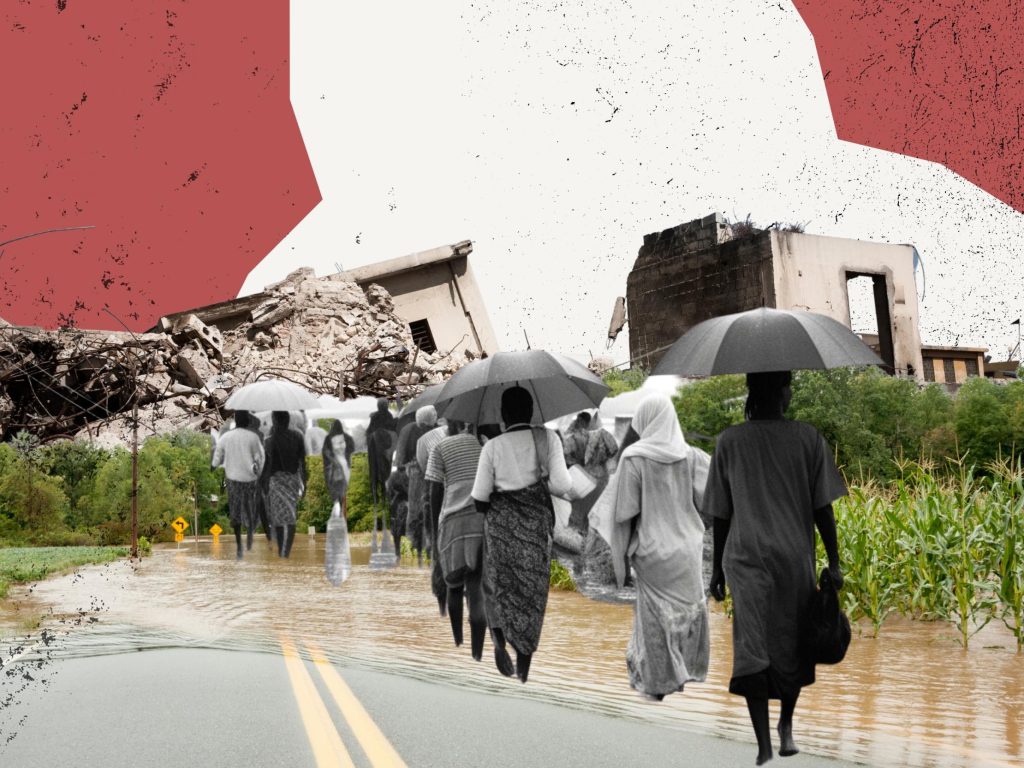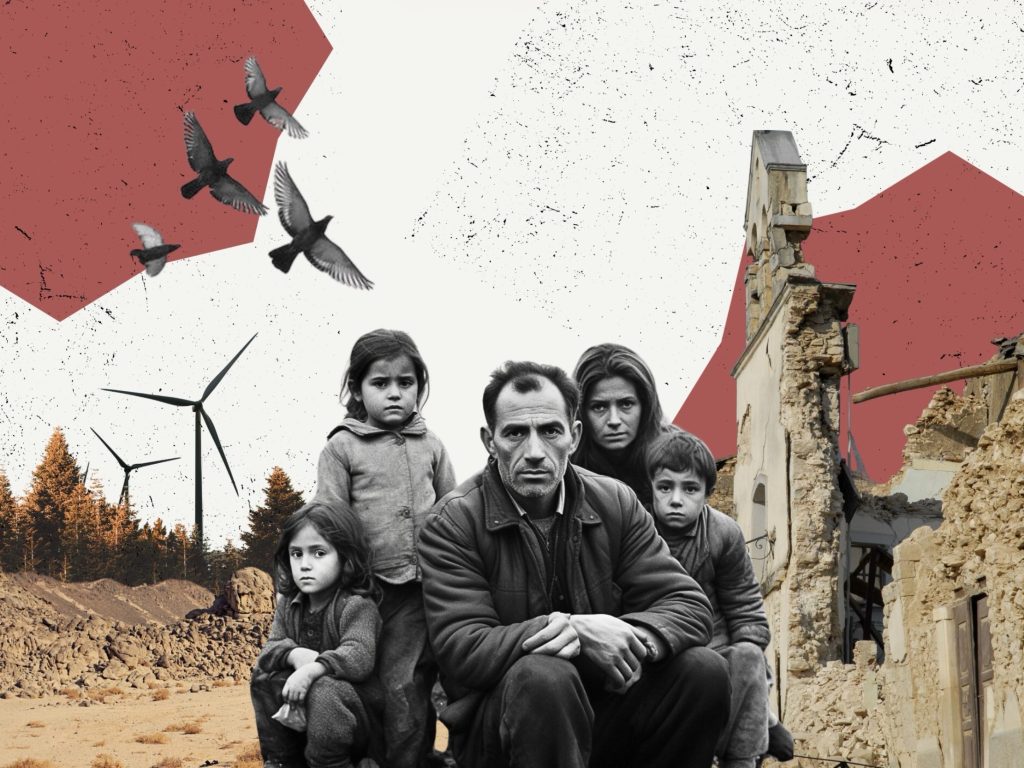
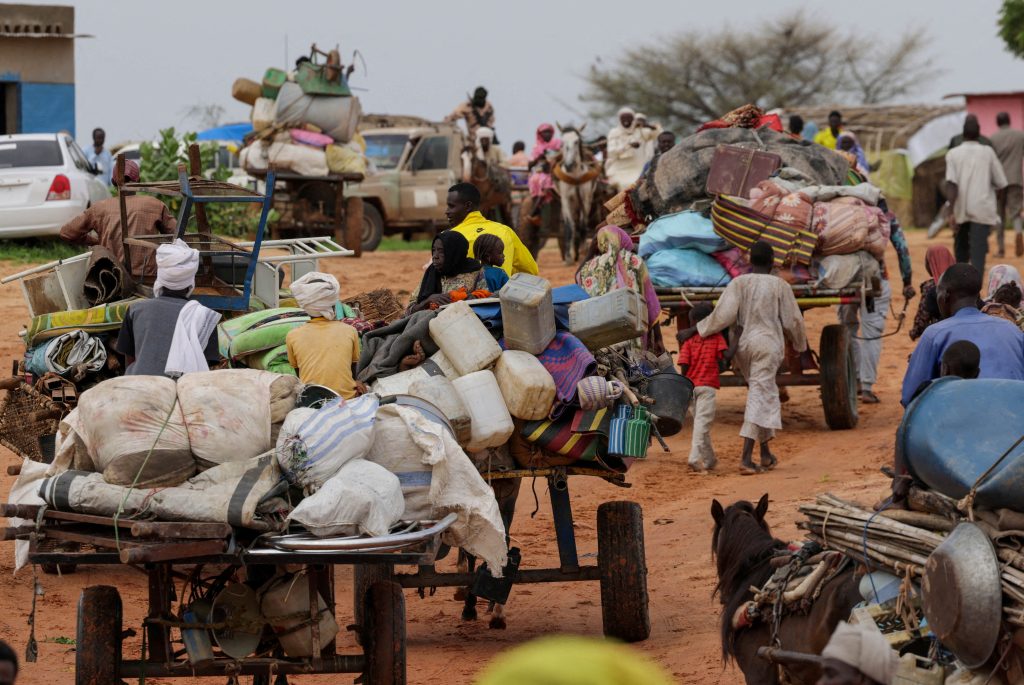
The images from El Fasher are not only records of a single battle. They are a mirror held up to a wider failure. In less than two years, Sudan’s civil war has moved from a contest inside the regime to a regionalized and commercialized conflict whose internal logic rewards atrocity, treats territory as a revenue base, and penalizes any external actor that insists on restraint. The seizure of El Fasher on 26 October, the killings that followed, and the systematic obstruction of aid are at once a crime of particular authorship and a signal that the war has entered a different phase.
This new phase is defined by organized, revenue-driven territorial consolidation, by deeper external patronage, and by a narrowing set of options for any consensual political settlement. States and multilateral organizations can catalogue El Fasher alongside Darfur, Tigray, and northern Mali as one more episode in an expanding archive of catastrophe, or they can treat it as an inflection point. That choice will shape whether Sudan disintegrates into armed fiefdoms or whether the conflict can still be steered back toward a negotiated compromise that limits further devastation of civilian life.
What made El Fasher possible
El Fasher fell to the Rapid Support Forces not simply because they outgunned their adversaries, but because they combined classic siege techniques with a mature predatory economy. Open-source analysis and survivor testimony point to deliberate interdiction of supplies, the obstruction of civilian flight, and coordinated use of heavy and light weapons alongside small-unit terror operations. Satellite imagery and geolocated videos indicate mass killing sites and systematic sexual violence. These are not random acts of battlefield indiscipline. They are instruments of occupation designed to fracture social cohesion, shatter any residual capacity for organized resistance, and secure control over revenue streams tied to land, trade, and mineral extraction. The decision by the International Criminal Court to move early to protect evidence is a recognition of the scale and intentional character of these abuses.
The RSF itself is not an improvisation of this war. It is the latest iteration of militia forces cultivated by successive governments in Khartoum, formalized and expanded in the last decade, and gradually repurposed as a political and economic conglomerate. That transformation confers three structural advantages. First, control of mining concessions and informal taxation along trade routes provides a diversified and partly deniable cash flow that blunts the effect of conventional financial sanctions. Second, operational experience abroad, particularly in Yemen, has produced a cadre of officers and fighters familiar with foreign patronage, expeditionary deployments, and the integration of newer technologies such as drones into relatively low-tech battlefields. Third, key external actors have come to see the RSF as a useful hedge in the Red Sea and Sahel security environment, a force that can be backed, threatened, or traded as regional alignments shift. That perception has lowered the political and operational cost for the RSF to expand its campaign of territorial takeover. A United Nations panel had already judged reports of arms supplies to the RSF to be credible; El Fasher illustrates what those supplies have made possible.
The regional political economy of the war
Sudan’s war is embedded in a regional marketplace. The RSF’s military strategy is inseparable from its financial model, which relies on capturing gold extraction sites, controlling smuggling corridors, and inserting itself into cross-border trading networks. Rents from gold, fuel, livestock, and other commodities fund payrolls, sustain patronage chains, and underwrite procurement. External sponsors add arms, logistics, training, and diplomatic insulation.
The Quad roadmap of 12 September, bringing together the United States, the United Kingdom, Saudi Arabia, and the United Arab Emirates, sketches a sequence that runs from humanitarian relief to a political transition. The document provides a minimal common vocabulary. It also exposes the central dilemma. The Quad binds together capitals that back different actors on the ground. Cairo and Riyadh continue to treat the regular army as the formal locus of sovereignty and as a counterweight to regional rivals. Abu Dhabi has nurtured ties with the RSF and sees advantages in working with an autonomous partner on the Red Sea corridor. These differences complicate any serious enforcement regime, because the same states that present themselves as mediators are, in varying degrees, also enablers.
The roadmap retains real value as an agreed frame, but only if the states that endorse it are prepared to place limits on their clients and to monitor compliance in ways that cannot easily be manipulated. Without that discipline the roadmap risks becoming another document in a crowded archive of unimplemented peace architectures.
The humanitarian and demographic consequences
The humanitarian collapse is immediate and structural at the same time. Millions of Sudanese have been displaced within the country and across its borders. Health systems have disintegrated in multiple provinces. Supply chains for food and medicine have been broken or captured. Siege tactics and the deliberate interruption of aid create famine conditions that are best understood as tools of political control rather than incidental by-products of war.
The first priority remains straightforward to state and difficult to execute: prevent the further unraveling of the food system and shield civilians trapped in contested or newly occupied towns. Yet beyond emergency relief the conflict is already generating second-order effects that will shape regional politics for years. Large refugee movements impose financial and social strains on host governments, alter local labor markets, and create grievances that can be mobilized by domestic political actors. Armed elements move with displaced populations, whether as organized units or as small groups seeking safety and resources. The interplay of local scarcity, weak border management, and the presence of weapons creates fertile ground for criminal networks and extremist groups.
Evacuation and protection therefore require more than logistics. They depend on political arrangements that guarantee safe corridors, credible commitments by armed actors not to divert aid, and enforcement mechanisms that punish those who turn humanitarian operations into new revenue sources.
Why the international response has so far been muted
The relative quiet that surrounded Sudan’s war until the El Fasher footage forced a recalibration is not accidental. Three dynamics help explain it. The first is the saturation of diplomatic attention elsewhere. Over the past two years, major capitals have been absorbed by other crises that generated potent domestic political pressure and consumed senior-level bandwidth. Sudan ranked below those emergencies in media coverage and in perceived strategic urgency.
The second is the persistent preference among many external actors for predictable authoritarian partners over uncertain transitions. Militaries and security services in Khartoum offered basing rights, intelligence cooperation, and counterterror guarantees. Their abuses were tolerated as the price of a workable relationship. Similar logics shaped early interactions with the RSF, which could deploy fighters abroad and police parts of the periphery in ways that spared central governments immediate costs.
The third factor is the legal and diplomatic ambiguity around accountability. When coups or power grabs are presented as constitutional corrections or when a faction claims to embody state institutions, external powers confront a set of familiar dilemmas. Acting directly risks accusations of interference and can disrupt fragile regional balances. Doing little allows new war economies to harden and atrocity tactics to become normalized. In Sudan, the latter path prevailed. The result is a conflict that now demands far more coercive diplomacy than would have been required had serious pressure been applied at earlier stages.
These frictions clarify why the Quad roadmap matters, but they also illustrate why translating it into practice will require uncomfortable choices, particularly in dealing with patrons who have treated Sudanese actors as instruments of wider regional strategies.
The leverage problem and the operational tools that could work
There is no shortage of policy instruments that could raise the cost of continued violence. The question is sequencing and credibility. Financial and legal tools have to be deployed in ways that bite into the war economy without collapsing what remains of the state or driving key actors toward even more disruptive patrons.
A first line of effort concerns finance. The RSF’s dependence on gold and illicit trade creates identifiable vulnerabilities. Disrupting those revenue streams requires pinpoint financial interdiction targeting specific nodes in the supply chain: trading houses, logistics firms, shell companies, and individuals that facilitate the movement and monetization of Sudanese gold and other commodities. Coordinated sanctions on those entities, embargoes on particular freight operators, and criminal investigations that follow the money through banking hubs and free zones can, if sustained, erode the RSF’s capacity to pay fighters and acquire arms. This approach depends on close cooperation between financial centers, regional regulators, and law enforcement bodies, as well as a willingness to name and freeze the assets of intermediaries who have treated the war as a commercial opportunity. It must be calibrated carefully so that pressure on illicit networks does not translate into a generalized collapse of trade that punishes civilians.
A second line of effort concerns arms flows. Public condemnations of weapons transfers into Sudan have not been matched by operational measures that would significantly raise the cost of continued trafficking. A more serious regime would include systematic customs inspections of suspicious cargo, expanded surveillance of air and maritime routes known to be used for deliveries, and targeted aviation and maritime restrictions on companies and individuals that appear repeatedly in open-source tracking of suspect flights and shipments. Where regional governments are willing, naval and aerial monitoring could be extended around key transshipment points in the Red Sea and adjacent corridors. Investigations by rights organizations and journalists have already documented the presence of Western-manufactured systems on Sudanese battlefields. Those findings can serve as leverage to compel exporting states and companies to tighten controls and to prosecute violations.
A third component is monitoring. For any humanitarian truce or political framework to move beyond declaration, it requires a verification mechanism with both technical capacity and political insulation. A credible monitoring cell would bring together the African Union, the United Nations, and a small number of states without direct client relationships to the main parties. Its mandate would span satellite imagery, open-source intelligence, independent observers on the ground where possible, and financial forensics directed at illicit flows. It would track not only ceasefire violations in the narrow sense but also continued monetization of territory that should be demilitarized. Any truce should be tied to a time-bound plan for arms collection and demobilization, audited by this cell and linked to phased incentives and penalties.
A fourth element involves incentives for the regular army leadership. General Abdel Fattah al Burhan and his coalition are unlikely to accept serious de-escalation if they see no alternative to marginalization or exile. External actors can design conditional guarantees that protect certain institutional and personal interests, while still constraining the capacity for renewed authoritarian consolidation. These might include the staged lifting of narrowly tailored sanctions in exchange for verifiable withdrawals from urban centers, assistance in securing and demobilizing heavy weapons at monitored sites, and technical support to stabilize a depoliticized chain of command. The content of such guarantees must be transparent enough to limit the scope for opaque elite bargains that reproduce impunity.
A fifth area is accountability. The ICC’s intervention will carry more weight if it is backed by field-based evidence collection teams, robust witness protection, and strong domestic legal cooperation in states where potential indictees travel or hold assets. Accountability should be understood as a strategic instrument of leverage, not only as a moral imperative. If commanders and the civilian facilitators of their campaigns in patron capitals come to believe that their mobility, reputations, and wealth are genuinely at risk, their tolerance for large-scale atrocities can change. That in turn requires linking legal processes to the same financial measures that target the proceeds of violence.
A final operational track concerns humanitarian protection. If scarcity remains politically useful to armed actors, relief operations will be manipulated. The response must be large enough and agile enough to reduce that utility. That means prepositioned stocks, multiple cross-border entry points, air and river corridors that can be switched as conditions change, and substantial support to host communities in neighboring countries, not only to refugees themselves. Cash transfer programs, livelihood support, and infrastructure investments can blunt resentment and make it harder for predatory networks to recruit or extort. Humanitarian access, in turn, must be underwritten by explicit political understandings and subjected to public verification.
Risks and second-order effects
None of these interventions is cost free. Effective disruption of the RSF’s finances may reinforce its search for new patrons, including private military companies and less constrained state actors. Aggressive public pressure on the United Arab Emirates or other regional sponsors, if not combined with private channels that offer a face-saving recalibration, could harden positions and lead to an escalation of covert support rather than restraint. Broad-based sanctions on entities tied to the regular army risk fragmenting Burhan’s coalition and opening the way for rival commanders who might be less amenable to any political process.
These risks underscore the need for parallel, discreet diplomacy. Public measures should be accompanied by backchannel engagements that spell out off-ramps for patrons and domestic actors. The aim is not to absolve those who have enabled the war but to give them concrete alternatives to long-term entanglement in an increasingly costly and unstable conflict. The Quad in particular will need to align incentives so that the shift from militarized hedging to conditional de-escalation appears preferable in narrow national terms, not only as a contribution to an abstract international order.
Regional strategic consequences if the war calcifies
If Sudan’s fragmentation continues unchecked, the consequences will not be contained within its borders. A patchwork of armed enclaves controlling towns, mines, and corridors would complicate the security of Red Sea shipping and overland trade routes linking the Horn, the Sahel, and North Africa. Non-state armed groups oriented around ideology, profit, or both would find open spaces in which to entrench. The combination of arms trafficking, illicit mining, and smuggling of migrants and goods would deepen the criminalization of politics along key corridors.
Host states that have absorbed large numbers of Sudanese refugees could experience rising domestic tensions and political competition framed around migration and security. Economic strains would intersect with national debates over identity and sovereignty. Meanwhile, if the RSF or successor formations manage to consolidate control over resource-rich areas, they could sustain a durable form of criminal governance whose revenues and external relationships outlast any formal settlement negotiated in the capital.
Such a scenario would not only diminish the prospects for a unified Sudanese recovery. It would also lock in new patterns of cross-border dispute over water, land, and population movements, shaping regional politics for decades.
Political scenarios and triggers to watch
Whether Sudan moves toward de-escalation or deeper disintegration will be visible in a small number of observable trends. A first positive indicator would be a verifiable and sustained halt to the movement of heavy weapons into contested areas, corroborated by independent monitoring rather than by the statements of the parties themselves. A second would be measurable reductions in arms trafficking along specific air and maritime routes that have been publicly identified, combined with evidence that financial flows from illicit gold and other commodities are being interrupted.
A third constructive sign would be a significant expansion of humanitarian access, documented by independent agencies and reflected in increased volumes of aid reaching previously inaccessible populations. On the political side, a genuine broadening of civilian participation in negotiations, beyond elites closely tied to armed factions, would indicate that patrons and domestic actors are beginning to contemplate a post-war order that goes beyond simple power-sharing among military contenders.
Negative signals are equally easy to specify. Renewed or continued targeting of civilians, particularly in areas recently occupied by the RSF or contested with the army, would point to the hardening of war economies rather than their erosion. Shifts in patterns of arms supply, with new sponsors replacing those under pressure, would suggest that external leverage is insufficiently coordinated. Fragmentation of the army into rival commands, or open splits within the RSF, could generate rapidly shifting frontlines and localized violence even in the absence of major national offensives.
A moment of moral test and strategic choice
El Fasher is both a moral rupture and a strategic alarm. The images and testimonies from the city undermine the comfortable fiction that Sudan’s crisis can be relegated to the margins of policy agendas. For governments that have preferred to wait, the episode alters the calculus. The Quad roadmap provides a workable skeleton, but it is only that. Turning it into an operational strategy will require careful sequencing of financial and legal pressure, the construction of a politically insulated monitoring mechanism, credible security and political guarantees for those willing to halt the fighting, and a substantial expansion of humanitarian capacity.
The decisions available to external actors are difficult, and each carries risk. Yet inaction is not a neutral position. Allowing the conflict to solidify into a pattern of criminal fiefdoms would condemn Sudanese civilians to prolonged suffering and would plant sources of instability across the Red Sea and Sahel for a generation. Choosing to act entails costs for capitals that have, to varying degrees, contributed to the current situation through distraction, misjudgment, or transactional engagement. It demands a level of strategic patience, operational focus, and political honesty that has often been lacking.
If policymakers seek a single operational imperative, it is to treat El Fasher not as the terminus of Sudan’s tragedy but as a point of leverage. The next period should be used to build a monitoring regime that can credibly report on violence and flows, to constrict the financial and logistical circuits that sustain the RSF and its allies, to articulate and implement verifiable guarantees for actors prepared to enter a truce, and to scale up civilian protection in and around contested areas. The alternative is to watch, in real time, the conversion of a state into an archipelago of armed enclaves whose violence will be far harder to reverse than the still-changeable dynamics of the war now unfolding.