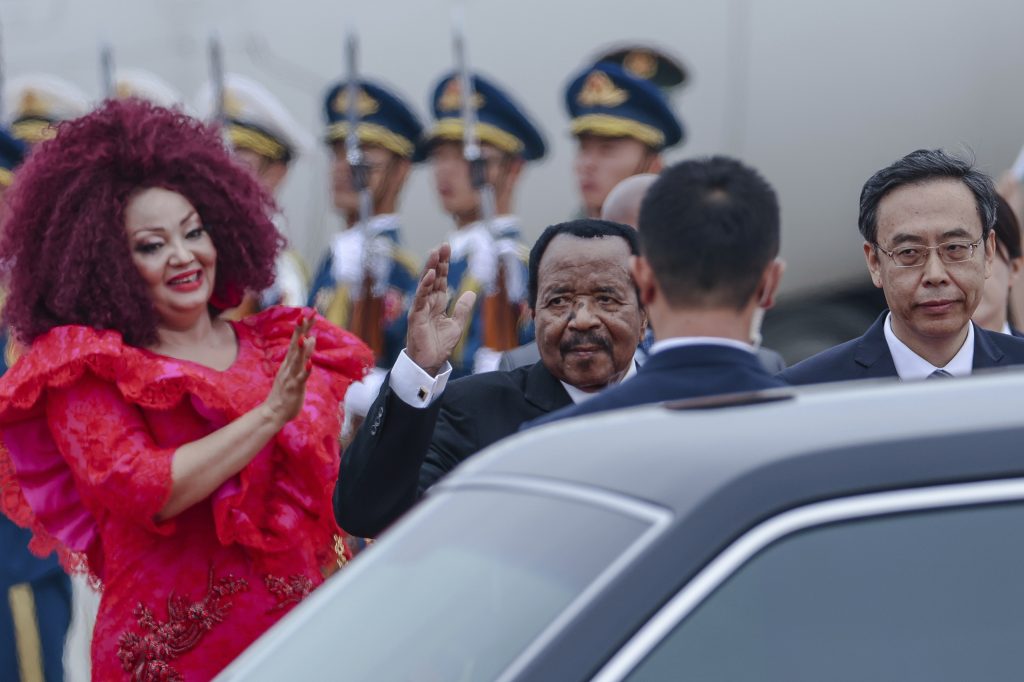
On November 6, 2025, Paul Biya
was sworn in for an eighth term as president of Cameroon, an event that captured both the spectacle and the peril of prolonged personal rule. The election that preceded the ceremony triggered mass protests and, according to United Nations sources, left dozens of civilians dead in the weeks around the vote. The Biya episode is instructive not only because of its excess but because of what it reveals about a broader system. It fuses ritual, law, violence, and international restraint into a single political technology that postpones elite rotation and turns the ordinary uncertainty of politics into a managed, almost technical problem for those in power.
To understand why such presidencies endure, and how they reshape their political environments, requires going beyond the familiar list of grievances about corruption, weak institutions, or “strongman rule.” The persistence of octogenarian leaders in postcolonial states is better read as the cumulative result of historical bargains, resource-driven political economies, constitutional engineering, and international patronage. Long incumbencies do not simply defy democratic expectations; they transform the incentives of elites, the organization of coercion, and the horizons of younger generations. They also alter the risk profile of entire regions, storing pressures that often erupt in sudden ruptures rather than predictable alternations of power.
This essay traces three strands of that story. It situates contemporary permanence in a longer history of postcolonial state formation, examines the political economy that allows rulers to decouple fiscal survival from societal consent, and follows the institutional and generational dynamics through which coups and “constitutional coups” arise as twin outcomes of the same logic. The aim is not simply to explain why leaders stay, but to identify concrete points of leverage where credible rotation might be reintroduced into systems deliberately designed to exclude it.
I. Historical Sedimentation and the Architecture of Entrenchment
Long presidencies in sub-Saharan Africa are not an aberration of the twenty-first century. They are the culmination of a historical sedimentation that began in the late colonial period and crystallized in the decades after independence. New states emerging in the 1960s and 1970s confronted weak fiscal bases, fragmented social landscapes, and fragile institutions. In that context, leaders embraced highly centralized executive models as a way to manage insecurity and overcome the centrifugal forces of region, ethnicity, and ideology.
The early postcolonial presidency was often fused with the ruling party and the security forces. Control over the state party, command of the coercive apparatus, and privileged access to public resources allowed incumbents to convert fragile sovereignties into personalized machines of rule. Loyalty, not programmatic performance, became the central currency of politics. The single party and the presidency together provided the skeleton of the state; opposition was framed as disloyalty to the nation itself.
The formal mechanisms of entrenchment have changed over time. In the era of overt one-party systems and military regimes, incumbency rested on explicit concentration of power and, at times, on outright expropriation or elimination of potential rivals. The repression was visible and often violent; the legal architecture was subordinate to the political project of consolidating rule.
Beginning in the late 1980s, and accelerating through the 1990s, that model came under pressure. Economic crisis, social protest, and global shifts produced a wave of political openings. Multiparty competition spread across the continent. By the mid-1990s, the majority of African states had adopted multiparty frameworks or held at least partially competitive elections. Scholars of the “third wave” of democratization documented this shift as a tectonic change in the institutional landscape.
These openings, however, generated a paradox. They created channels through which incumbents could in principle be disciplined or removed. At the same time, they offered rulers new instruments for survival: constitutions, courts, electoral commissions, and legislatures that could be captured and repurposed. The contemporary leader for life rarely depends on the blunt tool of a classic military coup. Instead, the executive works from within the formal legal order, adjusting and exploiting it to make tenure extension appear as a byproduct of lawful procedure.
This adaptation is visible in the current distribution of long tenures. As of 2025, a small cluster of African presidents had already been in office for more than three decades. Alongside these outliers stands a larger set of leaders who have used constitutional and electoral mechanisms to extend their time in power beyond original term limits or political expectations. A Council on Foreign Relations backgrounder on long-serving African leaders captures this concentration of longevity and the mix of formal and informal tools that sustain it.
Three channels of juridical manipulation are especially important. The first is constitutional redesign and judicial co-optation. Leaders rely on pliant courts to reinterpret term limits, or they oversee referenda and rewrites that retroactively reset the clock. The case of Alassane Ouattara in Côte d’Ivoire, who argued that a new constitution nullified his earlier terms, illustrates how changes in legal text can be used to repackage a third term as a first. Such maneuvers are carried out within a nominally legal frame, which complicates external reactions because the moves cannot be easily dismissed as extralegal seizures.
The second channel is institutional capture through managed electoral competition. Elections are retained because they remain important devices for legitimacy, elite coordination, and diplomatic recognition. Incumbents accept competitive contests, but they shape electoral management, restrict media access, and deploy security forces in ways that tilt the playing field decisively. The outcome is not the abolition of competitive politics but its domestication. The spectacle of pluralism is preserved; its disciplining capacity is blunted.
The third channel is the financial and coercive substrate that underpins formal legality. Resource rents, foreign aid, and security assistance lengthen the time horizons of rulers by furnishing the resources needed to buy elite loyalty, fund oversized security apparatuses, and cushion economic discontent. Comparative political economy has repeatedly shown that resource wealth, especially oil, increases the survival probability of autocratic incumbents because it supplies the fiscal material for patronage and coup-proofing. The literature on the “resource curse” and more recent cross-national work confirm this linkage and quantify its effect on regime durability.
Combined, these channels reshape the incentives of three central domestic actors: opposition elites, the security forces, and the judiciary. Opposition parties must operate in a setting where formal competition is allowed but substantively neutered. Investing heavily in electoral campaigns promises, at best, marginal gains, while co-optation and selective repression raise the costs of mobilizing outside the system.
Officers within the security forces operate in a patronage economy in which their advancement and material benefits depend less on professional merit than on personal proximity to the president and his network. The army and police become not state institutions with autonomous esprit de corps, but extensions of the ruler’s faction.
Judicial actors, meanwhile, confront a system in which promotion, resources, and security hinge on political loyalty. Courts that were once at least partially independent become arenas for loyalty tests and legal engineering. They give a procedural gloss to decisions that are in substance political bargains.
When elite defection is costly, street protest is dangerous, and external patrons are reluctant to impose serious penalties, the equilibrium shifts toward managed permanence. The straightforward military coup becomes less frequent, not because regimes are more democratic but because the architecture of entrenchment has moved into the realm of law and procedure. The “constitutional coup” is thus better seen as the institutional heir to earlier forms of authoritarian survival, more subtle and in many ways more resilient.
II. The Political Economy of Longevity
The staying power of many African incumbents is rooted in a triangular political economy. One corner is fiscal decoupling through rents from hydrocarbons and minerals. Another is the internal organization of coercion through deliberate coup-proofing. A third is external insurance through a diversified set of foreign patrons. Each component has its own mechanisms and metrics; together they create a system more durable than any single element on its own.
At the core of the rentier dynamic lies a simple fiscal reality. Where governments derive a very large share of revenue from oil or minerals, the link that historically tied taxation to representation weakens. States that draw their income from subsoil assets can finance patronage networks, sustain sizeable security budgets, and dispense discretionary transfers without needing to build broad-based, tax-paying constituencies. The empirical literature on resource dependence and autocratic survival has repeatedly found that hydrocarbon revenues lengthen the expected tenure of incumbents. Work by Michael Ross and others has become canonical on this point.
The contours of this regime are visible in specific cases. In Angola, International Monetary Fund and World Bank data show that oil accounted for roughly 55 percent of total fiscal revenue between 2015 and 2021, rising and falling with global prices but providing, in normal years, a large discretionary war chest. The Angolan experience underscores two linked insights. First, resource rents generate sustained fiscal capacity for patronage and security spending, which are essential for holding together a coalition of insiders and for paying the coercive apparatus. Second, the volatility of those rents creates vulnerability: when prices collapse or production declines, the same circuits that sustained loyalty become brittle. World Bank country reviews and IMF consultations document the magnitude of these fiscal swings and the political stress they produce.
Equatorial Guinea offers another illustration. Despite its small population, the country’s economy became extraordinarily dependent on hydrocarbons. World Bank reporting has traced sharp movements in GDP and fiscal balances as oil production and prices have fluctuated. High per capita income figures sit alongside deep social and developmental deficits. In such settings, ruling elites can use oil revenues to purchase loyalty within a narrow circle while large portions of the population remain underserved and excluded.
Resource-backed finance intensifies these dynamics. The World Bank has catalogued dozens of resource-backed loans in sub-Saharan Africa between the early 2000s and 2018, concentrated in a limited number of states and often provided by Chinese state-owned banks or commodity traders. These arrangements create immediate liquidity that rulers can deploy for infrastructure, political projects, or fiscal stabilization. In exchange, future export streams are pledged as collateral. The Angola model of infrastructure-for-oil is emblematic. While these deals bolster short-term fiscal space and political control, they also deepen the ruler’s grip over resource governance and amplify medium-term vulnerability if production or prices fall.
Quantitative work does not deliver a single, universal conversion factor, such as a precise number of added years in office for each additional ten percentage points of oil revenue. Estimates differ across models and samples. The directional conclusion, however, is robust. Where oil and mineral rents make up a very high share of state income, autocrats tend to last longer, even when one controls for region and overall development. Any plausible strategy for restoring credible rotation in such states must therefore reckon with the politics of rent collection and allocation.
Rent alone, however, does not explain survival. The second corner of the triangle is coup-proofing: the deliberate structuring of the security apparatus to prevent challengers from coordinating. Coup-proofing operates through fragmentation of command, overlapping competencies, and the cultivation of personalist loyalty.
One common technique is the frequent rotation of senior officers, which prevents any individual from building an independent base of power in a particular region or unit. Another is the proliferation of parallel security services with overlapping mandates. Intelligence agencies, presidential guards, special forces, gendarmeries, and regular armies are encouraged to monitor one another, with the president sitting as the broker of inter-service rivalries. A third is the formation of elite units whose loyalty is personally tied to the ruler and his family, often through better pay, equipment, and access to rents.
Coup-proofing is expensive. Data compiled by SIPRI and other sources show that several African governments have raised military spending as a share of total expenditure in recent years. Uganda, for example, recorded sharp increases in military outlays between 2014 and 2021, reflecting both real security operations and the costs of maintaining a factionalised security architecture. The broad relationship is straightforward: regimes that invest heavily in security establishments with fragmented chains of command often succeed in deterring or neutralizing classic coups, at least while fiscal flows remain robust.
The very measures that reduce the short-term risk of a unified military revolt can undermine long-term stability. Bloated security sectors are costly to maintain and vulnerable to fiscal shocks. When oil prices fall, aid is cut, or debt service rises, governments may struggle to pay salaries, sustain procurement, or preserve the differentials that keep elite units loyal. At that point, the fragmentation that once deterred coups can morph into a source of predation, mutiny, or factional alignment with opposition forces. Several recent seizures of power in the region have involved units whose loyalty had been taken for granted or whose grievances had been ignored.
Coup-proofing is intertwined with patronage networks that spread far beyond formal security budgets. The Luanda Leaks investigation into the business empire of Isabel dos Santos revealed how ruling families use state companies, banks, and opaque joint ventures to channel resources to allies, including those tied to security agencies. When foreign jurisdictions impose asset freezes or open legal cases, they do not merely embarrass individual figures; they alter the financial expectations of entire elite circles. Credit lines shrink, future rents become uncertain, and some insiders begin to hedge against the possibility of change. Legal and financial pressure on these networks can therefore ripple back into the political arena and alter the calculus of key actors.
The third corner of the triangle is external insurance and geopolitical arbitrage. During the 1990s and early 2000s, when Western influence was comparatively strong and the global system more unipolar, donors could sometimes link finance and security cooperation to governance benchmarks. Today, a more multipolar environment has widened the menu of patrons available to incumbents. Leaders who find one partner too demanding can seek others who attach fewer conditions to their support.
China’s role is structural. Chinese policy banks and state-owned enterprises have become major financiers of infrastructure across the continent. Their loans are often collateralised with future resource exports, and governance reforms are rarely a central requirement. Angola’s experience again illustrates this pattern. Oil-backed loans and turnkey infrastructure projects gave Luanda immediate resources and leverage, and they reinforced a highly centralized model of decision-making. Chinese financing does not in itself create authoritarianism, but it can reduce the leverage that Western creditors might otherwise have exercised and provide rulers with ways to circumvent traditional conditionality.
Russia’s presence has taken a different form. The deployment of mercenaries and private military contractors in recent years has offered embattled regimes bespoke coercive services with plausible deniability. Policy research organizations have documented the spread of Russian-linked paramilitary forces, the security contracts and mining concessions that underwrite them, and their impact on local political balances. The transition from Wagner to more formal structures aligned with the Russian state has reinforced this model. For incumbents facing insurgencies, protests, or coup threats, such partnerships supply both manpower and an external guarantor of regime security, often in exchange for access to gold, diamonds, or other assets.
Gulf states add another layer. Wealthy monarchies in the Gulf have provided rapid budgetary support, direct investments, or political endorsement to African leaders whose collapse they see as destabilizing or whose cooperation they value on security or migration. These flows usually come with few human rights conditions. For rulers needing quick cash to plug fiscal gaps or to fund patronage during tense periods, such support can be decisive.
Western states, for their part, continue to provide development assistance, budget support, and security cooperation, particularly on counterterrorism. They may impose targeted sanctions, visa bans, or rhetorical pressure when leaders manipulate constitutions or crack down on opponents. Yet their desire to preserve short-term stability and maintain intelligence and military partnerships often blunts the edge of their normative criticism. The result is a complicated landscape in which incumbents can play multiple patrons off against each other, extracting resources and protection while limiting exposure to punitive measures.
These three dimensions reinforce one another. Resource rents finance patronage and military outlays. Coup-proofing secures the domestic conditions required to extract and allocate rents. External patrons provide the liquidity, equipment, and political cover that sustain both. The outcome is a high-resilience equilibrium that can endure poor governance and declining legitimacy for long periods.
The same triangular structure also reveals points of vulnerability. Extended slumps in commodity prices or declines in production shrink the rent pool and erode the fiscal foundations of patronage. Targeted financial measures that focus on ruling families and their commercial networks can spark internal splits. Security sectors that have been expanded and fragmented in boom times can become difficult to sustain and control under stress. And shifts in the behavior of foreign patrons, whether through reputational concerns, domestic politics, or strategic recalibration, can reduce external insurance.
For analysts and policymakers, this model suggests concrete metrics to monitor. These include the share of oil and mineral revenues in total fiscal income, the number and size of resource-backed loans on a government’s books, military and security expenditures as a proportion of the budget, the presence and scope of foreign paramilitary actors, and the scale of cross-border asset holdings by ruling families. World Bank country briefs, IMF Article IV consultations, SIPRI military expenditure data, the World Bank catalog of resource-backed loans, and investigative reporting on illicit financial flows all offer material for such monitoring. The purpose is not technocratic fascination with data for its own sake, but early identification of stress points where political leverage may be available.
III. Constitutional Engineering as Political Technology
Constitutional manipulation in this environment is not a sporadic breach of rules but a structured technology of rule. Incumbents treat constitutions, courts, electoral laws, and referenda as instruments to be refashioned and redeployed. They nurture compliant judiciaries that issue narrow, formalistic decisions whose outcomes are politically predictable. They stage referenda or push through new charters that are presented as clean breaks with the past, and they shepherd amendments through legislatures whose members have already been disciplined by patronage or intimidation.
This approach confers several advantages. It dresses entrenchment in the language of legality and procedure, reducing the diplomatic costs that would follow an overt military takeover. It creates legal ambiguity that allows foreign partners to defer hard choices. It also reconfigures domestic incentives. Opposition figures are drawn into protracted legal struggles with little prospect of success, while insiders who benefit from the status quo bear high costs if they defect.
Recent episodes in Côte d’Ivoire, Uganda, and Chad illustrate the method. In Abidjan, the argument that a constitutional rewrite annulled earlier presidential terms allowed Ouattara to stand again. In Kampala, the removal of the presidential age cap in 2017 cleared the way for President Museveni to extend his time in office. In N’Djamena, fast-tracked constitutional changes have entrenched a ruling family under the banner of transitional reform. Each move was framed as a technical or stabilizing measure. Each entrenched personal rule.
Over time, this juridical veneer hollows out the separation of powers. Courts, parliaments, electoral commissions, and oversight bodies, instead of constraining the executive, become filters through which its decisions are formalized. The private sector, which depends on predictable rules, adapts by seeking protection and opportunity through patronage. Civil society and independent media face closure or legal harassment on the basis of laws drafted to appear neutral but applied selectively. Elections become ritualized events that regulate elite rivalry but do not offer credible pathways for alternation. The institutional ecosystem that is supposed to sustain democracy is not simply weakened; it is repurposed to preserve personal rule with a minimum of visible coercion.
Two patterns deserve particular attention. One is the retroactive reset. Leaders usher in a new constitution or reinterpret an existing clause and then claim that previous terms are null. Another is incremental capture. Instead of a single dramatic self-coup, rulers accumulate small legal victories: strategic appointments, revised voting rules, new party regulations, or modified judicial procedures. Each change appears individually manageable; together they lock out competition.
Foreign governments and regional organizations that condition their responses on formal legality alone risk endorsing this slide. If the presence of an election or a constitutional amendment is taken as sufficient proof of democratic practice, then legalistic entrenchment will proceed unchecked. A more substantive reading is needed, one that judges formal changes by their effects on real contestation and alternation.
IV. Thermodynamics of Instability
Systems designed to eliminate uncertainty in leadership succession do not produce stability without cost. They accumulate pressure. By progressively closing institutional channels for elite turnover, long-running presidencies create what might be called thermodynamic instability: heat builds beneath a sealed lid. The longer that mechanism operates, the more likely the eventual release will be abrupt and violent.
The sequence is familiar. As institutions are hollowed out, the space for nonviolent contestation narrows. Opposition parties lose faith in elections as an avenue for change and struggle to mobilize followers whose experience tells them the outcome is predetermined. Civil society encounters legal constraints and targeted repression. The effort needed to challenge the system within its own rules increases, while the expected payoff shrinks.
Within the security sector, loyalty that has been purchased rather than normatively anchored begins to look transactional. Officers see constitutions and laws as instruments used by the executive rather than as binding frameworks that protect the institution and the state. In such an environment, the normative barrier to intervention erodes. Coups can then be framed, not only to domestic audiences but also to regional bodies, as attempts to restore constitutional order or to correct abuses.
This is the logic that links the recent wave of coups in West and Central Africa to earlier patterns of constitutional manipulation. The Sahelian seizures of power since 2020 are often described in isolation, as reactions to jihadist violence or external interference. They are also, in many cases, the culmination of years of institutional erosion that left militaries both empowered and disillusioned. Treating military coups and constitutional coups as separate puzzles obscures how they emerge from the same underlying refusal to accept the mortal limits of executive power.
Specific triggers then convert latent tension into open crisis. Fiscal shocks that reduce patronage pools, scandals that expose spectacular corruption, episodes of repression that produce martyr figures, or security failures that lay bare the weakness of the state can all ignite broader confrontations. In coup-prone environments, even seemingly minor events, such as a disputed local election or an internal quarrel within the officer corps, can cascade when trust has already been depleted.
For external actors, this produces a difficult tradeoff. Pressuring entrenched incumbents can contribute to instability in the short run, especially if they control fragile security sectors or contested territories. Acquiescing in entrenchment for the sake of order, however, increases the probability of a more disruptive, violent transition later. Responses that focus solely on the formal aspects of constitutional change, without addressing the political economy and security dynamics beneath, are unlikely to reduce long-term risk.
Certain governance signals are particularly useful as early-warning indicators. Rapid judicial reinterpretations of term limits combined with rushed constitutional reforms suggest deliberate resetting strategies. Sudden, opaque changes in security-sector leadership or off-budget spending hint at a retooling of the coercive apparatus for domestic defense rather than external threats. Around elections, delayed announcements of results, restricted access for observers, and internet blackouts often point to attempts to manage outcomes in ways that may later provoke backlash.
V. Demography, Digital Space, and Generational Contestation
The social environment within which today’s long-serving presidents operate differs sharply from that of their predecessors. Sub-Saharan Africa’s median age remains under twenty. In the coming decade, tens of millions of young citizens will enter the electorate. Many will do so in economies where job creation lags behind population growth, where public services are stretched, and where the visible benefits of national resource wealth are narrowly distributed.
This cohort is also more connected. Even where overall internet penetration is modest by global standards, smartphones and messaging platforms have transformed the possibilities for organization and information sharing. Young people can follow regional and global events in real time, compare their own governments to others, and coordinate protest at relatively low cost. Surveys consistently show that majorities across many African countries express support for democratic principles and opposition to one-man rule, while also expressing deep skepticism about the integrity of elections and the responsiveness of political elites. The gap between democratic aspiration and institutional experience feeds a sharp impatience.
Governments have responded by trying to control the digital arena. Internet shutdowns and social media restrictions reached new levels in 2024 and 2025 in a number of states. Authorities have also acquired intrusive surveillance tools, sometimes from foreign vendors, and used them against journalists, activists, and opposition figures. Such measures raise the costs and risks of mobilization and can generate a climate of fear. They also create fresh grievances. When citizens see connectivity cut or messages blocked at sensitive political moments, it confirms their suspicion that rules are being manipulated.
Digital repression can thus have paradoxical effects. In some cases, it prevents protests from coalescing. In others, it acts as a focal point for anger. Once connectivity returns, images, recordings, and testimonies spread quickly, often colored by rumor and distrust. For regimes that already suffer from low legitimacy, overt attempts to regulate online space can become powerful symbols of fragility.
Generational change is also altering the internal life of security institutions. Younger officers did not fight in independence wars. They have weaker personal bonds with liberation-era leaders and less emotional investment in founding myths. When promotion and access to resources are seen as rigged in favor of particular ethnic groups or family circles, their attachment to the regime can be thin. In such settings, younger officers may align with popular movements, pursue their own predatory agendas, or justify intervention as a corrective to political abuse. Demography therefore shapes both mass politics and elite behavior within the coercive core of the state.
The interaction of legalism, fiscal networks, coercive engineering, and a digitally aware youth majority produces a politics that is more pressured and less predictable. Constitutional engineering can postpone turnover, but it cannot permanently insulate rulers from a society that feels locked out of decision-making and from officers who no longer share the founding generation’s loyalties. That is why systems built on the denial of contingency tend to end in abrupt, destabilizing transitions rather than negotiated handovers.
VI. Regional Politics and the Limits of Normative Enforcement
Africa’s regional institutions were designed to uphold shared norms and provide some protection against abuses. In practice, their record is mixed. The African Union has tended to respond more swiftly and forcefully to military coups than to constitutional manipulation. Juntas that take power through overt force are often suspended and sanctioned. Leaders who extend their terms through legalistic maneuvers seldom face comparable penalties.
Subregional economic communities, such as ECOWAS, have gradually developed charters and protocols on governance. Yet the diversity of political regimes among their members makes collective enforcement difficult. Governments implicated in similar practices are reluctant to set precedents that might one day be used against them. Powerful member states may shield allies or pursue crisis-specific bargains that undercut shared standards.
This asymmetry has two consequences. Sanctions, when imposed, are often blunt tools that hurt populations more than political elites. Border closures, trade suspensions, or financial restrictions can deepen hardship in already fragile economies while leaving ruling coalitions intact. At the same time, the inconsistent application of norms creates perverse incentives. Some actors conclude that a straightforward coup carries immediate costs that may eventually be lifted, while a gradual constitutional coup provokes little more than statements of concern. The regional immune system, in that sense, is partial. It can sometimes contain overt seizures of power, but it struggles to deter more sophisticated forms of entrenchment.
VII. Pathways Back to Contingency
The restoration of credible rotation is not only a matter for constitutional lawyers. It is a political project that must align incentives across domestic and external actors and operate over time. It requires a strategy that addresses the triangular political economy of rents, coercion, and external insurance, rather than focusing on a single corner.
Targeted financial measures are one instrument. Freezing the overseas assets of ruling families and their closest commercial associates, restricting access to certain financial services, and tightening beneficial ownership transparency in key jurisdictions can have immediate psychological and material effects. When elites can no longer move or defend their wealth easily abroad, their calculation of risk changes. These measures are most effective when coordinated among major financial centers and paired with credible signals that defection or support for reform will be recognized rather than punished.
Regional legal architecture is another. A binding term-limit standard at the continental or subregional level, tied to automatic consequences for violations, would alter expectations. Such a standard would need clear triggers, reliable monitoring, and real penalties, such as suspension from decision-making bodies or loss of access to regional financial instruments. It would also require backing from major regional powers, which would have to accept that the rules could one day apply to them.
Security sector reform is indispensable, though sensitive. External partners can support training programs that emphasize constitutional norms, civilian oversight, and professional standards; provide assistance for more transparent promotion systems; and condition certain types of aid on basic benchmarks, such as balanced ethnic representation or the absence of partisan militias. None of this can by itself depoliticize armies that have long been intertwined with regimes. It can, however, support those within the security sector who see their future in professional institutions rather than in personal patronage.
Conditional finance offers another channel. Development banks, bilateral donors, and institutional investors can tie access to concessional loans, guarantees, or investment insurance to improvements in corporate governance, fiscal transparency, and judicial independence. These conditions need not be rhetorical. They can be grounded in specific, verifiable benchmarks: publication of resource contracts, strengthening of audit institutions, or protection of budget lines for electoral commissions. When such requirements are consistently applied, they raise the cost of entrenchment and reward governments that maintain open political systems.
Support for civil society, independent media, and legal professions carries its own leverage. Lawyers’ associations, bar councils, investigative journalists, and civic educators act as repositories of constitutional memory and as channels through which citizens can challenge abuses. Small grants for legal aid, digital security training, or local reporting can have an outsized impact, especially in environments where domestic financing for such work is scarce or politically constrained.
Finally, there is space for domestically engineered elite bargains that recognize the need for transition. When powerful actors within ruling coalitions come to see an incumbent as a liability, external mediators can help broker arrangements that provide guarantees against retribution while opening the way for more competitive politics. Such bargains are delicate. They must avoid endorsing sham referenda or cosmetic reforms and instead focus on verifiable changes in electoral administration, term limits, and security-sector behavior.
VIII. Case Reflections and Contours of Success
Episodes of successful rotation, though fewer than advocates of democracy might wish, offer guidance on what it takes to unwind entrenched systems. Fiscal stress has played a role in several. Angola’s 2017 leadership change, though managed within the ruling party, followed a period of declining oil revenues that strained patronage networks and weakened the incumbent’s grip. In that context, insiders recalculated the costs and benefits of continuity.
Elsewhere, cross-ethnic coalitions and credible opposition platforms have made a difference when combined with relatively independent judiciaries and neutral or at least divided security sectors. In countries such as Senegal and Zambia, alternations in power have occurred in part because opposition figures were able to convince both voters and key state actors that a change in leadership would not produce chaos or retribution. Courts that were willing to resist overt manipulation of results, and security forces that refrained from large-scale repression, created the space for electoral outcomes to stand.
These cases underline a broader point. The question is not only how to punish bad behavior. It is how to widen the political space in which alternative coalitions can emerge and compete, how to disrupt the financial structures that feed entrenched patronage, and how to make the pursuit of perpetual incumbency look, to insiders, riskier than negotiated exit.
IX. Restoring the Mortal Clock
Leaders who seek to make themselves politically immortal are not simply violating abstract norms. They are reorganizing the economic and coercive foundations of their states in ways that generate long-term instability. By using law, resource rents, and external partnerships to strip uncertainty from succession, they construct systems that accumulate risk and then release it in disruptive ways.
Restoring what might be called the mortal clock of politics is therefore not a luxury. It is a security imperative. It means accepting that leaders must face real chances of losing power and that institutions must be designed to manage, rather than eliminate, that possibility. Practically, this requires a blend of targeted financial tools that disrupt kleptocratic networks, regional enforcement mechanisms with real consequences, pragmatic security sector reforms that reward professionalism, and sustained investment in domestic institutions that uphold constitutional principles. It also requires a shift in external priorities, away from a narrow fixation on short-term stability and toward a longer view that recognizes rotation as a precondition for durable legitimacy.
The Biya inauguration in Yaoundé is a reminder of what is at stake. The oath of office was not simply a ceremonial reaffirmation of continuity. It signaled once again how legal forms can be harnessed to entrench personal rule. Unless African leaders and international partners develop and deploy instruments that raise the price of such capture and reopen paths to genuine alternation, the continent will remain trapped in a cycle in which efforts to abolish political uncertainty only hasten the arrival of more violent, more destabilizing kinds of change.
For readers seeking to verify core empirical claims, several sources are particularly useful. UNHCR’s situation reports and operational data portals provide detailed figures on displacement and conflict dynamics that intersect with questions of regime survival. Reuters and other international news agencies have documented events around recent elections, protests, and coups, including those in Cameroon and the Sahel. Afrobarometer’s 2024 flagship report offers systematic evidence on public attitudes toward democracy, elections, and term limits across multiple African countries. Cross-national studies on oil and authoritarian durability by Ross and others survey the links between resource dependence and regime survival. The recent wave of coups since 2020 has been tracked and analysed by UNDP and other multilateral organizations. Together, these materials ground the patterns described here in a body of data and research that goes beyond anecdote.