
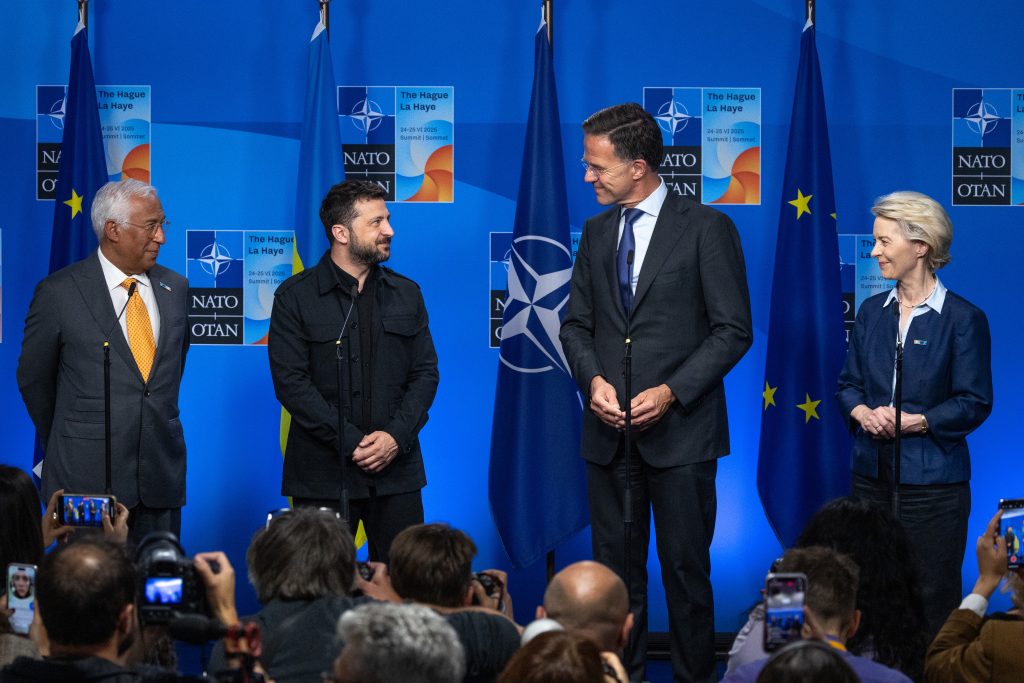
Contemporary European security is structured around two partially overlapping institutions that include nearly the same set of states but rest on different legal foundations, political traditions and policy instruments. NATO continues to serve as the principal framework for collective defence, deterrence and operational military planning. The European Union, although not a defence alliance, has become indispensable to security through its regulatory authority, budgetary instruments, industrial policy, enlargement and neighbourhood policy, and crisis management tools. The relationship between these two institutional pillars is no longer a technical sidebar. It is one of the core determinants of whether Europe can sustain support for a prolonged war in Ukraine, manage a more competitive and militarised Arctic, address instability on its southern periphery and carry out a climate transition that cuts across every other aspect of security.
Official documents present an image of steady convergence. Three joint declarations on EU–NATO cooperation, adopted in 2016, 2018 and 2023, set out an increasingly extensive agenda of common work that now includes cyber defence, hybrid threats, military mobility, critical infrastructure, disruptive technologies, outer space, climate-related security risks and foreign information manipulation. NATO’s 2022 Strategic Concept and the EU’s Strategic Compass both state that a more capable European Union should be understood as complementary to NATO, not as a rival structure. In the narrative presented to parliaments and publics, the strategic debate about institutional competition is therefore described as largely settled.
A closer examination of the machinery that translates these texts into practice produces a more ambivalent picture. Patterns of coordination still vary widely across policy domains and geographic theatres. Many national administrations find it difficult to reconcile different strategic documents, planning cycles and capability targets in a way that produces a single set of national priorities. Longstanding disputes, in particular the Cyprus–Turkey conflict, continue to limit the scope of structured exchanges between the two organisations and to constrain the sharing of information. At the same time, the security environment is evolving rapidly under the combined effects of war, technological change, climate impacts and economic rivalry. The institutional relationship is struggling to keep pace.
The core claim developed here is that cooperation between the European Union and NATO is subject to three concurrent and partially conflicting pressures. First, there is a functional pressure toward deeper integration, because the main challenges confronting European security systems are interlocked problems that do not map neatly onto one institution. Deterrence, resilience, climate risk, technological dependence and industrial competition all cut across the formal division of labour. Second, there is political resistance generated by unresolved questions of sovereignty, the volatility of United States politics and enduring distrust among European states about each other’s long term intentions. Third, there is a gradual geographic rebalancing, as the eastern and northern flanks gain political weight relative to the south, forcing both organisations to decide whether they are ready to think and act on genuinely pan-European lines.
Viewed through this lens, the current state of EU–NATO cooperation resembles an incomplete structure. The interaction between the two organisations is too dense, routinised and embedded in national policies to be simply reversed. Yet it remains too shallow, uneven and compartmentalised to amount to a shared strategic operating system for the Euro-Atlantic area. Incremental extensions of the agenda in future joint declarations will not be sufficient. What is required is a re-examination of comparative advantages, a more explicit sequencing of priorities and a clearer approach to the structural tension between large scale rearmament and ambitious climate policies.
The Arctic and High North, analysed in detail in several recent studies, are a particularly sharp lens for this transformation. The dynamics observed there, however, cannot be understood in isolation. They form part of a wider pattern that also encompasses the eastern flank, the Black Sea basin, the Mediterranean and the evolving technological and industrial frontiers where EU and NATO policies interact and sometimes collide in their effects on governments and firms.
Any analysis of EU–NATO relations must begin with the asymmetry between the two organisations. NATO is a defence alliance constructed around a treaty-based collective defence obligation, a primarily intergovernmental decision making system and an established culture of operational planning and command. The European Union is a legal and political entity of a different kind, with its own legal order, a single market, a common trade policy and extensive competences in fields that shape security indirectly but deeply, including industrial, energy, digital and climate policy. This asymmetry generates complementarities but also recurrent friction.
In the strictly military domain, NATO retains the mandate, planning culture and command structures required to organise collective defence. The 2022 Strategic Concept redefined the strategic environment around deterrence and defence against Russia, while placing this within a broader context of competition that explicitly includes the rise of China and systemic rivalry with other authoritarian actors. NATO’s new generation of regional defence plans and force posture decisions rest on the assumption that, in a serious crisis, the Alliance will remain the primary forum where decisions on the employment of multinational forces are taken and where operational command is exercised.
On the European Union side, the Strategic Compass articulates a wider security agenda that covers crisis management beyond Europe, the protection of citizens, resilience, partnership policy and internal–external security linkages. It recognises NATO’s leading role in collective defence, while committing the Union to building more credible instruments for hard security, including a rapid deployment capacity, stronger involvement in capability development and extensive use of regulatory and financial levers. The EU can influence defence supply chains through competition and export rules, provide funding for cross-border industrial consortia, regulate the security of critical infrastructure, set climate and environmental standards that affect armed forces and defence industries, and shape access to its market and research programmes. These powers exert a centrifugal pull that does not always match NATO’s priorities.
The geometry of membership amplifies these structural differences. Twenty-three states belong to both NATO and the EU. Several NATO allies are outside the Union, including the United States, the United Kingdom and Norway. A small number of EU members are not NATO allies. The most persistent and visible constraint arising from this pattern is the Cyprus–Turkey dispute. For many years, this has limited the scope for formal information sharing and has confined structured political exchanges to situations where both organisations are present in the same theatre under carefully crafted arrangements. From the outside this can appear as a narrowly framed dispute among medium sized states, yet its implications are systemic. It discourages the normalisation of routine consultations, pushes important cooperation into informal formats among like-minded members and shifts attention to highly technical mechanisms such as specialised centres of excellence.
Above these institutional and membership issues sits the evolving transatlantic bargain. For much of the post-Cold War era, the implicit arrangement was straightforward. The United States provided the strategic umbrella, nuclear deterrence and most of the critical enabling capabilities, while European allies and EU institutions deepened integration, expanded the single market and accepted US strategic leadership within NATO. That bargain is under strain. The return of Donald Trump to the presidency, the decision at The Hague summit to move toward a five per cent of GDP benchmark for defence spending in order to shore up US commitment, and the growing focus of US strategy on China all alter the conditions in which EU–NATO relations develop.
In the High North, recent work on the region makes this shift particularly concrete. If US policy oscillates between engagement and forms of transactional pressure, the European Union’s ability to rely on a stable American line diminishes. This pushes EU institutions and member states toward more autonomous regional postures, especially in domains where EU instruments are dominant, such as energy policy, critical raw materials and environmental regulation. The same logic extends beyond the Arctic. It shapes debates about industrial policy, access to strategic minerals, energy diversification and relations with states in the Global South. These are mainly EU-led policy arenas, yet NATO’s political weight and the centrality of the United States to security remain decisive in shaping incentives and constraints.
The institutional bargain that underpins EU–NATO interaction is therefore fluid rather than fixed. It is being renegotiated under pressure from Russia’s war against Ukraine, accelerating climate disruption, sharper industrial and technological competition and shifting domestic politics on both sides of the Atlantic. The way cooperation between the two organisations develops has become one of the places where this renegotiation is visible, and one of the arenas where it can either be stabilised or further unsettled.
Four arenas of cooperation: where the partnership works and where it is thin
EU–NATO cooperation does not exist as a single coherent practice. It takes distinct forms across different policy fields, with different degrees of institutionalisation and political attention. Four areas are especially revealing: collective defence, hybrid and societal resilience, defence industrial and technological policy, and the climate–energy–Arctic nexus.
The first arena is collective defence and deterrence. Since the annexation of Crimea in 2014, and with greater intensity since the full-scale invasion of Ukraine in 2022, NATO has rebuilt a forward posture along the eastern flank and has resumed planning for large scale conventional defence in Europe. The European Union’s contribution in this area is primarily indirect but nonetheless substantial. It consists of regulatory measures for the cross-border movement of troops and equipment, financial support for dual use transport infrastructure and the political choice to provide long term military and macro-financial assistance to Ukraine. The concept of military mobility illustrates what effective complementarity can look like. NATO defines operational requirements and contingency scenarios, while the EU adapts customs rules, transport regulation and funding mechanisms so that European territory can function as an effective logistical platform in a crisis. Even in this relatively advanced field, however, implementation remains uneven, because national bureaucratic practices, legal constraints and domestic political preferences still shape outcomes.
The second arena concerns hybrid threats and the resilience of societies. Here, interdependence is intrinsic to the challenge. Cyber operations, disinformation, electoral interference, coercion through energy and digital networks, and the instrumentalisation of migration routes cut across the conventional boundary between internal and external security. Both organisations have had to acknowledge that they cannot address these issues in isolation. NATO has reinforced its cyber structures, assigned a clearer role to the protection of undersea infrastructure and adopted baseline resilience requirements for allies. The European Union has built a dense framework of regulation covering digital markets and services, critical entities, foreign interference and information manipulation, and has created analytical and financial instruments to support resilience measures. Hybrid threats have become one of the most active fields of EU–NATO engagement, with joint playbooks, regular exchanges of information and coordinated communication efforts. Yet questions remain about lines of authority and responsibility in a major cross-border cyber incident and about the sharing of sensitive intelligence with all EU members. The distinction between a useful division of labour and inefficient duplication is not always easy to draw.
The third arena is defence industrial and technological policy, which will largely determine the long term trajectory of European security. The renewed commitment to significantly higher defence spending within NATO, embodied in the move toward a five per cent target, is already reshaping fiscal debates and industrial strategies across Europe. The European Union has reacted to the war in Ukraine with new instruments for joint procurement, ammunition production and industrial scaling. It has expanded the use of the European Defence Fund, the European Peace Facility and other mechanisms to promote cross border consolidation and the development of advanced technologies. NATO, by contrast, does not provide funding to industry but shapes demand through capability targets, standardisation, common requirements and innovation initiatives such as DIANA. The key question is whether these different logics can be brought into alignment. If they are effectively coordinated, European defence industries can expand in ways that strengthen both NATO and the EU and reduce tensions with the United States over industrial policy. If they are not, member states will face incompatible demands on their procurement budgets, conflicting political and economic signals, and increased pressure from competing industrial lobbies, while both institutions are criticised for waste and incoherence.
The fourth arena links climate, energy policy and the Arctic and High North. Analysis of EU–NATO cooperation in the Arctic underlines how climate change, resource competition and great power rivalry converge in this region. The loss of sea ice creates new shipping routes and facilitates access to mineral and hydrocarbon resources, while at the same time eroding existing infrastructure and exposing local communities to environmental and economic stress. Russia has built the region into a central strategic stronghold that integrates submarine forces, air defence and nuclear assets on the Kola Peninsula into a wider deterrence posture. China describes itself as a near-Arctic state, invests in infrastructure and science, and seeks to connect the region to a broader Polar Silk Road concept.
In this environment, NATO is reinforcing its northern posture, restoring competencies in polar and high latitude operations and integrating Finland and Sweden into its regional plans. The European Union addresses the Arctic primarily through climate policy, resource governance and partnership frameworks with actors such as Greenland, Norway and Canada, treating the region as a test case for sustainable development, strategic autonomy in critical minerals and the link between climate and security. The approaches are convergent in some respects but rarely connected at the level of practical planning. There is no common northern strategy that integrates military posture, climate adaptation, resource extraction, environmental protection and infrastructure resilience into a single analytical framework. Instead, one observes parallel tracks with only partial coordination.
Taken together, these four arenas reveal a pattern. Cooperation tends to be most developed where both institutions see clear complementarity and where competition for political prestige is limited, as in military mobility or selected aspects of hybrid resilience. It is cautious or underdeveloped in areas where mandates overlap, where fiscal, industrial and distributional stakes are high, or where questions of political authority remain sensitive.
Why the partnership underperforms?
Several interlocking factors help explain why EU–NATO cooperation has not yet realised its full declared potential.
The first factor is political blockage rooted in membership asymmetries. The Cyprus–Turkey conflict continues to shape institutional practice in ways that go beyond the immediate dispute. It restricts what can be placed formally on joint agendas, creates uncertainty among officials who fear that initiatives may be derailed at late stages by cross-issue vetoes and fosters a preference for limited, low risk technical cooperation. It also makes it more difficult to employ the partnership to address politically sensitive themes such as relations with China, contested maritime zones or specific crises in the Eastern Mediterranean.
The second factor is the misalignment of bureaucratic processes and planning systems. NATO’s Defence Planning Process, its regional defence plans and associated capability targets are built around cycles that focus on military performance, interoperability and deterrence. The EU’s Strategic Compass, the Coordinated Annual Review on Defence, Permanent Structured Cooperation and the various industrial programmes follow distinct calendars and are embedded in negotiations over the single market and the EU budget. If national governments do not invest in mechanisms that connect these two planning universes, they generate conflicting demands on national defence budgets and industries. Faced with such frictions, many administrations fall back on ingrained habits: NATO is treated as the arena for serious defence planning, and EU initiatives are seen as auxiliary or discretionary. Where governments have created small but specialised units that understand both systems, coordination improves measurably, which shows that this outcome is not inevitable.
The third factor is the unresolved debate on European strategic autonomy. For several Central and Eastern European states, references to autonomy are often interpreted as signals of a potential decoupling from the United States or of a dilution of NATO’s role. For others, primarily in Western and Southern Europe, repeated shocks stemming from US domestic politics and trade disputes have strengthened the conviction that Europe needs more autonomous capabilities, industrial capacities and decision-making processes. The 2023 EU–NATO Joint Declaration frames the organisations as indispensable partners and argues that stronger European defence efforts will reinforce NATO, not undermine it. The problem is that concrete policy decisions in areas such as industrial subsidies, export controls and technology partnerships do not always align neatly with this message.
The fourth factor relates to geographic imbalances and divergent threat perceptions. The war in Ukraine and Russia’s expanding military infrastructure in the Arctic have placed the eastern and northern dimensions at the centre of NATO strategy and, by extension, of much EU security thinking. Southern member states however focus on insecurity in the Sahel, migration routes across the Mediterranean, and energy and food vulnerabilities in North Africa and the Middle East. They often view the current agenda as heavily tilted toward other regions’ concerns. A similar argument applies in regional terms: a stronger EU Arctic posture risks triggering fears of neglect on the southern flank unless embedded in a genuinely pan-European approach. Comparable dynamics can be observed in the Baltic and Black Sea regions when resources are directed to distant crisis management missions. The pattern of cooperation between the EU and NATO thus has a redistributive dimension that affects perceptions of fairness among member states.
The fifth factor is the structural tension between rearmament objectives and climate policy commitments. Higher defence spending, the acquisition of more heavy equipment and the hardening of infrastructure all imply increased greenhouse gas emissions in the short and medium term. Recent analytical work and public debates suggest that full implementation of current rearmament plans across the Alliance could add very substantial volumes of emissions, complicating the credibility of climate targets and transition pathways. The Arctic context highlights this difficulty. Projects to exploit critical minerals in northern territories are framed as necessary for the energy transition and for reducing strategic dependence, yet they require infrastructure and industrial processes that have non-trivial environmental impacts and can provoke opposition from local communities and indigenous groups. If NATO and EU strategies do not converge on how to manage such trade offs, both risk losing legitimacy.
A final factor is narrative and public perception. In many member states, domestic debates still tend to present NATO and the EU as occupying distinct and largely non-overlapping domains. NATO is associated with deterrence, hard power and war. The EU is associated with economic rules, standards and bureaucratic procedures. This separation makes it more difficult to explain and secure support for policy measures that sit at the intersection, such as investments in dual use transport corridors or efforts to protect undersea cables that carry data essential to both civilian and military systems. It also shapes how actors in the Global South interpret European actions. When they observe rearmament, export restrictions and industrial measures framed primarily through NATO, while climate and development initiatives are presented through the EU, they may see an instrumentalised split rather than a coherent approach.
The Arctic as a laboratory
The Arctic and High North bring these dynamics into sharper focus. They should not be treated as a peripheral theatre. They are one of the places where climate processes, strategic geography and alliance politics intersect most visibly.
The analysis of EU–NATO cooperation in the Arctic underlines how climate change has transformed the region into a concrete example of the link between environmental and security risks. Concepts such as climate as a threat multiplier acquire operational content in this context. Changes in sea ice, permafrost and weather patterns directly affect the viability of infrastructure, the reliability of supply routes and the living conditions of local populations. These in turn influence resource politics, shipping routes and military basing decisions.
At the same time, the Arctic has shifted from an area where cooperation could be insulated from wider tensions to one where competition is explicit. Russia conceives of the region as a central economic and military asset, tied to its nuclear posture and to its energy export strategy. China employs research expeditions, infrastructure investments and its Polar Silk Road narrative to establish a lasting presence. Western actors respond by reinforcing deterrence, seeking new sources of critical minerals and energy, and deepening partnerships with key regional players such as Greenland, Norway, Canada and the United Kingdom.
This constellation places the Arctic at the boundary of EU and NATO responsibilities. NATO must safeguard freedom of navigation, secure sea lines of communication across the North Atlantic into the Arctic, protect reinforcement routes and deter any attempt to use the region as a sanctuary for long range strike systems or as a pressure point against allied societies. The European Union holds no formal mandate for collective defence in the region, but it strongly shapes the regulatory and economic environment through shipping regulations, environmental law, critical raw materials policy, energy legislation and funding for infrastructure and research. It also negotiates cooperative arrangements with non-EU Arctic actors and takes part in global deliberations on issues such as deep sea mining, fisheries and polar emissions.
If both organisations treat the Arctic simply as another item in their crowded portfolios, they will pass up an opportunity to develop a more mature form of partnership. The region could serve as a laboratory in which overlapping but distinct roles are recognised explicitly and where joint analytical and planning capacities are constructed systematically rather than through ad hoc fixes.
Three characteristics of the Arctic make this feasible. First, the number of key actors is limited and the main flows of goods, energy, data and people can be mapped with reasonable precision, which simplifies the construction of shared situational awareness. Second, the connections between climate dynamics, resource extraction, energy policy, local development and military activity are unusually visible, which obliges practitioners from different policy communities to engage directly with one another. Third, the strategic importance of the region will increase irrespective of European preferences, because it is driven primarily by global emissions trajectories and associated physical changes, not by institutional decisions in Brussels.
A serious attempt to treat the Arctic as a laboratory would move beyond the inclusion of climate language in NATO documents or security language in EU Arctic communications, developments that are already under way. It would require at least three tangible steps. The first would be to produce a shared northern situational picture that integrates military, economic, environmental and social data. The second would be to co-design investments in dual use infrastructure that can simultaneously serve civilian and military purposes and meet climate resilience standards. The third would be to institutionalise joint exercises and simulations that involve not only armed forces but also civilian agencies, regulators, scientific institutions and local authorities. Such an agenda would bring unresolved questions about the EU’s role in security and NATO’s openness to non-military inputs into sharper relief. For precisely this reason, the Arctic is a useful testing ground for the broader evolution of EU–NATO relations.
Pathways for improvement?
Improving cooperation between the European Union and NATO is not primarily a conceptual challenge. The basic principles are already set out in existing documents and speeches. The central obstacles relate to implementation, prioritisation and the distribution of political and administrative effort. Several plausible avenues for progress are available if member states decide to invest in them.
One avenue is the alignment of strategic cycles. The adoption of NATO’s 2022 Strategic Concept and the EU’s Strategic Compass created an unusual moment of parallel strategic reflection. Rather than allowing this coincidence to fade, the next revision cycles could be organised as mutually informed processes. This would not require a joint strategy document, which would be politically unrealistic, but it would entail synchronised timelines, early exchange of key assessments and the creation of joint analytical teams focusing on cross-cutting challenges such as climate security, critical infrastructure and systemic resilience. Over time, such practices could generate a de facto shared strategic picture, even if formal decision making remains institutionally distinct.
A second avenue concerns planning and capability development. Member states can choose to treat NATO capability targets and EU defence initiatives as inputs into a single national planning process rather than as parallel sets of obligations. This would require organisational changes in defence ministries and finance ministries, as well as in foreign and industry ministries where relevant. The current practice in several Nordic and Baltic states, where the same small group of officials work across NATO regional planning, EU PESCO projects and industrial support instruments, provides a concrete example. With Finland and Sweden now present in both organisations, the scope for such bridging mechanisms has increased. Other states, including larger members such as Germany, Italy, Spain and the Netherlands, possess the administrative capacity to adopt similar models.
A third avenue lies in the area of climate and infrastructure policy. NATO has adopted a climate and security action plan and has established a dedicated centre of excellence in Montreal, while the European Union has integrated climate security into its external action and has identified the Arctic and other vulnerable regions as strategic spaces. What is missing is a shared operational framework. A joint EU–NATO task group on climate and security could develop common scenarios, identify critical nodes where climate impacts intersect with defence and civilian vulnerabilities, and draft baseline standards for resilient and lower emissions infrastructure that can be applied across borders. The Arctic could serve as an initial case study, with subsequent extension to the Mediterranean and Black Sea.
A fourth avenue relates to defence industrial policy and critical raw materials. NATO has begun to identify defence critical raw materials and to map vulnerabilities in supply chains. The European Union has moved ahead with the Critical Raw Materials Act, the designation of strategic projects and enhanced partnerships with key suppliers such as Norway, Greenland and Canada. Coordinating these efforts could prevent contradictory pricing signals and avoid sending conflicting messages to supplier countries. A relatively straightforward measure would be to cross-reference NATO assessments and lists with EU trade and industrial measures and to involve NATO expertise at early stages in EU decisions that have clear security implications, while preserving the separate competences of each organisation.
A fifth avenue is political and concerns the constraints generated by the Cyprus–Turkey dispute. No simple technical solution exists, but steps can be taken to limit the ability of this conflict to disrupt cooperation in all other domains. One method is to invest more systematically in formats where clusters of like-minded states that belong to both organisations organise regular exchanges and commit to carrying ideas and lessons across institutional boundaries. These configurations cannot speak on behalf of NATO or the EU as such, but they can help institutional learning and reduce information asymmetries. Over time, as their utility becomes evident, the political cost of blocking them for unrelated reasons may increase. Another complementary method is to formalise some cooperative initiatives in flexible coalitions of willing states, for example on undersea infrastructure protection or specific hybrid threat projects, that remain open to all but do not require unanimity. Such coalitions already exist informally; bringing them into a clearer framework would increase transparency.
A final avenue concerns narrative work. Parliaments, think tanks and national leaders can present EU–NATO cooperation as a central structural feature of European security rather than as an annex to other policy debates. Such a narrative would have to acknowledge costs and tensions rather than presenting integration as a frictionless process. It would need to explain how increased investment in armed forces interacts with climate goals, how the reinforcement of the eastern flank affects obligations and expectations in the south, and how industrial policy choices influence relations with the United States and with partners in other regions. It would also need to show that combining EU and NATO instruments can help manage these tensions, for example by designing port, rail and digital projects that simultaneously support NATO reinforcement, EU decarbonisation objectives and regional development. The Arctic provides concrete illustrations, since a single port development in northern Norway or Iceland can be configured to serve multiple civilian and military purposes if planned accordingly.
EU–NATO cooperation is unlikely to become fully coherent or free of tension. The two organisations derive from different historical experiences, legal frameworks and political cultures. Their members diverge in interests, capabilities and collective memories. The question, therefore, is not whether the partnership can be made perfectly neat, but whether it can evolve beyond the plateau on which it currently rests.
The war in Ukraine, the transformation of the Arctic and High North, instability on the southern flank, technological competition with China and the accelerating climate emergency point in the same direction. They increase the demand for integrated responses that combine military, economic, regulatory and diplomatic tools. No single institution can provide this combination. The choice is between a partnership that remains fragmented and reactive and one that, although still messy, gradually develops more coherent patterns of analysis, planning and implementation.
The present moment is risky but also unusually fluid. The third EU–NATO Joint Declaration, the Strategic Compass, the Strategic Concept and the renewed transatlantic debate about burden sharing and industrial policy have pushed the relationship to the centre of strategic discussion. Debates on Arctic cooperation highlight how questions of climate and energy have moved from the margins of security to its core. When such structural shifts occur, institutional arrangements that once appeared fixed can change more rapidly than expected.
A more substantial EU–NATO partnership would not eliminate conflicts of interest or erase structural asymmetries. It would, however, increase Europe’s chances of navigating a security environment shaped by enduring war, climate disruption and intensified great power rivalry. It would also convey to sceptical observers, including those in the Global South, that Western institutions retain some capacity to learn, to adjust and to share influence among themselves.
The alternative is a pattern that is already familiar. It consists of a partnership that appears well developed on paper, generates regular communiqués and high level meetings, and functions satisfactorily in several technical sectors, but fails to deliver when strategic, industrial or climate-related trade offs are at stake. In the security order that is now emerging, that level of performance may no longer be sufficient.