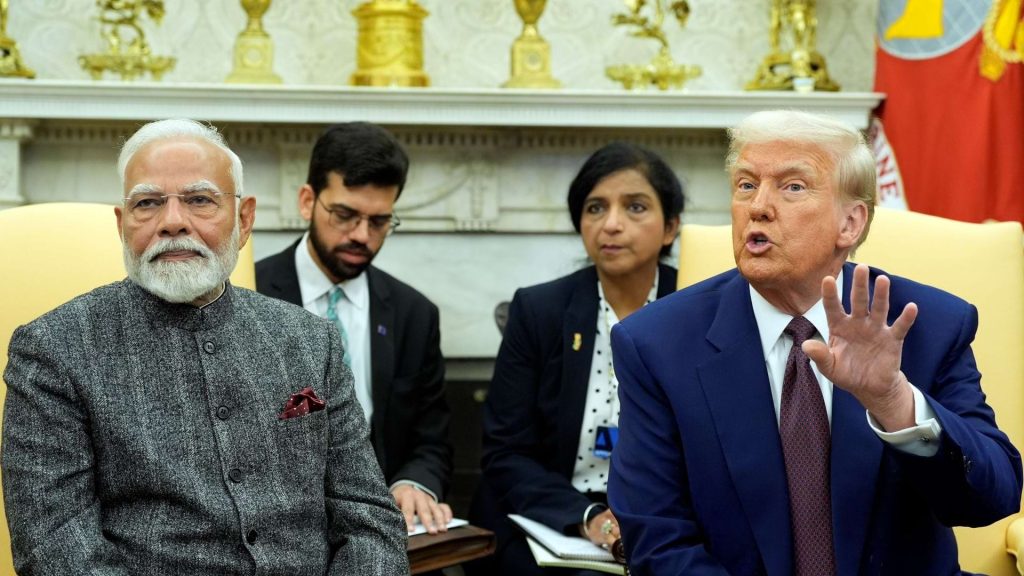
The second Trump presidency has turned the US–India relationship into a test case of whether “America First” economics can coexist with a long term strategic partnership in Asia. The personal warmth between Donald Trump and Narendra Modi has survived, but the political chemistry of the first term has given way to a more brittle, transactional phase. A summer tariff shock over Russian oil purchases pushed ties to their lowest point in years. Now both sides are edging toward a truce, without resolving the deeper tension between India’s multi-alignment and Washington’s demand for clearer choices.
The new tariff confrontation grew out of overlapping energy and security disputes. In August Trump signed an executive order imposing a 25 percent surcharge on all imports from India, explicitly framed as punishment for continued purchases and re-exports of Russian crude. Within weeks he doubled the effective rate on many goods to 50 percent, one of the highest levels applied to any US trading partner, and later backed legislation that would allow tariffs of up to 500 percent on countries reselling Russian oil. For Indian exporters already adjusting to pandemic disruptions and earlier tariff skirmishes, the shock was immediate. Labor-intensive sectors such as textiles, jewellery, shrimp, smartphones and generics saw shipments to the US fall sharply, contributing to a wider trade deficit at home.
For Delhi, this was not just an economic blow but a political affront. Indian officials argue that their energy strategy since Russia’s 2022 invasion of Ukraine has been driven by price and diversification, not by geopolitical alignment with Moscow. Independent analysis suggests that India had already trimmed the value of Russian oil imports for most of the year before the tariffs, even as volumes fluctuated with domestic demand and sanctions timetables. In their view, Washington moved the goalposts from capping prices to penalising any continued trade with Russian suppliers, and did so in a way that seemed to single India out while granting waivers or exemptions to some European partners. The decision to exempt Hungary from certain sanctions while threatening “very severe” measures against others trading with Russia did not go unnoticed in Delhi.
Yet even at the height of the tariff war, neither side seriously contemplated abandoning the broader partnership. Bilateral trade has reached roughly two hundred billion dollars a year and is deeply embedded in supply chains for pharmaceuticals, IT services, aerospace and clean energy. Defense cooperation has continued to expand, with Indian orders for US aircraft, drones and engines moving ahead and joint exercises growing more complex in the Indian Ocean and Western Pacific. The Quad framework with Japan and Australia, though quieter under Trump than under Biden, still provides a loose strategic scaffold for balancing China’s regional weight. The friction has been less about whether India matters to the United States than about how much economic pain Washington is willing to inflict in order to change Indian behaviour on Russia.
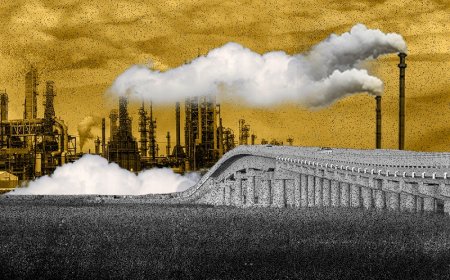
That debate is now entering a more nuanced phase. A visible drop in Russian crude shipments to India in recent months, driven both by US secondary sanctions and by India’s own desire to avoid over-dependence on a single supplier, has created space for de-escalation. Indian refiners have cancelled or diverted some cargoes from sanctioned firms and quietly expanded energy deals with American producers, including a new liquefied petroleum gas agreement. Trump has responded by signalling that a trade deal is “pretty close” and that tariffs can come down, tying this explicitly to India’s reduced intake of Russian oil. The link between energy flows and tariff relief is blunt but effective: Moscow’s share of India’s crude basket becomes a lever in a three-cornered negotiation among Washington, Delhi and Russian suppliers.
The appointment of Sergio Gor as US ambassador to India is meant to lock in this pivot from punishment to bargaining. Gor is less a traditional regional specialist than a trusted political operative, also serving as special envoy for South and Central Asia. His confirmation hearings and early visits to Delhi framed India as a “strategic partner” and suggested that the two countries are “not that far apart” on tariffs, with a resolution possible within weeks. His mission is to turn leader-level rapport into an economic compact that preserves Trump’s tough-on-Russia narrative while easing pressure on Indian exporters and reassuring US companies that India remains a viable alternative to China in their long term plans.
The problem is that this highly personalised diplomacy sits atop diverging structural interests. For Washington, India is a pivotal counterweight to China, but only if it can be counted on in crises that matter to the United States. That pushes the Trump team to press Delhi on Russia, technology controls and certain votes at the United Nations. For India, the United States is an indispensable partner in balancing Beijing, but not a patron that can dictate its Russia policy or its stance on sanctions it did not help design. Strategists in Delhi see Moscow as both a legacy supplier of defence hardware and a useful, if diminished, hedge against an over-reliance on the West. They also worry that if they acquiesce too easily on Russian oil today, they will have less room to manoeuvre if future US administrations demand curbs on trade with China in ways that cut against core Indian interests.
Domestic political incentives on both sides complicate things further. Trump’s Russia sanctions rhetoric, including backing a bill for 500 percent tariffs on resales of Russian oil, is aimed at a domestic audience that sees being “tough on Russia” and “bringing jobs home” as non-negotiable. Admitting that tariffs on a major partner like India were counter-productive would be politically costly unless packaged as a victory extracted through pressure. Modi, facing his own electoral and coalition pressures, cannot be seen as bowing to US diktat, especially after months of public friction over Kashmir diplomacy and perceived US meddling in South Asian crises. The earlier spat over who deserved credit for fostering a ceasefire between India and Pakistan in Jammu and Kashmir still colours elite opinion in Delhi, reinforcing a sense that Washington sometimes uses regional flashpoints as backdrops for its own narratives.
Beyond trade and energy, the relationship is also being pulled by issues that resonate differently in each capital. In Washington, concerns about democratic backsliding, minority rights and media freedom in India have not disappeared simply because Trump is less inclined than his predecessor to speak about them in public. Members of Congress, think tanks and parts of the bureaucracy continue to debate how far the United States can deepen security ties with a partner whose internal trajectory raises questions for some about long term value convergence. In India, such criticism is often dismissed as hypocritical or selective, especially when juxtaposed with US tolerance of illiberal allies elsewhere. That undercurrent occasionally spills into disputes over visas, diaspora politics and social media regulation, adding layers of mistrust that trade technocrats cannot simply ignore.
Technology and critical supply chains, once seen as pure win-win fields, now come with their own strategic trade-offs. The United States wants India firmly inside its emerging “trusted networks” for semiconductors, digital infrastructure and quantum and AI cooperation. That means pressure to exclude certain Chinese vendors, adhere to export controls and align on data standards. Delhi welcomes investment and joint ventures but is still building its own regulatory and industrial capacity and is keen to preserve room for manoeuvre. The same applies to critical minerals. American and Indian officials increasingly talk about collaboration on rare earths and battery metals, and Sergio Gor’s early conversations in Delhi reportedly emphasised critical minerals as a pillar of future cooperation. Turning those ambitions into real projects will require stable trade terms and predictable regulatory environments, which tariff volatility has undermined.
Security cooperation in the Indo-Pacific remains the strongest glue in the relationship, but even here expectations need managing. Indian naval and air forces train with their US counterparts more than ever before and share a growing interest in keeping sea lanes open from the Persian Gulf to the Western Pacific. Information sharing and logistics agreements have made it easier for ships and aircraft to refuel and resupply. Yet India’s willingness to be drawn into contingencies that Washington cares about outside its immediate region, such as a Taiwan crisis, remains limited. Indian planners view their principal challenge as deterring a two-front scenario with China and Pakistan, not joining US-led operations in East Asia.
Against this backdrop, the question of a “détente” in late 2025 is less about a single trade deal than about whether both governments can accept a more modest, realistic definition of partnership. A deal that phases out the additional 25 percent “Russia surcharge” while leaving some base tariffs intact would give Trump something to present as a win and give Modi space to claim that standing firm on core sovereignty issues ultimately paid off. A parallel energy package, expanding Indian purchases of US LNG and LPG while codifying some upper bound on Russian crude in India’s import mix, could anchor the economic relationship in a more stable framework and align with India’s own diversification goals.
The deeper strategic bargain, however, will still hinge on how both sides handle three hard questions. The first is how much divergence on Russia they can tolerate while still calling each other “indispensable partners.” So far the answer has been: more than many in Washington expected, less than some in Delhi would like. The second is whether Trump’s instinct for using tariffs as a first resort can be restrained in a way that recognises India’s peculiar position as both a security partner and a target of energy-related sanctions. The third is whether India can convincingly position itself as a long term alternative to China in supply chains while continuing to hedge on some of the very issues that drove US companies to reconsider China in the first place.
For now, the trajectory points toward a cautious thaw. Oil flows from Russia to India are edging down under sanctions pressure and diversification, trade negotiators are once again drafting text rather than exchanging insults, and a politically connected ambassador is installed in Delhi with a mandate to repair the damage. That does not restore the uncomplicated enthusiasm of the “Howdy, Modi” era. It does suggest that both Trump and Modi recognise the costs of letting a tariff war overshadow the larger logic of their partnership.
Whether they can turn this moment into something more durable will depend less on one summit or one deal than on their ability to insulate the relationship from the next shock: another flare-up over Kashmir, a sharper US–China confrontation, a change of government in Delhi or Washington, or a fresh round of Russia sanctions. The India–US story in Trump 2.0 is not a straightforward arc from friendship to estrangement and back. It is a negotiation between two states that increasingly need each other, yet still approach the world with very different instincts. Managing that negotiation will require quieter diplomacy than the headline-grabbing rallies of the past, and a thicker layer of institutional trust than either side has yet invested.