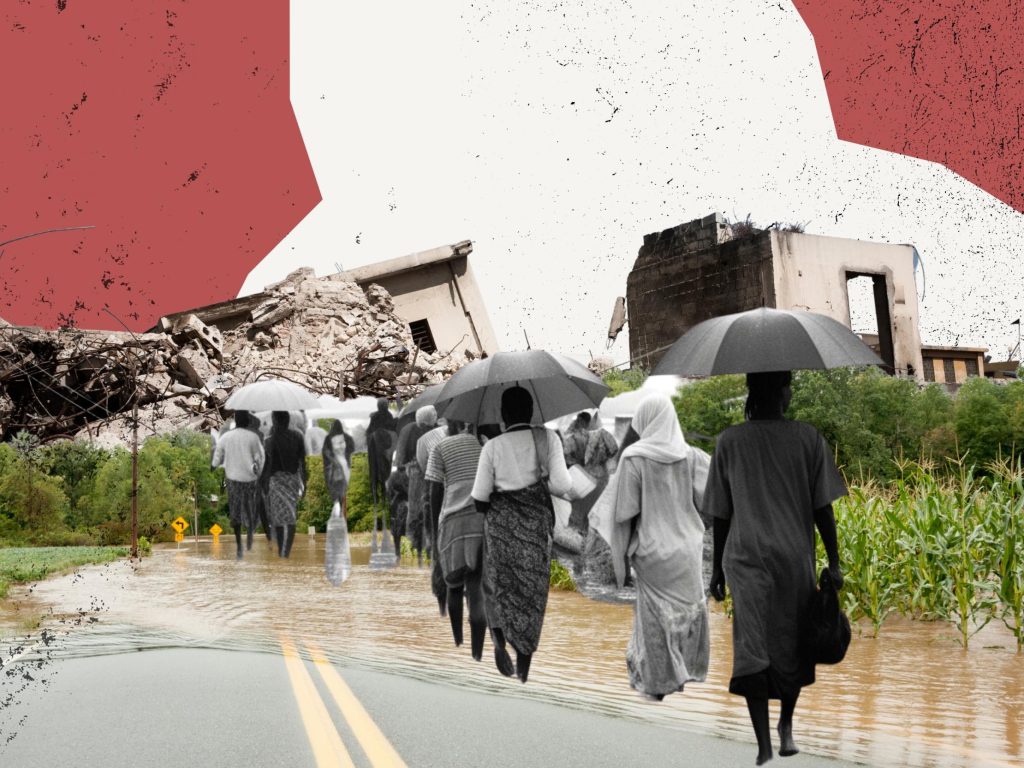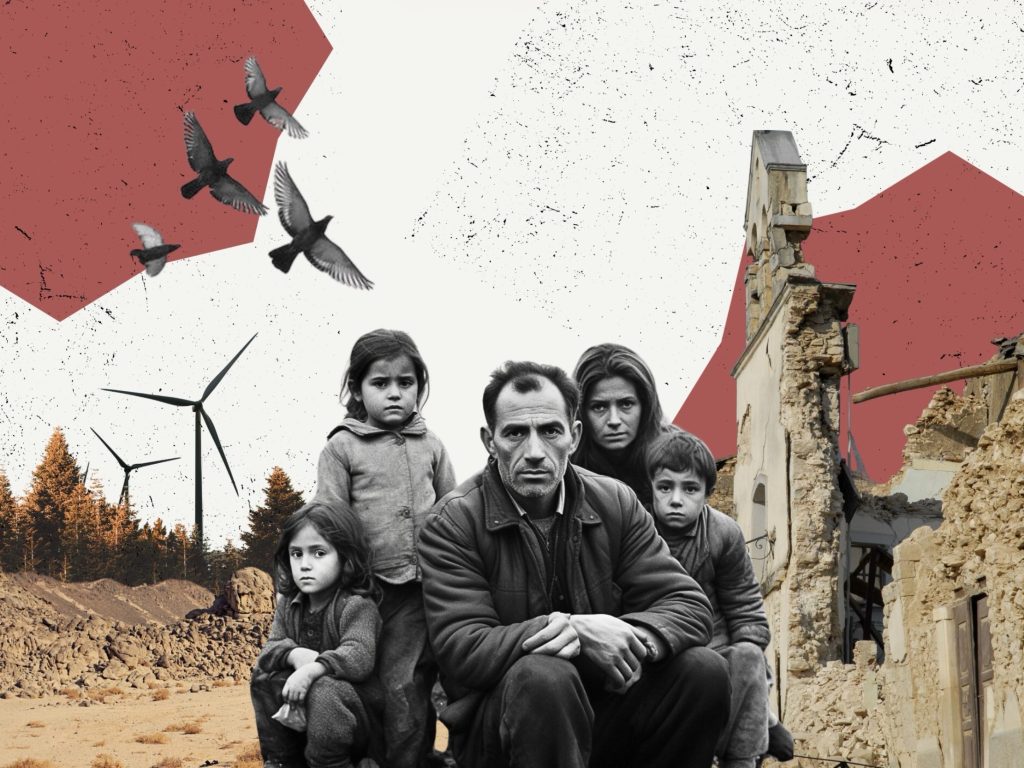
United States–Pakistan relations have always been more about deals than sentiment. Alliances have risen and fallen around specific wars, bases, and funding packages, not around shared values. Trump’s second term has not changed that basic pattern. What has changed is the regional setting: a fragile ceasefire in Gaza where Washington wants Muslim security forces on the ground, an unsettled Afghanistan where Trump talks openly of returning to Bagram, and a Pakistani state desperate for dollars, recognition, and some semblance of strategic relevance after several years in the diplomatic cold.
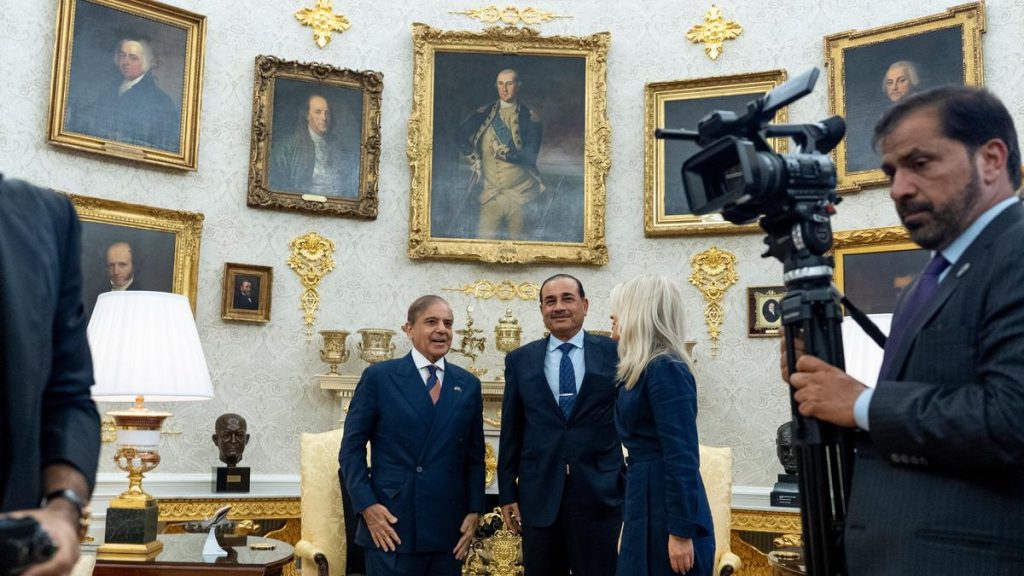
The two highly publicised Trump–Munir meetings in mid and late 2025, with Pakistan Army chief Asim Munir treated almost as a visiting head of state, capture this shift. They signal a renewed transactional compact in which Pakistan offers troops, access, and political cover in exchange for money, weapons, diplomatic indulgence and a restored place in Washington’s mental map. The enthusiasm in parts of Pakistan’s elite is real. So are the risks, both domestic and regional.
This brief distils the core logic of that bargain and then looks wider at what a Trump 2.0 framework with Pakistan means for regional security and for US policy.
A familiar pattern in a different decade
If one strips away new jargon about Gaza “Boards of Peace” and “Islamic stabilisation forces”, the underlying picture looks oddly familiar. During the Cold War, Pakistan joined American treaty systems in return for arms and aid against India. During the anti Soviet war, it became the main conduit for support to the Afghan mujahideen. After 2001, it turned itself into a frontline partner against the Taliban while simultaneously managing its own network of proxies. Each cycle ended in mutual recrimination when Washington concluded that Islamabad had pocketed the benefits without delivering fully on US expectations, while Pakistan complained of abandonment once the immediate crisis had passed.
The discovery of Osama bin Laden in Abbottabad badly damaged the relationship, and the first Trump term began with public complaints about Pakistani “lies and deceit” and suspension of security assistance. By the time Joe Biden took office, contacts were cool and largely functional. Imran Khan never received a serious presidential conversation from Washington.
Trump’s return to the White House and his hunger for visible foreign policy “deals” have revived the old instinct to reach for Pakistan when the United States wants Muslim political cover and low cost manpower. The Gaza plan and the Bagram discussion have given Pakistan’s generals a way back into the centre of the story, and they have seized it.
Gaza as the first testing ground
Trump’s Gaza plan, with its twenty points, international committee, and staged Israeli withdrawal, is less interesting for its wording than for its architecture. It rests on a simple idea: Western powers and Israel want out of direct occupation while still shaping Gaza’s future security and political order. To bridge that gap, the plan seeks an “Islamic” stabilisation force that can police Gaza’s streets, guard borders, and oversee reconstruction while an international board, chaired by Trump himself, supervises the transition.
For that force to look credible, it cannot be a token contribution from tiny states. It needs large Muslim militaries that can deploy trained formations for long rotations, preferably without asking too many questions about rules of engagement and political end states. That points naturally to Pakistan, which is already present in multiple UN missions and has long supplied officers and troops to Gulf monarchies.
Trump’s public praise of Pakistan and his description of Munir as his “favourite field marshal” fit directly into this effort. Islamabad has been flattered in front of television cameras and reassured in private that it will be central to the Gaza stabilisation phase. The Saudi–Pakistan defence pact announced in September, which speaks of mutual defence without spelling out nuclear guarantees but is widely read as a form of extended deterrence for Riyadh, adds a further layer of trust between Pakistan’s army and key Arab capitals. A Pakistani contingent under an Islamic umbrella in Gaza, funded largely by Gulf money and backed by Washington, fits smoothly into this emerging security triangle.
For Rawalpindi, the attraction is threefold. First, participation gives the army a highly visible role as protector of Palestinians, reinforcing its self image as defender of the wider Muslim community. Second, it opens the gate to fresh military assistance from Washington, including long discussed upgrades for Pakistan’s F 16 fleet and perhaps a loosening of restrictions on other hardware. Third, it delivers cash at a time when Pakistan’s economy remains fragile despite a new IMF agreement and Gulf deposits.
Yet the domestic cost is already visible. Critics from across Pakistan’s political spectrum have condemned the Gaza plan as surrender dressed up as peace and accused Prime Minister Shehbaz Sharif of endorsing it without any serious debate in parliament or the public sphere. The Tehreek e Labbaik protests in October, culminating in a “Labbaik Ya Aqsa” march that the government suppressed by force, show how combustible this issue is. For many Pakistanis, any role that looks like policing Palestinians on Israel’s behalf crosses a moral red line.
Munir and his circle seem convinced they can manage the narrative by stressing Islamic solidarity and painting participation as a way to protect Palestinians and constrain Israel. That may hold in the short term if casualties are low and the mission looks reasonably dignified. If images circulate of Pakistani soldiers clashing with Palestinian militants or protecting Israeli interests, the backlash could be severe.
Afghanistan and the Bagram temptation
The second arena where Trump believes Pakistan can be useful is Afghanistan. His rhetoric about retaking Bagram air base reflects a desire to reinsert American power east of Iran and west of China without repeating the full scale ground presence of the previous decades. In his view, a small American footprint at a strategic air hub, underpinned by local partners and over the horizon firepower, would be enough to project strength.
That ambition collides with several realities. The Taliban government in Kabul has no interest in inviting US forces back. Russia, China and Iran have all signalled opposition, including through the Moscow Format statement that brought together regional powers in early October. Domestic US appetite for another Afghan venture is low outside certain security circles.
In this constrained setting, Pakistan becomes the only plausible facilitator. Its intelligence services maintain links with the Taliban leadership. Its territory offers the most practical supply lines. Its political elites know Afghan factions and local terrain better than any other external power.
Trump’s approach appears to rest on a mixture of pressure and inducements. By raising the spectre of airstrikes or covert action against transnational jihadi groups based in Afghanistan, he makes clear that US security agencies have not accepted a hard limit on operations. By inviting Pakistan into wider regional bargains on Gaza and Gulf security, he hints that cooperation on Afghanistan could be rewarded with a more tolerant US posture toward Pakistan’s own security concerns, including its struggle with the Tehreek e Taliban Pakistan.
For Pakistan, Afghanistan is both liability and asset. The TTP’s growing attacks from Afghan soil threaten internal stability and public confidence in the army. At the same time, any renewed US presence in Afghanistan would give Islamabad leverage with Washington that India and Iran cannot easily match. There are already suggestions in regional commentary that elements within Pakistan’s security establishment might be open to a carefully managed American return to Bagram, provided Islamabad can present it domestically as part of a counter terrorism framework rather than a fresh occupation.
Here again, the risk of overreach is obvious. If Pakistan is seen as colluding in a regime change operation or in a new military intervention, anti American sentiment at home and anger from Kabul could converge. The last time Islamabad played a double role in Afghanistan, backing the Taliban while extracting rents from Washington, the eventual blowback was severe. Trump’s impatience and love of deals may tempt both sides into shortcuts that undermine any long term stability.
Resources, fantasy wealth, and critical minerals
The third strand in the Trump–Pakistan understanding concerns energy and minerals. Throughout 2025, Pakistani officials and sympathetic media have projected the country as sitting on vast untapped oil reserves and critical mineral deposits. Trump has picked up and amplified this narrative, speaking publicly about helping Pakistan develop “massive” reserves and presenting US firms as partners in a coming resource boom.
Geologists and energy experts in Pakistan and abroad have poured cold water on the oil story. Earlier estimates of technically recoverable shale resources from the lower Indus basin were always highly tentative. Repeated drilling campaigns over decades have failed to find commercially viable fields. Former officials in Pakistan’s own petroleum ministry describe the current hype as a political device rather than an evidence based claim.
The critical minerals story is less fanciful but still modest. Pakistan does hold deposits of certain rare earth elements and other strategic minerals, mainly in politically fragile regions such as Balochistan and Khyber Pakhtunkhwa, where security hazards and local grievances make extraction difficult. The recent agreement between Islamabad and a Missouri based firm to invest around half a billion dollars in exploration and processing, and the first small shipment of minerals to the United States, are symbolically important but far from transformative.
From Washington’s perspective, even small volumes matter if they can be folded into a wider effort to diversify supply away from China. From Islamabad’s side, the economic scale is less important than the political recognition and the promise of further deals. For Munir and his civilian partners, the idea that Pakistan can turn itself into a hub for strategic resources plays well in domestic debates about sovereignty and economic revival.
The danger lies in raising expectations that the subsoil will solve Pakistan’s structural problems while underplaying environmental, social, and security costs. Local communities that have long felt exploited in Balochistan and the northwest will not accept new extraction projects meekly, particularly if they believe that benefits flow outwards to the army, foreign firms, and distant elites. Here again, Trump’s style of politics, which emphasises the headline contract over the painstaking work of governance, meshes poorly with Pakistan’s fragile internal balance.
What each side wants from the bargain
The renewed partnership is not an alliance in the classical sense. It is a set of overlapping trades between two leaderships that see the world through a deal maker’s lens. Understanding those trades helps identify where the relationship may run into trouble.
From Trump’s side, the priorities are relatively clear. He wants a Gaza implementation mechanism that does not turn into a permanent American occupation and that can be presented as a success before the next election cycle. He wants options in Afghanistan that restore some US leverage without a large footprint. He wants modest but visible diversification of critical mineral supplies away from China. And he wants all of this at low budgetary and political cost to the United States, outsourcing as much risk and manpower as possible to others.
From Munir’s side, the goals are equally stark. He wants money: direct budgetary support through Gulf partners, project finance tied to US firms, and a smoothing of Pakistan’s path with the IMF. He wants military hardware, especially upgrades to legacy aircraft and possibly access to certain precision systems, to shore up the army’s image at home and its balance with India. He wants diplomatic shield, both against Western criticism of Pakistan’s internal repression and against Indian lobbying in Washington. He also wants the symbolic status of being at the table in major regional negotiations on Gaza, Afghanistan, and Gulf security.
There is overlap. Each can give the other something real without concession on core sovereignty. That is why the relationship has revived so quickly despite the bitterness of the previous decade. But there is also a mismatch in time horizons. Trump thinks in terms of news cycles and electoral calendars. Pakistan’s military establishment has to manage a restless population, a long insurgency on its margins, and a permanent rivalry with India. Short term trades that look brilliant in the Oval Office photograph may store up trouble for Rawalpindi later.
Domestic politics in Pakistan as a fragile foundation
Any external bargain with the United States rests on how much room Pakistan’s rulers have at home. Under Munir, the army has tightened its grip through repression of opposition, especially Imran Khan’s movement, and by using legal and administrative tools to marginalise critics. That control is not as solid as it looks.
Pakistan’s political identity has long tied support for the Palestinian cause and hostility to Israel to broader ideas of national purpose. School textbooks, Friday sermons, and speeches by every shade of politician reinforce this instinct. Endorsing a Gaza plan that many see as ratifying an unjust status quo cuts against this narrative. So does any move that looks like indirectly legitimising Israel without a clear path to Palestinian statehood centred on East Jerusalem.
The early reactions from former diplomats, opposition leaders, and civil society figures show how sensitive this is. They accuse the government of bypassing national debate, bartering principles for favour with Trump, and undermining the moral foundations of Pakistan’s foreign policy. Their language is sharp, framing the plan as betrayal rather than compromise.
Religious movements add another layer of risk. Groups such as Tehreek e Labbaik can mobilise tens of thousands on short notice around issues tied to sanctity and solidarity with the wider Muslim community. They have shown willingness to confront the state violently when they feel core symbols have been offended. If Pakistani troops end up in firefights with Palestinian factions or if the Gaza stabilisation mission drags on with no improvement in living conditions for civilians, there is a real possibility of renewed agitation framed not only against Israel and the United States but also against Pakistan’s own rulers.
Within the provinces, especially in Khyber Pakhtunkhwa and Balochistan, sending soldiers to Gaza while local grievances about missing persons, heavy handed security measures, and lack of development remain unresolved would deepen the sense that the military sees its rank and file as expendable instruments for foreign adventures. Punjabi and Urdu speaking urban elites may view a Gaza mission as a ticket back into the American camp. Many in the periphery are likely to see it as another example of centre driven policy that ignores their priorities.
Munir’s camp appears to be betting that control over mainstream media, pressure on dissenting voices, and careful framing of the mission as an Islamic responsibility will be enough. That may prove optimistic. The underlying legitimacy of Pakistan’s hybrid system has eroded in recent years, and using the army in Gaza for Trump’s project could accelerate that process.
Regional reactions: India, China, Iran and the Gulf
No US Pakistan reset takes place in a vacuum. Regional powers are already adjusting to the new pattern.
India views the Trump–Munir warmth with suspicion. New Delhi had grown used to a strategic triangle in which the United States, India, and key Indo Pacific partners coordinated against China, while Pakistan was seen as a secondary player. The spectacle of Trump echoing Pakistani narratives about the last India–Pakistan crisis and presenting himself as mediator undercuts that comfortable picture. It suggests that Trump values transactional cooperation on Gaza and Afghanistan more than long term alignment with India on China.
That does not mean the India–US partnership is collapsing. Defence, technology, and economic ties remain dense. But it does mean that India can no longer assume it is Washington’s sole or even primary partner in South Asia. If Pakistan can rebrand itself in Washington as a useful security provider again, some of the diplomatic insulation India enjoyed in recent crises may weaken.
China faces a subtler dilemma. For years it has been Pakistan’s main strategic backer, financing the China Pakistan Economic Corridor and providing cover in multilateral forums. A renewed Pakistan–US transactional relationship focused on security in Gaza and Afghanistan does not directly threaten Beijing, but it complicates its picture of Pakistan as a partner primarily oriented toward Chinese interests. Beijing will watch closely whether the United States gains practical access to Pakistani bases, infrastructure, or intelligence that affects Chinese projects in Balochistan and the north.
Iran is perhaps the most immediately unsettled by Trump’s plans. A US anchored stabilisation force in Gaza and a possible American presence again in Bagram both cut against Iranian ambitions for strategic depth. Pakistan’s attempt to balance its traditional relationship with Tehran against growing security intimacy with Saudi Arabia and new deals with Washington will be tested. Border clashes and disagreements over militant groups could intensify if Tehran concludes that Islamabad has thrown its weight too far behind an American designed security system extending from the Levant to the Hindu Kush.
For the Gulf monarchies, Pakistan’s new role is largely welcome. Saudi Arabia and the United Arab Emirates have long used Pakistani troops and officers in discreet security roles. A formal defence pact and participation in Gaza operations under an American designed framework gives them fresh options without excessive domestic exposure. At the same time, they know that Pakistan is financially vulnerable. That gives Riyadh in particular considerable leverage over Rawalpindi’s choices.
Making the relationship less destructive: options for Washington
Given Trump’s preferences, Washington is unlikely to walk away from a Pakistan that offers troops, access, and political cover at discount rates. The task for US policymakers inside and outside the administration is therefore not to undo this tilt but to civilise it.
That starts with clear boundaries. If Pakistani participation in Gaza is to go ahead, the mission needs a transparent mandate, credible oversight, and a real plan for Palestinian political agency, not only security. A purely militarised stabilisation effort supervised by a small circle in Washington and a handful of Arab capitals will invite failure. American planners should push for procedures that involve credible international actors, protect civilians, and give Palestinian institutions a path to genuine authority. Without those elements, any foreign force will quickly become a target.
On Afghanistan, the United States should be wary of fantasies about reoccupying Bagram. Intelligence cooperation with Pakistan against specific transnational threats may be necessary. Rebuilding a visible US base in the country would probably generate more enemies than it destroys, especially if regional powers unite in opposition. Quiet pressure on Pakistan to use its influence with the Taliban to constrain groups like Islamic State Khorasan would be a more realistic route.
In dealings with Pakistan’s military, Washington needs to avoid sending the signal that repression at home and proxy games abroad are once again acceptable costs of cooperation. Security assistance can be calibrated to reward steps that strengthen civilian institutions, reduce support for militant proxies, and open space for normal politics, even if only modestly. The temptation to fall back into the “our bastard” logic of earlier decades is strong, particularly with a president who prizes personal relationships with strongmen. That is precisely why institutional guardrails matter.
Choices for Pakistan’s leadership
Pakistan is not simply a pawn in all this. It can still decide what kind of relationship it wants with the United States in the Trump 2.0 era.
One option is to embrace fully the role of subcontractor for American and Gulf security agendas in Gaza and Afghanistan, trading manpower and access for funds and diplomatic cover. This path is tempting in the short run, especially with foreign exchange reserves under pressure and political opposition fragmented. But it carries high risks of entanglement and domestic blowback, and it deepens Pakistan’s image as a rentier security state rather than a normal partner.
Another option is to engage selectively. Islamabad could, for example, support certain elements of Gaza stabilisation while insisting on a stronger multilateral frame and more visible Palestinian ownership. It could offer intelligence cooperation on specific Afghan threats without opening the door to a full scale US return to Bagram. It could welcome investment in critical minerals while setting strict social and environmental standards and making sure local communities share benefits.
Any of these approaches would benefit from greater transparency. Parliamentary debate on the terms of Pakistani participation in Gaza, public release of basic information about security pacts, and more open discussion with civil society about the tradeoffs involved would all help reduce the sense that a small clique is selling the country’s services for private gain. That is precisely why current leaders are reluctant to take that route.
For the military, there is also a longer term institutional question. An army that repeatedly deploys its officers and troops in foreign missions designed abroad risks gradual corrosion of its own doctrine and identity. Pakistan’s armed forces have already been stretched by operations in the tribal areas, the long counterinsurgency in Balochistan, and constant confrontation with India. Adding Gaza and perhaps renewed Afghan commitments on top of that may satisfy today’s leadership but leave tomorrow’s officers with a force that is tired, politicised, and unsure of its fundamental mission.
Conclusion: a risky revival
Under Trump 2.0, United States–Pakistan relations have snapped back into a familiar shape. The language of partnership hides a narrower reality. Washington wants specific services at acceptable cost. Islamabad’s power brokers want money, status, and respite from criticism. Each side believes it can outplay the other, just as it has in earlier decades.
What is different this time is the fragility of the wider environment. Gaza is a powder keg. Afghanistan is unsettled in ways that cut across all regional rivalries. Pakistan’s internal cohesion is weaker than at almost any point since the 1971 break up. India is more powerful, China more entrenched, Iran more willing to test boundaries. A transactional revival under these conditions may prove harder to contain than previous cycles.
If Trump treats Pakistan simply as an expendable tool, he will deepen the very pathologies in that country that have so often undermined American interests: the dominance of the military over civilians, the reliance on militant proxies, and the habit of extracting rents from great power rivalries instead of building a sustainable economy. If Pakistan’s rulers treat Trump’s renewed interest as a blank cheque, they will mortgage what remains of their domestic legitimacy and flexibility abroad.
There is still time for both sides to choose a narrower, more disciplined form of cooperation that recognises limits and builds in restraint. That would mean fewer grand receptions at the White House and more quiet agreements on specific issues, fewer sweeping promises about oil riches and more honest talks about debt and reform, less flattery and more clarity.
History suggests that this is unlikely. Yet for anyone who cares about stability from the Mediterranean coast to the Khyber Pass, it remains the only path that does not end with all parties blaming each other again once the latest bargain unravels.