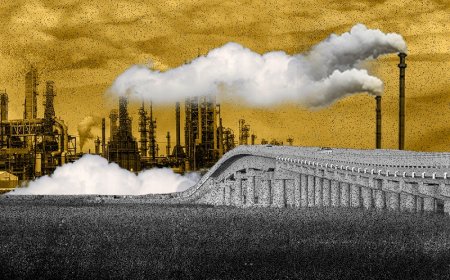
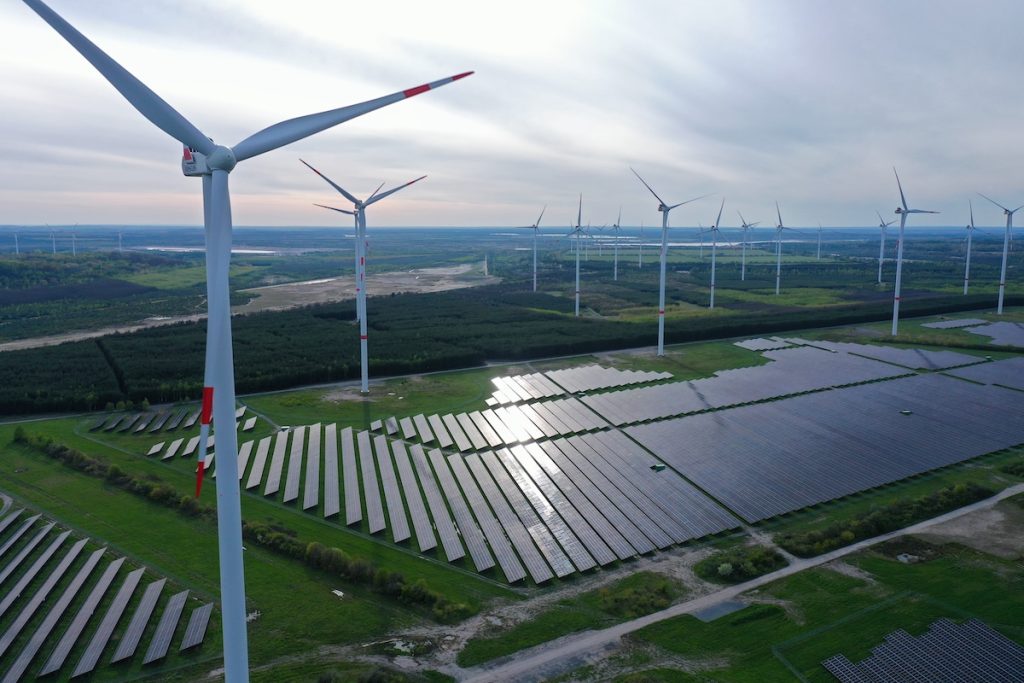
The global energy system is undergoing a structural shift that is no longer theoretical or aspirational. It is material, measurable, and economically grounded. Yet this shift is unfolding unevenly. The most striking divergence is the widening gap between the United States and the rest of the world. While Washington has moved sharply toward restricting support for wind and solar deployment, the global energy market has entered a period of expansion that is larger and faster than at any point in the past twenty years. These opposing trajectories illuminate a deeper transformation in international energy politics. Renewable energy has ceased to be a climate agenda and has become a foundation for industrial power.
Across the first half of 2025, renewable energy generation surpassed coal in global electricity supply for the first time, according to multiple independent data sources that track real-time power production. This is not an anomaly produced by favorable weather or temporary fuel shortages. It reflects a decade of investment in utility-scale solar, accelerated manufacturing capacity in Asia, declining levelized costs of energy, and heavy capital flows into grid-connected renewable projects. The shift began in China, which now installs more solar capacity each year than the entire world did only a few years ago. China’s manufacturing advantage is rooted in early state support, low capital costs, and an industrial ecosystem capable of producing photovoltaic components at volumes that cut global prices to levels no competitor can match. As a result, solar power has become the cheapest electricity source in many regions, regardless of subsidy.
India has followed this trajectory with a dramatic expansion of solar parks, transmission corridors, and storage pilots that are now reshaping its peak demand curve. Several Middle Eastern economies, long defined by hydrocarbons, have begun to invest in solar projects that approach baseload generation because the economics are simply more favorable than gas-fired power. Even oil exporters understand that cheap daytime solar allows them to reallocate valuable hydrocarbons for export. Latin American grids have expanded their renewable share through auctions that reveal the same fundamental reality. The cost advantage of renewables is no longer marginal. It is structural.
The United States stands apart. Policy reversals that began in early 2025 have led to the withdrawal of long-standing tax credits, the suspension of supportive regulations, and a tightening of federal review processes that effectively slow grid-scale project development. These choices reduce the pace of domestic renewable deployment but do not change the broader global trajectory. Instead they isolate the United States from the most rapid period of energy transformation in modern history.
What makes this reversal so consequential is that it intersects with several other strategic transitions. First, global electricity demand continues to rise, driven by data centers, electrification of industry, and demographic changes. Second, geopolitical instability has raised the stakes of energy independence, prompting countries to reduce their exposure to imported fossil fuels. Third, the rapid expansion of energy-intensive digital infrastructure, including artificial intelligence and robotics, has increased the need for low-cost, high-volume power. Countries investing heavily in renewables today are positioning themselves to capture future industrial capacity. The United States, by contrast, risks building an economy dependent on higher-cost fossil fuels while competitors scale industries around cheaper alternatives.
Deep trends in energy economics shape this divergence. The cost of solar energy has fallen by more than eighty percent over the last decade, a decline driven by manufacturing scale, efficiency improvements, and supply chain integration. The learning curve remains steep, with further reductions expected as China and India expand production and as new materials enter commercial use. The economics of wind power are more complex, with offshore wind facing cost inflation and project delays, but these challenges do not reverse the broader pattern. In markets with adequate planning and transmission, the long-run marginal cost of renewables continues to fall.
The international financial system reflects this reality. Global investment in renewables reached record levels in early 2025, even as US commitments weakened. Private capital follows cost curves rather than political cycles. Investors understand that the future value of electricity will be determined by the technologies able to produce it cheaply and consistently. Solar and wind fit that profile even when domestic politics produce fluctuations in support. This is why the International Energy Agency, after years of underestimating renewable growth, now projects that global renewable capacity will more than double by 2030. The projection may again prove conservative.
For Europe, the energy transition remains complicated by hydrological variability, inconsistent wind patterns, and uneven grid integration. Drought conditions in southern Europe have reduced hydroelectric output, and slow permitting processes continue to limit the pace of new wind installations. These constraints temporarily increased reliance on gas in 2025, but they did not signal a structural return to fossil fuels. Instead they exposed the need for grid modernization, storage investment, and cross-border coordination. Europe remains committed to reducing fossil fuel dependence, not only for climate reasons but for strategic ones. Russian gas is no longer a stable anchor for European security. The shift toward renewables is therefore understood as a geopolitical project as much as an environmental one.
The United States is therefore not diverging from a global climate agenda but from an emerging economic and geopolitical consensus. Energy security today is shaped by stable access to low-cost electricity, not by access to hydrocarbons. Industrial competitiveness depends on predictable power prices and the ability to expand supply rapidly. China’s industrial base is now closely tied to cheap solar electricity, giving it an advantage in manufacturing sectors that require vast amounts of power. Countries that replicate this model are building the infrastructure for future export advantages. The United States risks building the opposite.
This divergence becomes even more significant when considered alongside digital infrastructure growth. Artificial intelligence, semiconductor fabrication, and automated manufacturing require enormous electricity volumes. Data centers alone may drive a substantial share of new demand across the next decade. Countries that can generate abundant, inexpensive electricity will attract this industrial activity. Those that cannot will face higher costs, slower adoption, and a weaker position in the next wave of technological expansion. Renewables are central to this future industrial landscape not because they are environmentally desirable but because they are economically decisive.
The geopolitical consequences are already taking shape. China controls the majority of global solar supply chains and is expanding battery production at similar scale. India is positioning itself as an alternative manufacturing hub. The Middle East is exploring green hydrogen as a future export commodity. Europe is investing in domestic supply chains to reduce external dependence. The United States, once poised to lead this race, is instead slowing itself at the moment global acceleration has become inevitable.
No single political shift can stop the global transition. The forces driving it are structural: cost declines, technological maturation, and rising electricity demand. Countries that align themselves with these forces will shape the next global energy order. Countries that resist them will buy their technologies from abroad.
This is the deeper reality beneath the contrast between American retreat and global advance. The transition will continue regardless. The only question is which countries will use it to build economic resilience and which will face the consequences of standing apart from a market that is already writing the rules of the next industrial era.