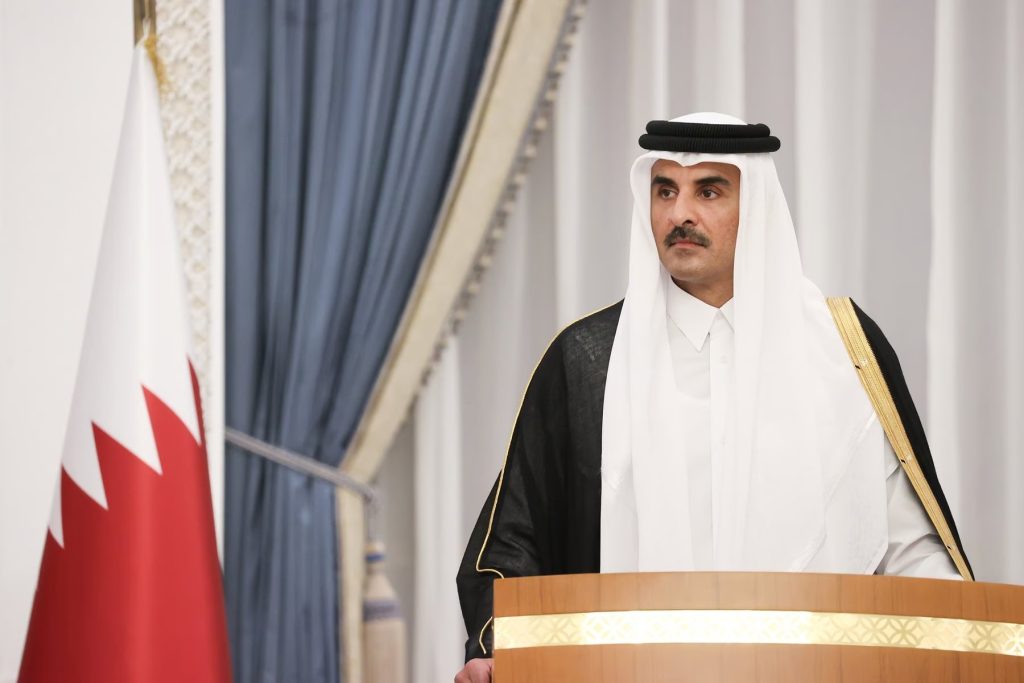
Qatar has begun to move from episodic engagement in Africa to a more ambitious and coordinated presence, with sub-Saharan states in central and southern Africa now occupying a visible place in Doha’s external economic planning. The tour of the region by Sheikh Tamim bin Hamad Al Thani, followed by Sheikh Mansour bin Jabor bin Jassim Al Thani’s investment roadshow and the sequence of peace-related initiatives in the Democratic Republic of Congo (DRC) and Rwanda, mark a qualitative shift. The pattern that emerges is a combined political and economic strategy: mediation in high-stakes conflicts paired with very large investment pledges in minerals, infrastructure, agriculture and services.
At the centre of this shift lies Sheikh Mansour’s series of memoranda of understanding across Botswana, Burundi, the DRC, Mozambique, Zambia and Zimbabwe. Publicly announced commitments now exceed 100 billion dollars, a figure that approaches half of Qatar’s annual GDP and roughly one fifth of its sovereign wealth fund assets. In several host countries the headline numbers are equivalent to a double-digit share of national GDP and, in Burundi’s case, reportedly larger than the entire economy. The deals are framed as multi-sectoral: established Qatari strengths such as aviation, tourism, energy and finance are bundled together with new ventures in mining, ports, rail, agribusiness and social housing. This portfolio reflects both Qatar’s own National Vision 2030, which seeks to reduce dependence on liquefied natural gas revenues, and African governments’ search for capital to fund post-pandemic recovery, infrastructure and industrialisation.
The credibility and implementation capacity of these pledges, however, remains uncertain. Al Mansour Holding is presented as a private conglomerate led by a member of the ruling family who has no formal government position, yet the sheer scale and geopolitical sensitivity of the commitments would be difficult to sustain without at least tacit support from the Qatari state and its sovereign wealth funds. The firm promises investments in sectors where Qatari public and private entities have little established track record on the continent, especially hard infrastructure, railways and large-scale mining. Since Qatar lacks the diversified construction and engineering ecosystem that its Gulf neighbours, particularly the United Arab Emirates (UAE), have cultivated over decades, it is almost certain that implementation will rely on consortia with non-Qatari partners, including European, Asian and perhaps even Emirati or Turkish firms.
Qatar’s Africa policy has, until recently, been defined less by capital flows than by soft power tools. Doha invested heavily in mediation and humanitarian diplomacy in Sudan, Chad and between Eritrea and Djibouti, while Al Jazeera helped project influence in information space. Investment was more cautious and concentrated in a few relatively predictable markets such as Côte d’Ivoire, Nigeria, Rwanda and South Africa, primarily through large state-backed vehicles like the Qatar Investment Authority, QatarEnergy and Qatar Airways. In the absence of acute pressure to diversify its gas-based economy, Qatari decision-makers avoided high-risk environments and refrained from the kind of continent-wide infrastructure push seen from the UAE.
The contrast with Abu Dhabi is stark. Emirati entities, above all International Resources Holding (IRH), DP World and Masdar, have built a dense network of assets in African ports, mining and renewable energy. IRH, controlled by UAE national security adviser Sheikh Tahnoon bin Zayed Al Nahyan, acquired a majority stake in Zambia’s Mopani Copper Mines in a deal valued around 1.1 billion dollars and has pursued mining ventures from Angola to Burundi. Masdar, in partnership with Zambia’s ZESCO, agreed on a two billion dollar programme of utility-scale solar power projects, in part to supply energy-intensive mining operations. At the same time, DP World has taken on port concessions in several coastal states, and Emirati defence firms have supplied armoured vehicles and other security assets to governments including the DRC. Saudi Arabia, while less expansive than the UAE, has also signalled interest in African minerals and pledged tens of billions at the first Saudi-Africa summit in 2023.
Qatar’s current activism has to be read against this background of intra-Gulf competition. Elites in Doha appear increasingly concerned that, if they do not move beyond mediation and symbolic projects, they risk being marginalised in a region that is rapidly integrating into the global energy transition through critical minerals, renewables and agri-food chains. Mansour’s investment roadshow, heavily concentrated in central and southern Africa, can be interpreted as a late but ambitious attempt to secure a place in this new economic geography before it is crowded out by Emirati, Saudi, Chinese and Western actors.
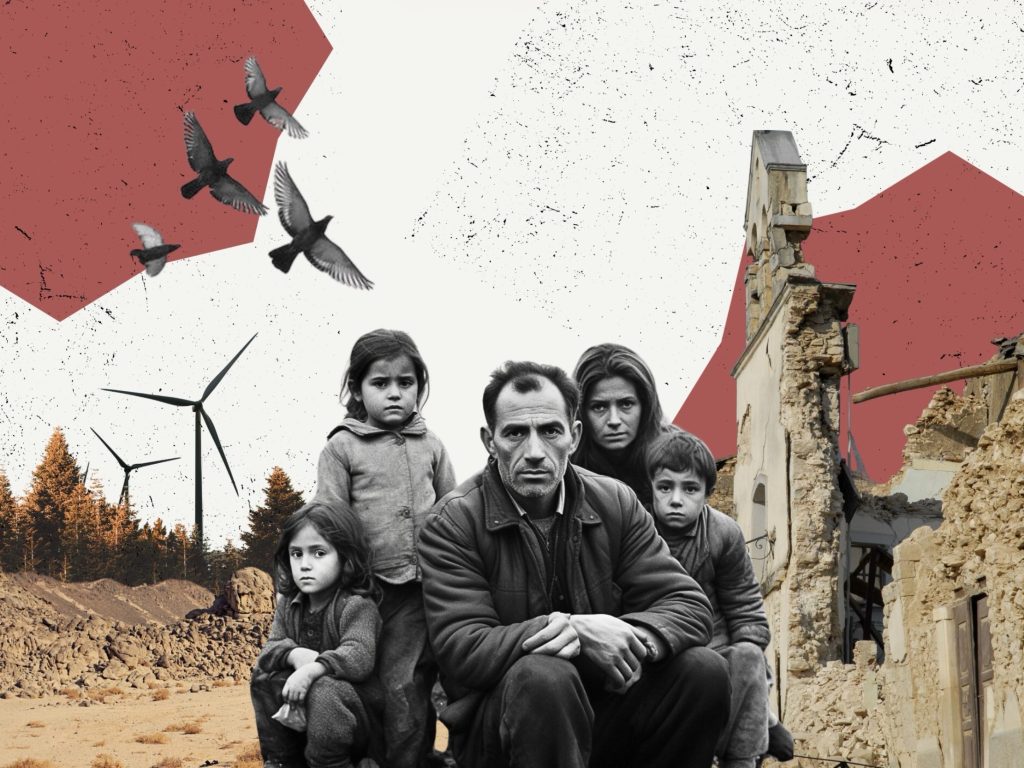
The DRC provides the clearest illustration of how Qatar’s political and economic tools are now being combined. Since 2024, Qatari diplomats have played a visible role in efforts to stabilise eastern Congo and manage tensions between Kinshasa, Rwanda and the M23 rebels. Doha has hosted multiple rounds of talks between the Congolese government and M23, facilitated declarations of principles and helped broker arrangements on ceasefire oversight. Qatar also took part in the December 2025 peace and economic agreement between the DRC and Rwanda signed in Washington under United States auspices, signalling that its mediation is embedded in a broader framework that links security and investment.
In parallel, Al Mansour Holding has concluded agreements worth around 21 billion dollars with the Congolese authorities. These cover agriculture, mining, banking, ports and humanitarian projects and are described in Kinshasa as the largest single investment commitment that the country has ever received. The configuration raises clear questions. On the one hand, the promise of large-scale Qatari investment could strengthen the peace process by creating new economic incentives for Congolese and Rwandan elites to de-escalate violence in eastern Congo. On the other, the overlap between mediation and commercial interests risks feeding perceptions in the DRC that external actors are seeking to “buy peace” in order to gain privileged access to strategic minerals and infrastructure.
Competition with the UAE heightens the stakes. Emirati interests in Congo are already substantial. IRH and allied companies have moved into the mining sector with a 1.9 billion dollar deal for copper and cobalt assets, while DP World has secured a concession for the country’s main seaport. Emirati defence suppliers have delivered more than one hundred mine-resistant armoured vehicles to the Congolese army, hardware that is being employed in the fight against M23 and other armed groups in the east. These transactions not only shield Emirati investments but also deepen Abu Dhabi’s role as a security partner, whereas Qatar comes to the table primarily as a mediator without comparable defence ties.
Qatar’s longstanding strategic partnership with Rwanda further complicates its posture in the DRC. Kigali has been a favoured African partner for Doha in aviation, hospitality and investment and is closely linked to Qatar Airways and other Qatari entities. This relationship has fostered trust between Qatari and Rwandan leaders, but it has also generated suspicion among Congolese actors, who view Rwanda as a key sponsor of M23. Qatar’s current effort to rebalance by pairing mediation with multi-billion investment commitments in the DRC can thus be interpreted as an attempt to reassure Kinshasa that Doha is not aligned with Kigali at Congo’s expense. How convincingly this message is received will influence the scope for Qatari projects in sensitive sectors such as mining and logistics.
Zambia is another crucial testing ground for Qatar’s sub-Saharan strategy. The country is central to the global copper and cobalt supply chain, both of which are vital for electric vehicles, batteries and grid infrastructure. Emirati firms have already secured footholds there: IRH’s stake in Mopani gives Abu Dhabi influence over one of Zambia’s flagship copper assets, while Masdar’s solar plans are intended to stabilise power supply for households and industry and simultaneously decarbonise mining operations. Qatar’s announced 19 billion dollar package with Lusaka, which reportedly includes the creation of a state-backed development bank, seeks to match or exceed this Emirati presence by offering a broader development proposition that spans financial intermediation, agriculture and infrastructure as well as minerals.
From Zambia’s perspective, the juxtaposition of Emirati and Qatari offers is an opportunity to diversify external partners and increase bargaining power. The government faces the dual challenge of resolving a debt overhang and reviving a capital-intensive mining sector while responding to domestic demands for jobs and social investment. The arrival of competing Gulf investors fits established patterns in African foreign policy making, where governments deliberately cultivate multiple patrons to avoid overdependence and to extract better financing terms, technology transfer commitments and local content obligations. The risk, however, is that opaque negotiations and the political use of state-linked investment vehicles entrench elite networks and reduce accountability over how these very large commitments are allocated and sequenced.
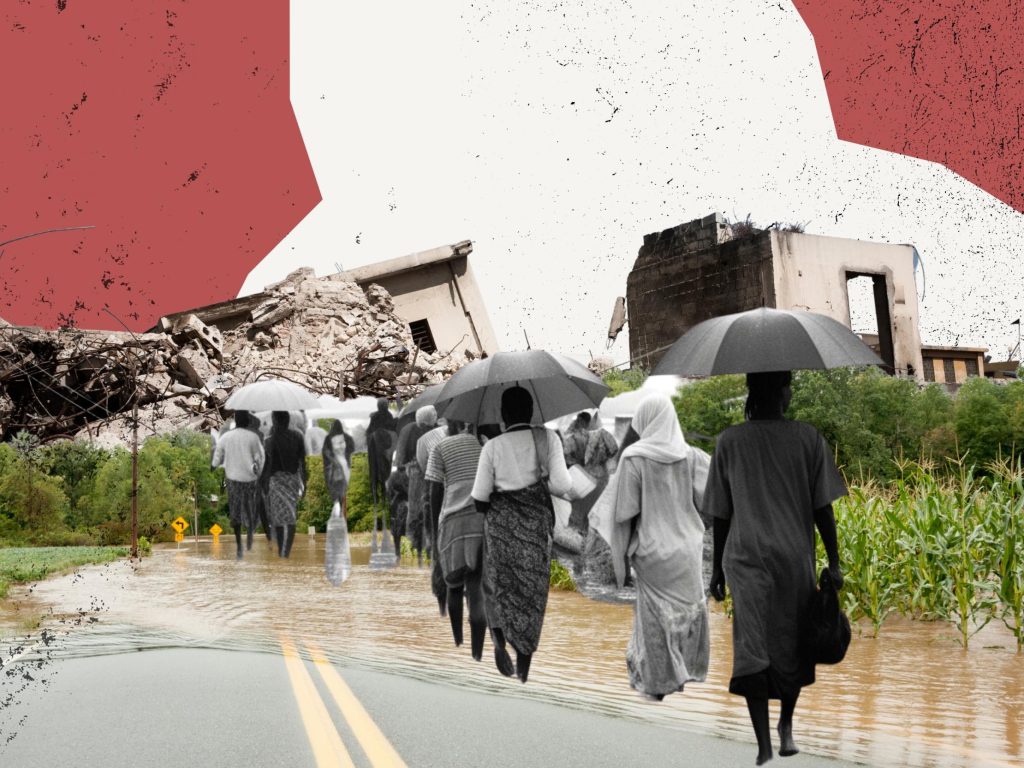
Smaller states such as Botswana, Burundi and Zimbabwe stand to be reshaped even more dramatically by Qatari pledges. Botswana’s 12 billion dollar agreement with Al Mansour Holding is framed as supporting economic diversification away from diamonds through investments in infrastructure, tourism and agriculture. For Burundi and Zimbabwe, promised volumes relative to GDP are even larger. This scale creates possibilities for rapid infrastructure build-out, but it also magnifies the macroeconomic and political risks if the projects underperform, generate limited local linkages or are heavily debt-financed. In fragile or authoritarian contexts, sudden inflows of Gulf capital can reinforce incumbent regimes and weaken incentives for domestic reform.
For Qatar, the new sub-Saharan posture offers several potential gains. It opens access to critical minerals and agricultural land that can hedge against volatility in gas markets and supply chains. It provides new outlets for Qatari construction, logistics and financial firms at a time when regional competition in the Gulf is eroding easy rents. It also broadens Doha’s diplomatic reach. Engagement in African conflicts and development agendas allows Qatar to present itself to Western and Asian partners as a constructive middle power that can deliver both political settlements and capital, at a relatively modest cost compared with its LNG revenues. Success, however, will depend on whether Doha can convert memoranda of understanding into actual projects that are financially viable, socially accepted and aligned with host country priorities rather than driven primarily by the optics of headline figures.
The intra-Gulf dimension will remain central. The UAE and Saudi Arabia have embedded themselves in African economies through a model that blends sovereign wealth funds, state-linked conglomerates and security partnerships. Qatar is entering an arena where those two neighbours already possess networks across ports, logistics corridors, food systems and mining belts. That does not exclude a division of labour or selective cooperation in some markets, but in sectors such as copper, cobalt, lithium and strategic ports, competitive dynamics are likely to intensify. In the Horn of Africa, this pattern is already visible in overlapping Emirati, Saudi and Qatari engagements; similar dynamics may now develop in the Great Lakes and southern Africa.
African agency will shape the trajectory of Qatar’s “sub-Saharan game plan” as much as decisions taken in Doha. Governments in Kinshasa, Lusaka, Gaborone or Bujumbura are experienced in playing external powers against each other, from Cold War alignments to present-day manoeuvring between China, the United States and Europe. The emergence of a Qatar-Saudi-UAE triangle adds further degrees of freedom. Used skilfully, that triangle can provide leverage to negotiate stricter environmental safeguards, stronger local content and more transparent revenue-sharing in extractive and infrastructure projects. Handled poorly, it can deepen rent-seeking, encourage opaque side-payments to political elites and entrench enclaves of extraction with limited developmental spillovers.
Ultimately, Qatar’s engagement in sub-Saharan Africa will be judged less by the volume of its pledges than by the quality and durability of the projects that result and by the degree to which its mediation efforts in places like eastern Congo are seen as genuinely supporting peace rather than underwriting access to resources. The present moment is still one of fluidity. Much of the 100-billion-plus portfolio remains at the level of framework agreements and memoranda, and many host countries are waiting to see how quickly and on what terms they translate into disbursed funds, jobs and infrastructure. Whether Qatar becomes a long-term economic and political actor in central and southern Africa, or whether this episode is remembered primarily as a short-lived wave of announcements, will depend on that conversion from promise to delivery and on Doha’s ability to navigate a crowded and competitive field of external powers.