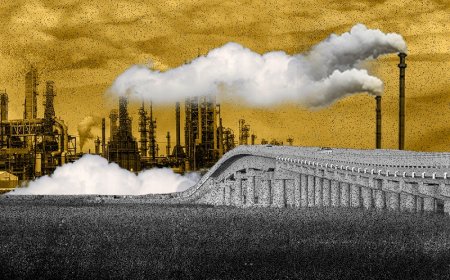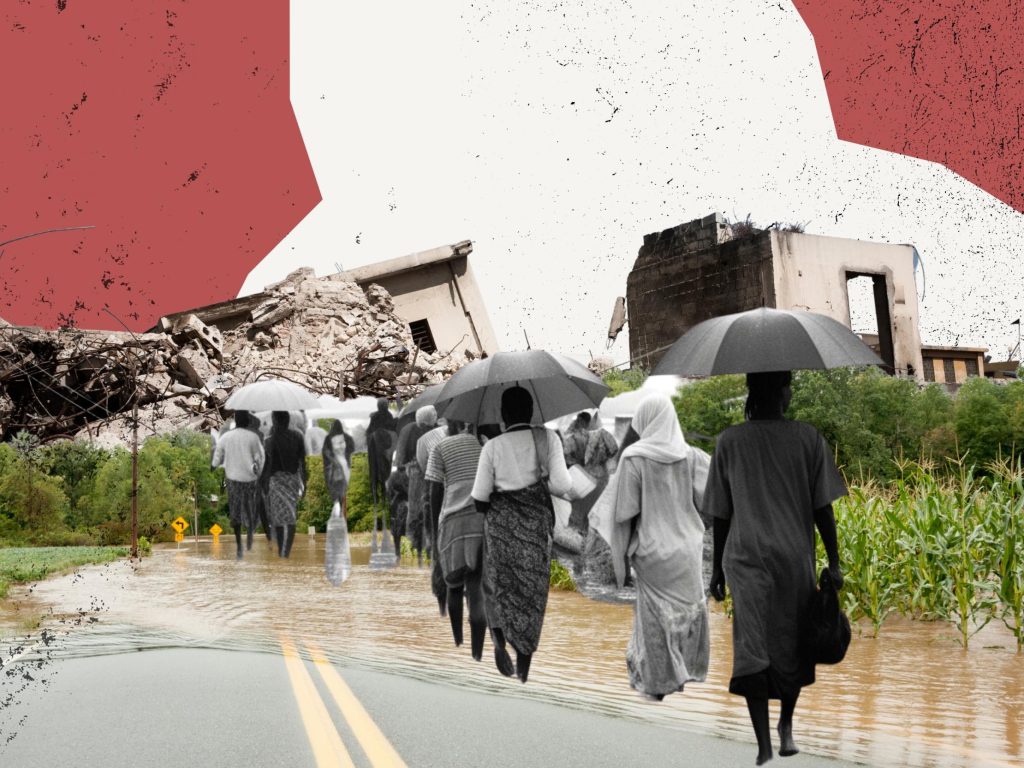
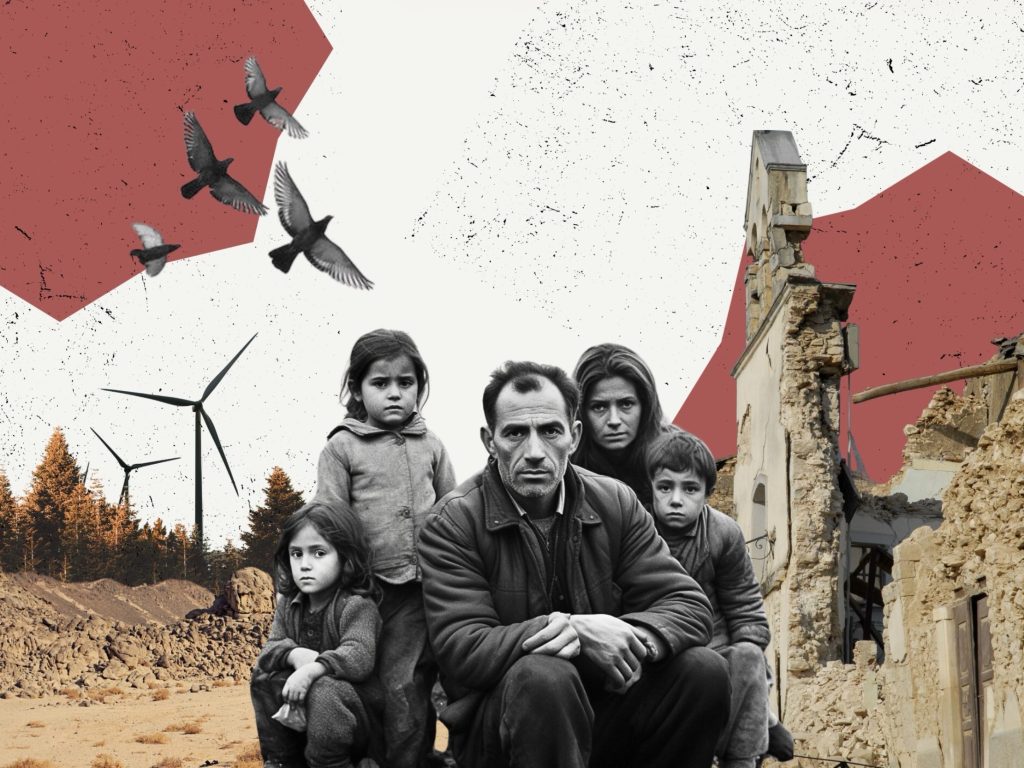
Security planners live surrounded by risk curves, scenarios and red folders, yet the most far reaching threat of this century still appears only at the margins of their own core documents. Climate change has entered the vocabulary of national security, but mostly as a footnote to traditional concerns. The result is a kind of split personality: governments acknowledge, in speeches and science-based fora, that warming beyond 1.5 degrees will reshape every aspect of collective safety, while their national security agendas still behave as if tanks, borders and terrorism exhaust the field.
This essay looks at that gap through the lens of national security and defence documents from nearly one hundred countries. These texts are not academic artefacts. They are the internal story a state tells itself about what matters most, and how it will allocate power, money and attention. When climate change only occupies a few paragraphs in a document that runs to tens of thousands of words, that is not a stylistic quirk. It is a political choice about priority.
Across the corpus, three patterns emerge. First, climate is now mentioned by the majority of states, roughly four out of five, which signals that silence is no longer an option. Second, the mentions are extremely thin. On average, only about three percent of the text is devoted to climate linked issues, and only a handful of states cross the ten percent mark. Third, the way climate appears is heavily shaped by each state’s strategic position: small island states treat it as a direct survival issue, a few Western governments are beginning to integrate climate through broader conceptions of security, and a large group of countries still frame it as a peripheral or purely socio economic concern.
Understanding why this is happening, and what to do about it, is not an academic exercise. As climate tipping points move from theoretical to empirical, national security systems that continue to plan as if climate were a side constraint, rather than a structuring condition, will compound harm. The question for security communities is no longer whether climate is a security issue, but why so many states are still dealing with it as if it were an add on, and how that can change without collapsing everything into a militarised discourse.
National security documents as mirrors of the state’s strategic mind
National security strategies and defence white papers form a distinct genre. They are not crisis playbooks, but they anchor medium term priorities. They set the tone for planning assumptions, capability development and inter agency coordination. They are, in practice, an index of what the state really deems worthy of the security label.
That is precisely what makes them useful for reading how climate is being treated. Climate change appears in international negotiations, in environment ministry plans, in development strategies. But unless it enters the core security documents with weight and specificity, it remains someone else’s problem, to be handled within the confines of environmental or economic portfolios.
The documents reviewed here are the most recent top level security or defence texts publicly available in 94 states. They vary in date, from the early 2000s to 2022, and in style. Some are tightly focused on military posture, others adopt an expansive definition of security that encompasses everything from cyber to organised crime to public health.
Despite these differences, they share two important characteristics. First, they are selective. No government can include every possible risk. If a topic appears in a national security document, it has already cleared a significant threshold of perceived importance. Second, they are agenda setting. Even if they are drafted in committees or written to satisfy domestic politics, once adopted they become a reference for bureaucracies that actually allocate resources and design operations.
Looking at climate through this lens allows a simple but sharp question. Given what we know about the scale and irreversibility of climate related damage, why does it receive so little textual space in documents that are supposed to codify the state’s highest security priorities?
Climate is on the agenda, but mostly at the edge
The first striking finding is that climate is no longer absent. Using a broad reading of climate related language, from direct references to climate change to mentions of environmental degradation, natural disasters, warming, sea level rise and related resource pressures, roughly 84 percent of the surveyed states mention climate or environment in their national security or defence document.
On the surface, this looks like a success story for those who have pushed climate up the security agenda. Twenty years ago, environment was still widely treated as an externality. Today, only a minority of states maintain complete silence. The problem lies not in the presence of climate, but in its weight.
When we look not just at whether climate appears, but at how much of the document is devoted to it, the picture becomes more sobering. On average, climate related content occupies just over three percent of the text. The median is even lower, around two percent. At the top of the distribution, only five states dedicate ten percent or more of their core security document to climate linked issues. One state nears a fifth of the text, two small island developing states are in the mid teens, and two large Western powers hover at or just above ten percent. The majority of states fall in the one to three percent band.
In other words, climate has entered the room, but it is still standing by the door.
The distribution matters. A state that devotes twenty percent of its security text to climate is clearly making a different strategic statement than one that gives it a page out of fifty. The former is saying that climate is one of the organising problems of its security posture. The latter is signalling that climate is acknowledged, but subordinate, to the traditional concerns that occupy most of the document.
This is not a matter of rhetoric alone. Textual weight tends to correlate with bureaucratic weight. What occupies pages in security doctrine often translates, over time, into dedicated desks, inter agency mechanisms, training, scenarios and budget lines. What appears only in passing struggles to acquire institutional footholds.
Three families of climate security framing
Behind the numbers lie different political economies of security. A closer reading of the documents suggests three broad families of framing.
The first family is composed of states that either ignore climate entirely or treat it in a way that is effectively negligible. This group includes large powers and smaller states. Their documents focus overwhelmingly on traditional threats: rival states, territorial disputes, terrorism, armed non state actors, nuclear proliferation, internal instability. If climate appears at all, it is confined to single sentences about disaster response, or to environmental protection efforts framed as sectoral tasks for the armed forces, such as preventing marine pollution or greening military bases.
In these texts, climate is not treated as a generator of strategic risk in its own right. It is not tied to conflict patterns, regime stability, resource competition or migration beyond occasional, passing remarks. National security, in this world, remains a question of border defence, regime survival and counter terrorism.
The second family includes states that recognise climate as a risk, but primarily through an adaptation lens. Here, climate change is seen as a source of more frequent disasters, infrastructure stress and humanitarian emergencies. Armed forces are tasked with improved disaster response, logistics, evacuation and reconstruction support. Security documents discuss the need for better early warning, resilient infrastructure, and civil protection, sometimes linking these to international cooperation.
This is a step forward from ignoring climate altogether, but it keeps climate in the register of response rather than transformation. The state is assumed to remain fundamentally the same; climate is simply one more stress that the existing apparatus must help manage. There may be reference to global climate justice or to the unequal distribution of impacts, yet the core security narrative still revolves around other threats.
The third family, much smaller, treats climate as both a direct security threat and a driver of other risks. In these documents, climate change appears not only in the sections on disasters or environment, but across the text, intertwined with energy security, economic stability, regional conflict and public health. These states explicitly acknowledge that climate change can be existential, either for their own territory, in the case of low lying islands, or for the broader international order.
Two small island developing states stand out in this group. Their security documents describe climate change as a long term threat to national survival, sovereignty and territorial integrity. Sea level rise, coral bleaching, storm surges and ecosystem loss are framed not as environmental issues but as questions of whether the state itself will remain habitable. Traditional military threats are described as distant or improbable compared with the certain progression of climatic impacts. These countries also adopt a leadership role, positioning themselves as advocates for other vulnerable states in international forums.
Among industrialised states, a few have begun to write climate into the heart of their cross sectoral security approach. One European country, for instance, devotes over a fifth of its security document to climate linked issues, connecting warming to energy dependency, rare earth supply chains, migration, health and geopolitical instability. Another frames its foreign and security policy as a vehicle for accelerating decarbonisation at home and abroad, emphasising its efforts to phase out fossil fuels and to push allies toward more ambitious climate action, while warning that failure will translate into sharpened security crises.
The United States, in its latest strategic document, explicitly refers to climate change as the greatest shared problem and potentially existential. Yet even here, the treatment is ambiguous. The narrative oscillates between climate as a field where Washington seeks to exercise leadership and climate as a backdrop to renewed strategic competition with China and Russia. Democracy versus autocracy is the central storyline, with climate layered on as one of several arenas where that contest will play out.
These three families are not rigid categories. States can move between them over time, and their internal politics often contain elements of several. Nevertheless, they help to explain why the average level of climate securitisation remains so low. For most governments, climate is either outside the core security frame or sits on its outer edges.
Why the gap persists between climate science and security doctrine?
Given the depth of evidence on climate impacts, the persistence of this gap cannot be explained by lack of information. Security ministries are not isolated from their own meteorological, environmental or economic agencies. The reasons lie elsewhere, in the structure of national security institutions and the politics that surround them.
One obstacle is temporal. National security elites are trained in short and medium term thinking. They follow electoral cycles, they manage crises that unfold over days and months, they plan capabilities over a decade or two. Climate operates on longer rhythms, yet with effects that are already measurable. This mismatch encourages a tendency to see climate as something that will matter later, even when the text acknowledges current damage. When climate induced floods or fires do appear, they are often filed under disaster management, not under the strategic section that sets priorities.
A second obstacle is distributional. The most acute climate harms so far have fallen on countries and populations that already sit at the margins of global power: small islands, least developed states, marginalised communities. Major security actors have been slower to treat climate as a core threat because their own capitals have not yet experienced systemic climate disruption. Even when documents acknowledge that vulnerable groups are hit hardest, this recognition rarely translates into repositioning climate at the centre of national security agendas.
A third factor lies in professional culture. Military and intelligence organisations are built around a repertoire of familiar threats: opposing armies, insurgent groups, terror networks, rival great powers. Climate change does not fit easily into that repertoire. It has no enemy command structure, no identifiable adversary that can be deterred or defeated. It is both everywhere and nowhere. Incorporating it seriously requires broadening the concept of security while resisting the temptation to squeeze climate into a purely military frame. Many institutions are uncomfortable with this stretch.
A fourth reason is political competition. In practice, national security documents are negotiated texts, shaped by domestic coalitions. Powerful industries that depend on fossil fuel extraction or heavy consumption have an interest in avoiding the full securitisation of climate, since that would legitimise more radical shifts in policy. Political actors who rely on traditional patriotic narratives may also be wary of redefining security around an apparently abstract environmental process rather than visible human adversaries.
Finally, there is a conceptual barrier built into older security thinking itself. Classic definitions of security focus on the absence of threats, often conceived as hostile actors. When the referent object is the state, threats are usually other states or organised groups. Climate change cuts across that map. It produces damage rather than organised hostility. If we define security as lowering the probability of severe damage to valued things, climate sits at the centre. If we stick to older ideas of hostile intent, climate remains a secondary issue.
Taken together, these factors help explain why so many states have settled on a halfway house. Climate is recognised, but not fully elevated. It is dealt with through adaptation and disaster response, but not yet treated as a driver that can reshape conflict patterns, fiscal stability, migration, legitimacy and even the physical viability of the state.
The risks of an adaptation only climate security
Security communities often claim that their job is pragmatic, not ideological. The tendency to frame climate mainly as a disaster management issue might appear pragmatic: armed forces handle floods and storms, shore up infrastructure, assist with evacuations. Yet an adaptation only approach carries several hidden dangers.
First, it normalises permanent crisis response. If climate is primarily a source of more frequent emergency events, then militaries and civil protection agencies will simply be expected to work harder, more often, under more strain. There is very little in national security documents that seriously questions whether this model is sustainable as events accumulate and interact. A security posture that assumes endless adaptation without mitigation is, in effect, planning for a world in which damage escalates without structural change.
Second, it obscures responsibility. Treating climate impacts as natural disasters downplays the human decisions that created and perpetuate the crisis. It allows security planners to focus on heroic response and resilience stories while leaving the drivers of emissions to other arenas. This division becomes particularly stark in states that rely heavily on fossil fuel exports or intensive resource extraction, where security documents proudly describe the armed forces’ role in disaster relief without confronting the fact that national economic structures are amplifying the crisis.
Third, it risks militarising social fault lines. When climate impacts exacerbate resource scarcity, food insecurity or displacement, a purely adaptive security response often leans on policing, border control and surveillance to manage the fallout. Without a parallel shift in economic and social policy, security institutions may be drawn into managing protests, unrest and cross border movements linked to climate stress, reinforcing narratives that criminalise affected populations instead of addressing underlying vulnerabilities.
Fourth, it offers no plan for tipping points. Gradual warming has already produced measurable changes. Crossing thresholds in ice sheets, ocean circulation or major ecosystems will have non linear effects. An adaptation only security posture is poorly suited to sudden shifts in sea level trajectories, regional monsoon patterns or wildfire regimes. These would not be discrete disasters, but step changes in baseline conditions. Yet very few national security documents even mention tipping behaviour, let alone integrate it into their risk models.
For these reasons, a more substantive integration of climate into security thinking cannot stop at disaster management. It has to engage with mitigation, with global decarbonisation and with the political economy of transition.
What a serious climate security agenda looks like
The few states that devote substantial portions of their security documents to climate provide some clues as to what more serious integration might mean.
Small island states are the clearest cases. For them, climate change is not a backdrop. It is a question of national existence. Their security texts describe, often in concrete and local terms, how sea level rise will erase agricultural land and contaminate freshwater, how reef degradation undermines fisheries and coastal protection, how increasingly intense storms threaten critical infrastructure and settlements. They explicitly use language of existential danger. They treat military threats as secondary and place climate at the centre of long term strategic planning.
These states do not simply portray themselves as victims. They also claim a political role as advocates for other vulnerable countries, insisting that global security debates must recognise that their survival depends on decisions over emissions taken elsewhere. In doing so, they quietly reframe security from a club dominated by large powers into a field where those with least material might claim moral priority.
Among larger economies, serious climate integration takes different forms. One European country, for instance, ties climate to energy, industrial and geopolitical strategy. Its security document explains how decarbonisation will alter patterns of dependency on oil, gas and critical minerals, and how the scramble for rare earths and other inputs needed for renewable technologies could shift influence toward particular regions. It warns that climate induced instability will increase pressure on European borders, that droughts and crop failures elsewhere will reverberate through markets, and that pandemics exacerbated by environmental disruption will strain health systems. Climate is not tucked into a separate section. It threads through discussions of trade, migration, defence posture and alliance politics.
Another advanced state uses its strategy to advertise its own domestic climate policies as security choices. Phasing out fossil fuel extraction, building renewable energy hubs and enacting ambitious emissions targets are cast not only as environmental or economic moves but as contributions to national and international security. The document argues that demonstrating feasibility and gaining first mover advantages in green technology help shift global pathways, and that working with allies to raise collective ambition is itself a security strategy.
These examples also reveal tensions. Ambitious climate language often coexists with continued reliance on fossil fuel infrastructure, or with alliance commitments that lock in high emitting military practices. Yet they mark a shift from climate as an external problem to climate as part of the core narrative of what national security is for.
Avoiding a purely militarised climate security
A recurring fear, especially among climate justice advocates, is that securitising climate will simply mean using military and intelligence tools to protect existing privileges against the consequences of warming. There is a risk that climate security becomes code for stricter border regimes, more controls on migration, expanded surveillance, and new justifications for interventions framed as managing instability in climate affected regions.
That risk is real, particularly in states where security establishments already lean toward hard power responses to complex social problems. But the alternative cannot be to keep climate outside the security field altogether. Doing so leaves climate policy vulnerable to the vagaries of electoral cycles and sectoral budgets, while the full weight of the state is still mobilised around narrower military concerns.
The challenge is to redefine climate security in a way that aligns with ecological realities and with a broader, more inclusive concept of whose security counts. That means several things.
It requires acknowledging that the primary way to reduce climate security risks is to reduce emissions and to build resilient, low carbon societies, not simply to reinforce the capacity to respond to climate disasters or to contain their fallout. Mitigation is not an environmental luxury. It is a security necessity.
It also means foregrounding the security of vulnerable populations, both within and beyond national borders. If rising seas, heatwaves and crop failures are pushing people into precarity, then their safety is part of any honest account of security. This implies a turn toward ecological security thinking that balances state interests with planetary and human needs, while keeping a clear view of the political conflicts that define climate negotiations.
Finally, it calls for transparency about the trade offs involved. Serious decarbonisation will disrupt sectors, regions and established power bases. National security communities can play a role in mapping these transitions and in identifying where unmanaged change could itself generate instability. But they should avoid becoming guardians of the status quo under a green label.
Practical implications for national security systems
For policy institutes and security planners who accept that climate should occupy more than a few paragraphs in strategic texts, the question becomes how to embed it without falling into either minimalism or militarisation.
One pragmatic starting point is to change what is measured and reported. If national security documents are to treat climate as a core issue, they should provide more than general statements. They can include, for example, clear assessments of domestic exposure to specific climate hazards, such as heat, floods, fires or sea level rise, as well as analysis of how these intersect with critical infrastructure, military installations and key economic hubs. They can map external climate risks that matter for the state, such as climate impacts in regions linked through trade, migration or alliances.
Another step is to rework scenarios. Wargaming and strategic foresight exercises often revolve around conflict between states or encounters with non state armed groups. Integrating climate means building scenarios where climatic tipping points or cascading disasters are central drivers. How would a prolonged disruption of a major monsoon system affect regional stability and food security? What happens if multiple megafires coincide with a financial shock? Security institutions that regularly practice for such futures are more likely to adjust posture and investments.
Inter agency structures will also need to adapt. Climate security is inherently cross cutting. Foreign ministries, defence departments, environment agencies, finance ministries and domestic security services all hold pieces of the puzzle. A national security strategy that takes climate seriously will describe mechanisms that bring these actors together with authority, not simply offer vague statements about coordination.
Budgeting is another barometer of priority. If the only climate related spending connected to security documents goes to disaster response units within the armed forces, this sends a specific signal. If, by contrast, security strategies are used to push for investment in resilient infrastructure, early warning systems, climate informed diplomacy and decarbonisation in sectors relevant to national safety, then climate really has moved toward the centre.
Finally, there is a need for external scrutiny. National parliaments, civil society and independent research institutes can use the content of security documents as a lever. When climate occupies less than a page in a hundred page strategy, that fact can be used to question ministers about priorities. Conversely, when climate language expands, it should be examined for substance. Are emissions reductions and just transitions being pursued, or is climate simply a new justification for old security reflexes?
Rewriting the narrative of security
Behind all these institutional adjustments lies a deeper question: what is national security for in the twenty first century.
If security is defined narrowly as protecting state sovereignty against armed challengers, climate change will remain peripheral. It does not fit the template. It crosses borders without intent. It undermines safety through physical processes rather than legible acts of aggression. Under that view, it is tempting to treat climate as either an environmental issue to be parked elsewhere, or as a multiplier of existing threats but never as a reshaper of the field itself.
If, instead, security is understood as reducing the probability of severe damage to people, institutions and ecosystems that societies value, then climate occupies a central place. The current trajectory of warming threatens to produce precisely such damage at scales that dwarf many traditional threats. This does not erase the importance of war, terrorism or interstate rivalry. It does, however, force a reprioritisation of what counts as existential.
National security documents are one place where this reprioritisation can start to become visible. They can be used to publicly recognise that unchecked climate change would make many other security debates moot. They can spell out, in concrete language, how the state will integrate climate science into defence, diplomacy and internal planning. They can admit that, in some cases, the greatest threats to national security stem not from hostile armies, but from the accumulated consequences of domestic and global choices about energy, land use and consumption.
At present, most states are not using these documents in that way. Climate is acknowledged, but usually treated as a secondary issue. The gap between climate science and security doctrine remains wide.
Closing that gap is not only a matter of intellectual coherence. It is a practical necessity. As climate impacts sharpen, security systems that remain focused on yesterday’s threats will find themselves constantly surprised, perpetually reactive, and increasingly implicated in managing the human fallout of decisions made elsewhere. Those that begin to treat climate as central, and to align security practice with ecological reality, will be better placed to navigate a hotter, more unstable world.