
The politics of rare earths have moved from the footnotes of industrial policy to the centre of strategic debate. For most of the Cold War and the early post Cold War period, the United States was able to assume that access to these obscure elements would be assured whenever needed. That assumption no longer holds.
China now dominates the rare earth system not simply because it has deposits, but because it commands the stages of production that others neglected. The crucial point in the chain is not the mine. It is the complex chemistry that turns mixed concentrates into high purity oxides, metals, alloys, and finally permanent magnets. Over time, China built up those midstream capabilities while other countries dismantled laboratories, let technical expertise fade, and allowed processing know how to migrate abroad.
Today the numbers tell their own story. China contributes only a bit more than half of world rare earth mine output, yet it is responsible for the overwhelming majority of separation and refining. In heavy rare earth processing its share is virtually total. Even the United States, now the second largest producer by volume thanks to Mountain Pass in California, has been sending most of its concentrate across the Pacific for separation and further processing.
When Beijing chooses to turn that position into leverage, it can do so quickly. It has already tested the instrument, cutting exports to Japan during a maritime dispute more than a decade ago and later restricting key technologies and heavy rare earth exports to slow the emergence of rival midstream facilities. The recent decision to bar the export of some processing technologies made clear that China understands its advantage lies in applied chemistry and industrial systems as much as in geology.
In this environment, calls to diversify mine supply, while necessary, are not sufficient. Opening new pits that still ship their output back to Chinese processors merely deepens dependence. If the United States and its allies want real resilience, they will have to tackle the far more difficult task of reconstructing the midstream. That is expensive, technically demanding, and environmentally troublesome. It cannot be done everywhere. It makes sense only if processing is concentrated in a limited number of well chosen hubs that can reach meaningful scale.
The question is where those hubs should be, what characteristics they require, and how to blend national industrial strategies into a coherent allied network that can credibly compete with China’s entrenched position.
Rare earths as a strategic choke point
Rare earth elements sit inside fighter jet engines, sonar systems, precision guided munitions, and advanced radars. Each F 35 carries hundreds of kilograms of rare earth content when one considers all the magnets, sensors, and actuators on board. Destroyers and submarines depend on them in even larger volumes when one accounts for propulsion, weapons handling, combat systems, and power electronics.
Civilian use is no less pervasive. Rare earths appear in MRI machines and medical imaging equipment, in catalytic converters and electric drivetrains, in wind turbines, smartphones, and laptops. Wherever a compact, powerful magnet is needed, or a scintillating crystal or specialised alloy, these elements are likely to be lurking in the bill of materials.
This wide scope of applications aggravates the impact of disruption. A shortage of high purity neodymium, praseodymium, dysprosium, or terbium does not simply hit one niche product. It ripples through several high value industries at once, affecting defence readiness, health systems, energy transition projects, and consumer technology companies.
China has repeatedly demonstrated both the capability and the willingness to use raw material dominance as an instrument of statecraft. The earlier embargo on shipments to Japan was a regional signal. The more recent global restrictions on technology transfers and heavy rare earth exports are more systemic. They effectively slow down the construction of alternative midstream capacity and keep others dependent on Chinese chemistry, even where the ore comes from elsewhere.
The striking fact is that China’s rare earth dominance is not an accident of nature. It is the product of deliberate policy choices. Chinese firms bought foreign assets at generous premiums, overpaying when necessary to secure feedstock. The state tolerated environmental damage that would have been unacceptable in most industrialised countries. Research institutes worked in tandem with companies to refine solvent extraction techniques and other complex separation processes. Over years, a dense ecosystem of firms, engineers, and regulators formed around this midstream core.
The United States once had something similar. The Ames Laboratory and related institutions were centres of excellence in rare earth chemistry and metallurgy, seeded by wartime research and sustained by defence priorities. They trained generations of specialists, supplied high purity materials to researchers, and catalysed early magnet technologies. As manufacturing moved abroad and cheap Chinese material entered the market, the domestic base atrophied. The know how that underpinned separation, refining, and magnet production went with it.
Recreating that base requires more than reopening a mine. It demands places where chemistry, engineering, finance, regulation, and logistics come together at scale. That is the logic behind rare earth processing hubs.
Why hubs rather than scattered projects
A processing hub is more than a plant. It is a cluster of facilities and capabilities concentrated in a particular geography that can handle multiple stages of the chain from concentrate through separated oxides and metals to magnet production. In such a location there are specialist engineers, analytical labs, waste management systems, logistics providers familiar with hazardous materials, regulators used to supervising complex industrial operations, and often universities and research institutes focused on relevant topics.
Concentration brings several advantages. It creates economies of scale, both in the use of capital intensive equipment and in the management of environmental burdens. Permitting can be streamlined when authorities become familiar with the technologies involved and can design regulatory frameworks that fit their specific risks rather than reinvent the wheel for each project. Service providers, from chemical suppliers to maintenance contractors, can justify investment because there is a critical mass of demand in one place. That in turn reduces operating costs for each facility within the hub.
Hubs are also where innovation happens. When researchers and operators work in proximity, problems encountered in daily production quickly become topics for targeted research. The historical experience of Ames shows how public funding for rare earth research can translate into breakthroughs in separation methods and downstream applications once there is a community of practice to absorb and apply new knowledge.
Trying to build parallel, small scale separation plants in many countries risks repeating the mistakes that left the field to China. Each project struggles with high fixed costs, limited learning, and difficulty attracting specialised staff. Few reach the throughput needed to compete with established Chinese facilities that run several large solvent extraction lines around the clock.
Of course, concentration has risks. Communities near hubs carry significant environmental and health burdens if waste streams are not properly treated. If political conditions change in the host country, access to hub capacity could be jeopardised. For these reasons, a resilient allied strategy cannot rely on a single hub but should instead cultivate a small network across friendly jurisdictions. The point is not to avoid concentration altogether, which is impossible given the economics, but to distribute it across several well chosen sites.
What Washington is attempting to build
In recent years United States policymakers have moved from diagnosis to construction. The Department of Defense has placed rare earths firmly in the category of materials whose supply chains must be reshaped, even at significant fiscal cost. The declared aim is to be able to go from mine to magnet inside a friendly ecosystem within a few years, rather than rely on Chinese midstream services.
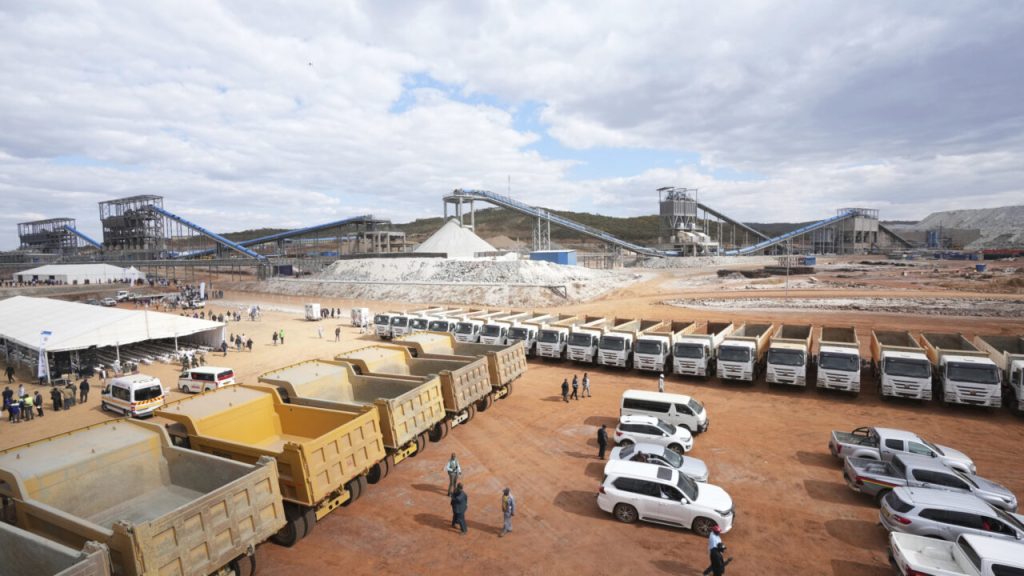
To that end, the Pentagon has drawn on the Defense Production Act and other instruments to support companies building separation and magnet facilities. Several hundred million dollars have been committed to projects that span light and heavy rare earth processing and magnet manufacture. One can already see a domestic hub forming, especially in Texas, where new separation plants and magnet factories are under construction in several locations, with Mountain Pass in California providing a significant portion of the ore.
The recent agreement with MP Materials is particularly revealing. The United States government is not merely providing a grant or loan for a plant. It is buying equity, offering a large loan for expansion, establishing a guaranteed price floor for key magnet metals, and committing to purchase the entire output of certain facilities for defence uses. That bundle of support addresses three layers of risk at once.
First, it gives the company capital to invest in complex chemistry and metallurgical lines that will not be profitable immediately. Second, it offers insurance against price volatility by stabilising income even if global neodymium and praseodymium prices fall below levels that would otherwise make the business unattractive. Third, it signals to investors and other potential customers that there will be a stable base load of demand over time, anchored by defence procurement.
This approach recognises a harsh commercial reality. Rare earth markets can be volatile and are prone to periods of oversupply in which prices collapse. China has used this dynamic to its advantage, tolerating low margins or losses for extended periods while competitors elsewhere buckle. For a new Western midstream industry to survive, it will need some shelter from such swings while it scales up and learns. A public price floor and long term offtake can provide that shelter without locking in rigid central planning.
Yet the domestic hub initiative has limits that must be openly acknowledged. Mountain Pass is rich in light rare earths but offers far fewer heavy elements, which are crucial for high temperature magnets. Current domestic production volumes are tiny compared to Chinese output. Even the most optimistic ramp up projections have United States magnet factories producing only a fraction of global demand for years to come.
That is why any serious strategy must combine domestic build out with international hubs. The objective is not autarky, but a diversified, allied network that reduces the leverage of any single supplier.
International partnerships as the second leg of the strategy
Washington has already begun to weave rare earth diplomacy into broader relationships. In the Gulf, United States officials and firms are working with Saudi Arabia to explore the creation of a fully integrated mine to magnet chain that would draw on Saudi geology, cheap energy, and investment capital, while tying the output into Western defence and industrial supply chains.
Saudi Arabia has signalled that it does not wish to remain only a source of crude and petrochemicals. Under its national development strategy it is investing heavily in mining and materials processing, aiming to become one of the top mineral producers and processors globally within the next decade. Rare earths fit that ambition, particularly because the kingdom can offer something few competitors can match: vast quantities of very low cost electricity, increasingly from renewable sources. For an industry where separation and calcination stages consume huge amounts of power, that matters.
In the North Atlantic, the United States has shown renewed interest in Greenland and other Arctic or sub Arctic jurisdictions with significant rare earth deposits. Financing commitments from US institutions to projects in southern Greenland are an early sign that Washington is willing to support overseas mining ventures where the output is likely to feed allied processing facilities rather than Chinese plants.
Elsewhere, Japan has long sought to diversify its rare earth sources after being on the receiving end of Chinese export restrictions. It has invested in projects in Vietnam and other regions, often pairing equity capital with technical support. Australia and the United States have deepened their collaboration in the sector, with Australian companies building separation plants on United States soil and United States agencies backing Australian refineries that commit to offtake arrangements with like minded countries.
These diplomatic strands are not yet woven into a coherent hub strategy, but the outlines are visible. The United States cannot and should not try to own every stage of the chain physically. What it can do is act as the organising centre for a loose coalition of countries that together have the geological resources, capital, industrial capabilities, and political will to challenge Chinese dominance.
What makes a viable processing hub
Not every country with a rare earth deposit or a political declaration will become a processing centre. Hubs need a combination of characteristics that are hard to assemble. At least ten factors matter.
First, sustained government commitment. Rare earth processing plants are expensive, slow to permit, and exposed to policy risk. Without clear, patient backing, private investors will be wary. This support can take the form of loans, guarantees, tax credits, or direct equity, as well as regulatory reforms that shorten permitting timelines while preserving environmental safeguards. Countries such as the United States, Australia, Saudi Arabia, and Japan have already put real money and legislative effort behind this sector. Others make speeches but have yet to align budgets and regulations.
Second, commercial ties with companies that already operate in rare earths. Building a trained workforce and sophisticated process control systems from scratch is difficult. Where domestic firms partner with experienced players, learning accelerates. Examples include Australian companies working with United States agencies on refineries that will supply Western markets, or United States based firms collaborating with Saudi mining entities to design integrated value chains. These partnerships create shared interests that go beyond a single project.
Third, proximity to feedstock. Shipping heavy concentrates across oceans is not cost free. In some bulk mineral markets transport can be more expensive than extraction. Processing hubs that sit within reach of several mines, whether in their own territory or nearby regions, enjoy a structural advantage. Here geology is kind to a select group of countries. Australia, Brazil, India, Saudi Arabia, Canada, and Vietnam all have significant rare earth potential, though of different compositions. Some are rich in light elements, others in heavy ones. An allied strategy will need to match resource types to processing lines in an intelligent way.
Fourth, infrastructure. Separation plants do not float above the physical world. They need roads, railways, deep water ports, power lines, waste treatment systems, secure storage, and access to large volumes of clean water. Countries with mature industrial infrastructure can move faster and at lower cost than those where each project must build its own supporting roads and utilities. In this respect, Australia, Canada, Japan, the United States, and parts of Saudi Arabia are well placed. Some African and Latin American jurisdictions with promising geology lag behind, which does not disqualify them but raises costs and timelines.
Fifth, energy availability and price. Rare earth processing is energy hungry. It also benefits from stable electricity supply, since frequent outages can ruin batches and damage equipment. Jurisdictions with abundant low cost power, especially from renewables, can undercut competitors. Saudi Arabia stands out here, with ultra low cost solar and wind projects already in operation and more in the pipeline. Canada and some parts of Australia also combine strong generation capacity with relatively competitive prices, especially where hydropower is available.
Sixth, the ease of doing business. Investors can live with technical risk; they are less tolerant of opaque regulations, arbitrary licensing decisions, and ever shifting tax regimes. Long permitting delays have already slowed projects in several countries. In extreme cases, the time from application to production can stretch toward two decades, which is difficult to square with urgent strategic timelines. Countries that can offer predictable, transparent regulatory pathways and reasonable timelines will be more attractive hubs than those where every permit becomes a political negotiation. Recent tax credit reforms in Australia and mining investment laws in Saudi Arabia show how policy can tilt the balance.
Seventh, exploration spending. Hubs do not thrive if they are fed by a single mine whose reserves may be exhausted or disrupted. They need a pipeline of potential deposits. High exploration budgets signal that a jurisdiction or region is likely to produce new projects over time. Australia currently leads in rare earth exploration spending, with Brazil, South Africa, Saudi Arabia, and several African states increasing their activity. This forward looking indicator matters because separation plants are long lived assets that must be supplied for decades to justify their cost.
Eighth, operating costs. Labour, reagents, energy, waste management, and maintenance all feed into the cost per kilogram of rare earth oxide or magnet alloy produced. China holds a formidable advantage here due to lower labour costs, less stringent environmental enforcement in many regions, and very large volumes that spread fixed costs. Competing hubs must narrow that gap wherever possible, either through technology that raises yields and reduces waste, or through cheap energy and efficient logistics. Some countries, like Brazil or Indonesia, can offer low labour and certain input costs, but may struggle with infrastructure or governance. Others, like the United States or Japan, have higher costs but can offset them partially through advanced technology and government support mechanisms such as price floors.
Ninth, research and development ecosystems. Hubs that host universities, public research organisations, and corporate laboratories focused on critical materials can continuously improve processing methods. They can also explore alternative chemistries, recycling, and substitution that reduce dependence on a narrow set of elements. Japan and Australia devote a significant share of their GDP to research, and both have explicitly created rare earth related programmes. Canada and the United States retain strong universities and national laboratories that can pivot toward these topics if funding is sustained.
Tenth, political stability. Processing hubs involve sunk capital and long payback periods. Investors are wary of jurisdictions with high risk of expropriation, civil conflict, or radical policy shifts. They also take note of export bans and arbitrary royalty changes imposed in the past on other commodities. Canada, Australia, the United States, Japan, and some Gulf states offer relatively predictable political environments. Parts of Latin America and Africa, while promising in geological and cost terms, carry higher political risk scores, which does not rule them out but will require higher returns or stronger guarantees to overcome investor caution.
When these factors are scored systematically, a pattern emerges. A small group of countries cluster at the top as realistic candidates for major hubs: the United States, Australia, Saudi Arabia, and Canada, with Brazil close behind and several African producers as important longer term complements.
The emerging map of allied hubs
If one sketches the future rare earth landscape with these criteria in mind, a plausible architecture comes into view.
In North America, a hub centred on the United States, with facilities in Texas and California supported by feedstock from Mountain Pass and from allied mines in the Americas and Greenland, can anchor defence oriented magnet production and some share of commercial demand. Canada, with its strong infrastructure, hydropower, research capability, and improving exploration pipeline, can host complementary processing, particularly where its own deposits justify co located plants. The two countries together can function as a northern cluster, pooling resources while preserving national oversight where necessary.
In the Indo Pacific, Australia is the obvious pillar. It already hosts one of the richest rare earth deposits in the world and several processing projects that are moving beyond simple concentrates to separated oxides, including heavy elements. Canberra has backed this development with loans and tax credits that reward domestic processing. Australia also sits geographically close to Southeast Asian deposits and enjoys stable governance and strong links to Japan and the United States. It can become the primary non Chinese processing centre in the region, particularly if environmental concerns are managed with transparency and community engagement.
Japan, although not a hub in the sense of massive processing volumes, plays a critical role as a technological node. Its research institutes, industrial companies, and financial institutions have deep experience in rare earth applications and can co invest in projects in Vietnam, Australia, and elsewhere, providing technological oversight and long term offtake.
In the Middle East, Saudi Arabia is positioning itself as both a miner and a processor. Its cheap energy, aggressive industrial policy, and desire to host advanced manufacturing make it a compelling site for large hydrometallurgical plants, provided that water constraints and environmental impacts are handled with care. If the planned partnerships with Western companies materialise, the kingdom could host a hub that supplies magnets and alloys to Europe, Asia, and its own emerging manufacturing base.
In Latin America, Brazil is the standout candidate. Its geology is rich, including heavy rare earths. It has long experience as a mining nation and a sizeable industrial base. Yet its permitting processes are notoriously slow and complex. If these regulatory bottlenecks can be reduced without sacrificing environmental safeguards, Brazil could become a southern complement to the North American hub, especially for heavy elements that are scarce elsewhere.
In Africa, several countries including South Africa, Namibia, Malawi, and others are attracting exploration spending and early stage project development. Their role in the near term is more likely to be as sources of feedstock than as major processing hubs, given infrastructure and political risk constraints. Over time, one or two could evolve into regional hubs if investments in ports, power, regulation, and skills converge, but that will take longer than the horizon for current defence concerns.
Such a map is not inevitable. It is a scenario that aligns geology, industrial capacity, and politics into a coherent pattern. It will only come into being if governments deliberately steer finance, technology transfer, and diplomatic energy toward making these hubs real.
Strategic risks and practical obstacles
Even with clear priorities and money on the table, building an allied rare earth hub network is fraught with risk.
First, there is the risk of over concentration inside the alliance. If, for instance, nearly all non Chinese heavy rare earth processing ends up in one or two countries and they face internal political shifts, environmental backlashes, or economic crises, the vulnerability merely shifts location rather than disappearing. That is why even within friendly blocs it is prudent to spread capacity across multiple jurisdictions.
Second, public opposition cannot be ignored. Rare earth processing has earned a poor reputation because of pollution incidents and radioactive waste in several countries, including China. Communities that fear contamination will resist plants in their vicinity unless governments and companies can demonstrate credible waste treatment, transparent monitoring, and long term remediation funds. If these concerns are brushed aside, projects will be delayed by litigation and protest or delegitimised in the eyes of the public.
Third, there is a financial risk. The combination of high capital expenditures, uncertain price trajectories, and political attention can create boom and bust cycles. Governments tempted to subsidise every stage at once may find themselves locked into supporting uncompetitive facilities long after they should have been consolidated. More targeted instruments such as temporary price floors, time limited tax credits, and support for shared infrastructure are likely to be more sustainable than blanket subsidies.
Fourth, China will not stand still. It can cut prices to squeeze new entrants, tighten or loosen export restrictions to sow uncertainty, or use diplomatic and economic pressure to deter some countries from joining an allied hub strategy. It can also invest in alternative sources of supply, including in countries where Western firms face political obstacles, thereby pulling more feedstock into its orbit even as others expand mining.
Fifth, allied coordination is hard even among friendly governments. Industrial policies that look complementary on paper can slide into competition as each capital seeks to attract the same investment or plant. Disputes over local content, export controls, and environmental standards can generate friction. Without some forum where these issues are addressed candidly and early, the hub concept can devolve into a collection of unconnected national projects that fail to reach scale.
Finally, the clock is ticking. Defence planners are working with timeframes measured in single digit years, not decades. Major processing plants and magnet factories, however, typically require many years from conception to full operation. Exploration, permitting, financing, construction, and commissioning all take time. The allied system therefore faces a crunch: either it is willing to accept some degree of regulatory and financial risk to accelerate projects, or it will not have meaningful capacity in place when it is most needed.
None of these obstacles are insurmountable, but they require a level of political focus and technical sophistication that goes beyond general slogans about supply chain resilience.
A practical blueprint
A serious hub strategy for rare earths would begin by acknowledging that the midstream is a strategic asset on par with semiconductors and advanced batteries. Governments would treat separation and magnet manufacturing not as a marginal industrial niche, but as a core enabler of defence and energy objectives.
Domestically, the United States and other hub candidates would expand instruments that directly reduce the commercial risk of midstream investment. This does not mean writing blank cheques. It means structuring support so that it rewards scale, learning, and environmental performance. Price floors can be tied to cost curves and adjusted over time. Tax credits can be linked to throughput or emissions reductions. Equity stakes can be designed to give the state influence over strategic decisions without micromanaging operations.
Internationally, the focus should be on a small number of deep partnerships rather than a long list of memoranda of understanding. For each prospective hub country, Washington and its allies could put together integrated packages that combine mine finance, processing plant investment, research collaboration, and long term offtake agreements. These packages would be tailored to local conditions, whether that means helping streamline regulation in Brazil, co funding water treatment in Saudi Arabia, or supporting skills development in parts of Africa.
In parallel, allied research institutions should orient more of their work toward rare earth separation, substitution, and recycling. The long term goal is to reduce the volume of primary extraction needed for each unit of magnet or component, and to develop chemistries that rely less on the scarcest heavy elements. Relying solely on increased mining and processing is unlikely to be environmentally or politically sustainable.
Transparency will be a key ingredient. If publics and markets can see where capacity is being built, what environmental safeguards are in place, and how much progress is being made toward reducing dependence on China, confidence will grow. Conversely, if decisions are opaque and dominated by narrow corporate interests, support for the necessary investments will erode.
Finally, there must be an honest recognition that rare earth hubs alone cannot solve all strategic vulnerabilities. They are one piece of a broader effort to rebuild industrial resilience in an era of geopolitical tension. The way they are designed and governed, however, will send a powerful signal about whether democracies are capable of organising complex, long term industrial projects in their own interest.
Conclusion
The rare earth story is often told as a cautionary tale of complacency and offshoring. It can also become a case study in recovery. The fact that China built its dominance through purposeful policy choices means that others are not condemned to permanent dependence. With enough focus, capital, and cooperation, a rival system can emerge.
The centre of that system will not be a single mine or plant, but a web of processing hubs in countries that combine geology, infrastructure, cheap and reliable energy, research capacity, and political stability. The United States, Australia, Saudi Arabia, Canada, and Brazil are prime candidates. Around them, a wider ring of producers and partners will supply ore, share technology, and absorb magnets and materials into their own manufacturing sectors.
This vision is ambitious, but the alternative is to remain beholden to a single country for materials that sit at the heart of both advanced weapons and modern civilian technologies. In a world where strategic competition is increasingly about control over physical and digital infrastructures, rare earth processing hubs are not a technical footnote. They are part of the scaffolding of power. How and where they are built will shape the balance of dependence and autonomy for decades to come.