The present global economy is moving through a period where geography has reasserted itself in ways that many policymakers had assumed belonged to the past. Throughout the late twentieth century, the dominant belief held that economic integration and technological innovation had loosened the grip of geography on global markets. Physical distance appeared to matter less. Political borders seemed more permeable. Supply chains looked secure enough to be treated as neutral infrastructure rather than strategic assets. That era created an impression that globalisation would steadily dilute geographic risk. The disruptions of the past decade have overturned that assumption.
A clearer picture has emerged in which geography does not simply describe where economic activity occurs. It structures how risk accumulates within global systems and how that risk spreads when shocks occur. Geography now shapes the patterns of scarcity and concentration that lie at the heart of global economic uncertainty. The spatial distribution of resources, the fragility of key transit routes, the pressures of climate exposure, and the unevenness of regional development together form a landscape where vulnerabilities are neither accidental nor evenly shared. They are systemic outcomes of physical conditions, political choices, and strategic behaviour.
Energy and mineral resources remain central to this landscape. Although the world speaks often about transitions toward renewable energy and new technological systems, the essential minerals that underpin these transformations are concentrated within limited geographic zones. Some regions possess vast lithium reserves while others control rare earth elements or cobalt. Nations that hold these materials possess leverage that extends far beyond mining. They influence the pace of technological innovation, shape industrial competitiveness, and can alter the bargaining power of entire regions. Concentration produces opportunity but also systemic fragility. When a small number of states control critical resources, political tension or conflict in these zones can reverberate across the global economy in rapid and unpredictable ways.
The same holds for energy. Despite the growth of renewables, large parts of the global economy are still dependent on oil and gas. These fuels remain unevenly distributed and politically contested. Tension in the Gulf region or instability in North Africa can lift global prices within hours. These price swings do not remain isolated within the energy sector. They flow into transport, agriculture, manufacturing, and the daily budgets of households. Energy concentrations therefore operate as amplifiers of geopolitical tension. They convert small shocks into global disturbances and create an environment where markets must absorb risks that cannot be priced accurately.
The geography of food carries similar weight. Many of the planet’s key grain producing regions sit in climate exposed zones. When drought or flood affects one of these regions, the effect is not constrained by local borders. Crop losses push global prices upward and increase inflationary pressure elsewhere. When several breadbasket regions experience climate stress at the same time, the effect compounds. Import dependent states struggle to maintain food access for their populations. Governments react through price controls or subsidies that strain budgets. In fragile states, food inflation can ignite unrest. What appears as a weather event on one continent becomes a political crisis on another. This is how climate induced geographic vulnerability feeds directly into the architecture of global economic uncertainty.
Geography also shapes the corridors through which global trade flows. Much of the world’s maritime trade passes through a handful of narrow straits and canals. These routes form the invisible skeleton of global commerce. Their vulnerability is widely acknowledged yet often underestimated. Disruptions in one transit route slow trade across several continents. The blockage of a canal or heightened tension near a strait can delay shipments for weeks and raise costs throughout entire supply chains. When the movement of goods becomes unpredictable, firms reduce investment, consumers face higher prices, and governments find themselves pressured to secure alternative routes that may not exist. The material geography of trade is therefore both an enabler of economic growth and a persistent source of systemic fragility.
Land based corridors share this dual character. Cross border railways, roads, and pipelines connect regions that may be politically aligned during some periods but divided during others. A single dispute at a border or a breakdown in customs cooperation can disrupt the movement of goods through a corridor that serves multiple countries. Infrastructure decay contributes to this fragility. Many states lack the resources to maintain the transit systems on which regional trade depends. As a result, land corridors become bottlenecks that slow economic activity and create uncertainty for firms that rely on predictable supply chains.
The spatial arrangements that encourage regional integration can also generate fragmentation. Geographic proximity and shared economic interests can support the creation of regional organisations that stabilise markets and increase collective bargaining power. Yet integration remains vulnerable to political divergence within the bloc. When member states pursue conflicting national priorities or react differently to external pressures, integration can unravel quickly. The departure of a major state from a regional grouping can reshape trade patterns, unsettle investment plans, and diminish the resilience of the region as a whole. Geographic proximity fosters cooperation but also intensifies the consequences when cooperation breaks down.
Border tensions and historical grievances contribute further to regional fragility. States that share contentious borders often struggle to sustain economic collaboration. Tensions diminish investor confidence, limit cross border trade, and reduce the potential for integrated supply chains. In some cases, border instability spills into the economy through reduced mobility, security costs, or the interruption of essential services. Geography again becomes the medium through which political discord transforms into economic uncertainty.
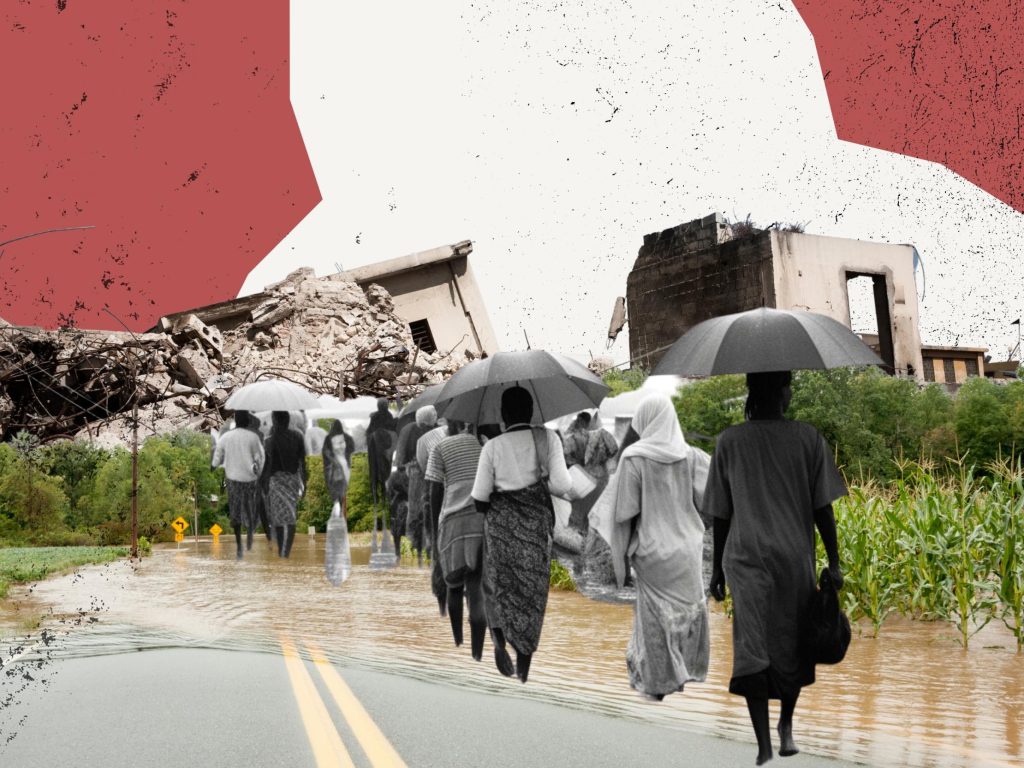
Climate change deepens these challenges by shifting the physical foundations of economic life. Coastal cities that anchor global trade face rising seas and more severe storms. Energy and transport infrastructure located near coastlines becomes more vulnerable to damage. Insurance markets struggle to quantify the risks. Governments confront escalating costs for adaptation and disaster response. Inland regions are not immune. Drought threatens agricultural production across vast territories. Wildfires damage both natural landscapes and built environments. Extreme heat undermines labour productivity and stresses health systems. Each event carries local costs but also creates shocks that pass through global markets.
Climate exposure is not distributed evenly. Some regions possess the institutional capacity and financial resources to adapt. They can reinforce infrastructure, invest in early warning systems, and reorganise their economies in ways that absorb climate stress. Others lack these capacities and face cumulative impacts that increase social vulnerability. When climate pressure intersects with political fragility, social inequality, or demographic stress, the result is a form of geographic risk that becomes structural rather than episodic. These layered vulnerabilities are now among the most important drivers of global economic uncertainty.
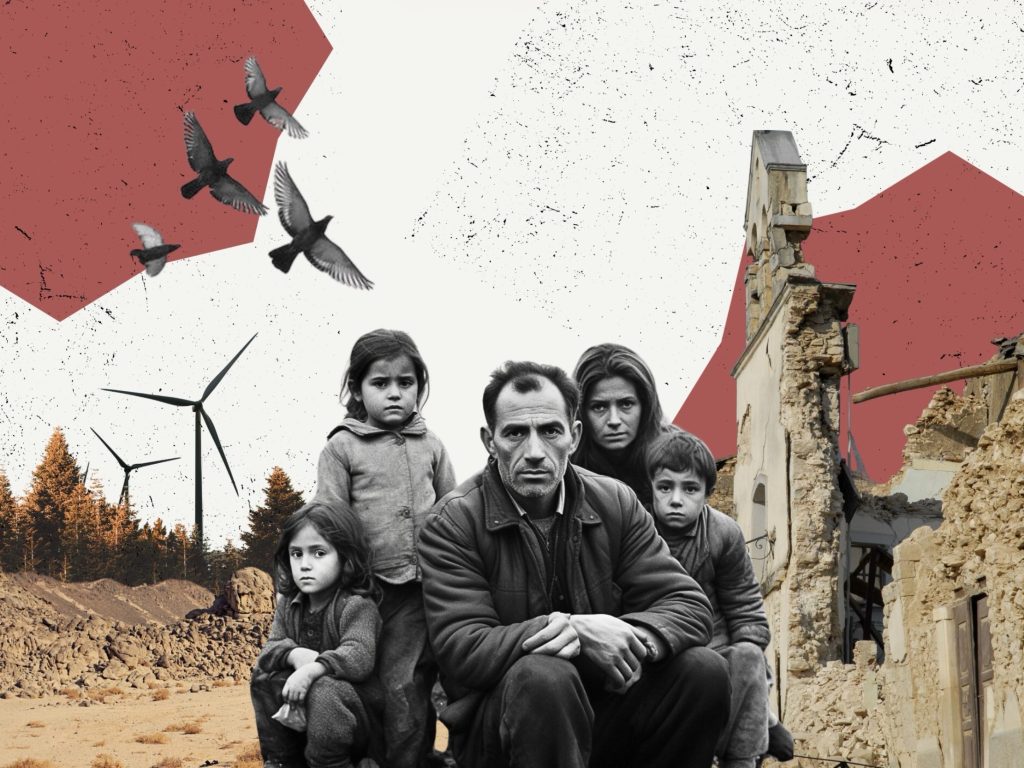
Regional development imbalances remain a persistent source of systemic risk. Wealth and opportunity concentrate in major cities and coastal regions while rural and interior regions fall behind. As disparities widen, migration increases. People leave areas with limited prospects and move toward regions that already struggle to manage population density. This movement reshapes labour markets, alters the social fabric of communities, and strains public services. Migration can support economic growth, yet if poorly managed it can feed political polarisation and social tension. Regions that lose population may struggle to sustain their economic base. Regions that gain population may become vulnerable to housing shortages, infrastructure overload, and political contestation. These dynamics can unsettle entire national economies.
Large metropolitan regions have become central nodes in the global economy. They host financial hubs, innovation centres, manufacturing clusters, and major ports. Their concentration gives them power but also exposes the entire system to risk. A disruption in one major city whether caused by climate impacts, pandemics, political unrest, or infrastructure failure can ripple through global supply chains and financial markets. The vulnerability of these nodes is often underestimated because their efficiency conceals their fragility. When the systems that support them falter, the consequences spread quickly.
All of these forces create a global environment in which uncertainty is not a temporary condition but a structural reality. Economic risk does not arise solely from market forces. It emerges from the deep interaction between geography and politics. Resource distribution, territorial disputes, climate exposure, infrastructure networks, and regional disparities form a complex landscape where economic decisions cannot be separated from strategic considerations.
Governance structures have not kept pace with these shifts. National policies often treat economic management and geopolitical risk as separate domains. Yet in a world where supply chains cross contested borders and agriculture depends on volatile climates, this separation is no longer viable. States require integrated frameworks that understand economic resilience as inseparable from geographic vulnerability. Planning must consider how physical landscapes shape risk and how risk moves through systems that are increasingly interlinked.
The international system faces a similar challenge. Global institutions were designed for a period when geographic risk was less intense and global economic integration was treated as a stabilising force. The assumptions that underpinned these institutions now face strains they were not built to handle. Climate migration, resource competition, regional fragmentation, and maritime chokepoint vulnerability require cooperative governance that is more adaptive and more geographically aware. Without such reform, global governance will lag behind the forces reshaping the world economy.
The path forward requires recognising that globalisation has not removed geography from economic life. It has, instead, magnified its significance. The more integrated the world becomes, the more a disruption in one place can influence outcomes in many others. Geography acts as both a constraint and a conduit. It determines where risk originates and how it spreads. It shapes opportunities for cooperation and also magnifies the consequences of rivalry.
If states acknowledge this reality, they can build resilience into the architecture of the global economy. Strategic corridors can be diversified. Critical resources can be secured through cooperative agreements rather than zero sum competition. Climate adaptation can be prioritised not only as environmental policy but as economic strategy. Regional disparities can be reduced by directing investment toward lagging areas. Large metropolitan hubs can be fortified against climatic and infrastructural threats. Such measures cannot eliminate uncertainty but can limit its most destabilising effects.
The world is entering a period where global economic stability depends on understanding the geographic foundations of risk. Economic resilience will belong to those who grasp the spatial dynamics that drive uncertainty and respond with policies that reflect the true shape of global interdependence. Geography has reentered the centre of strategic thinking. The challenge now is whether global governance can evolve quickly enough to reflect this reality.