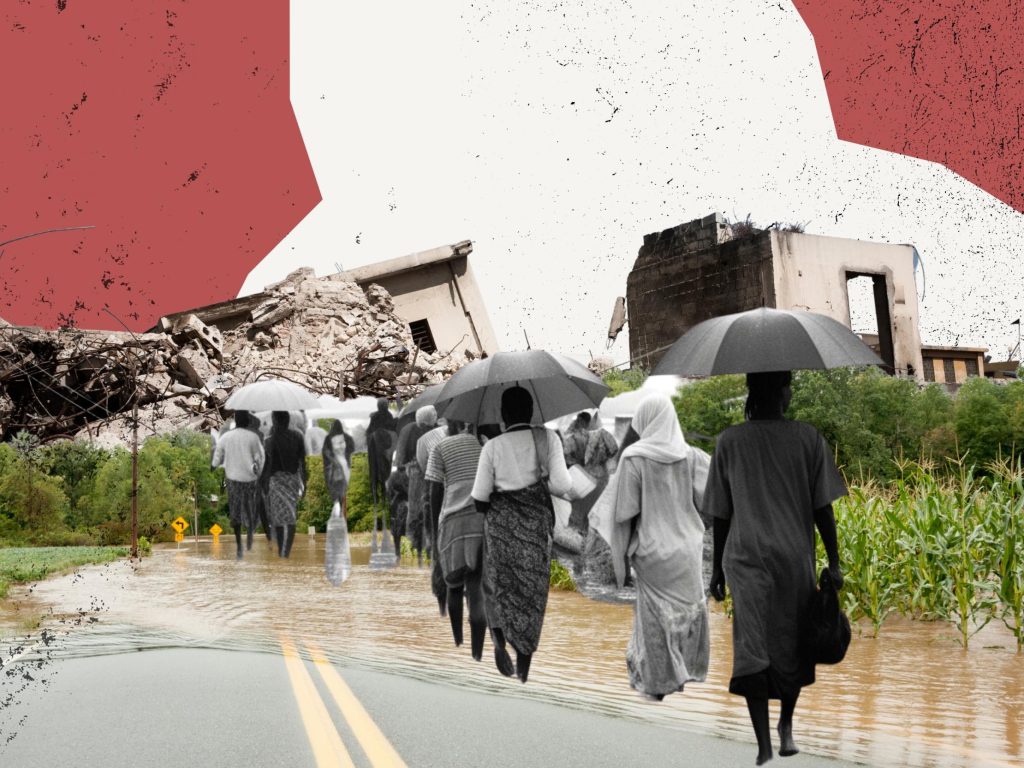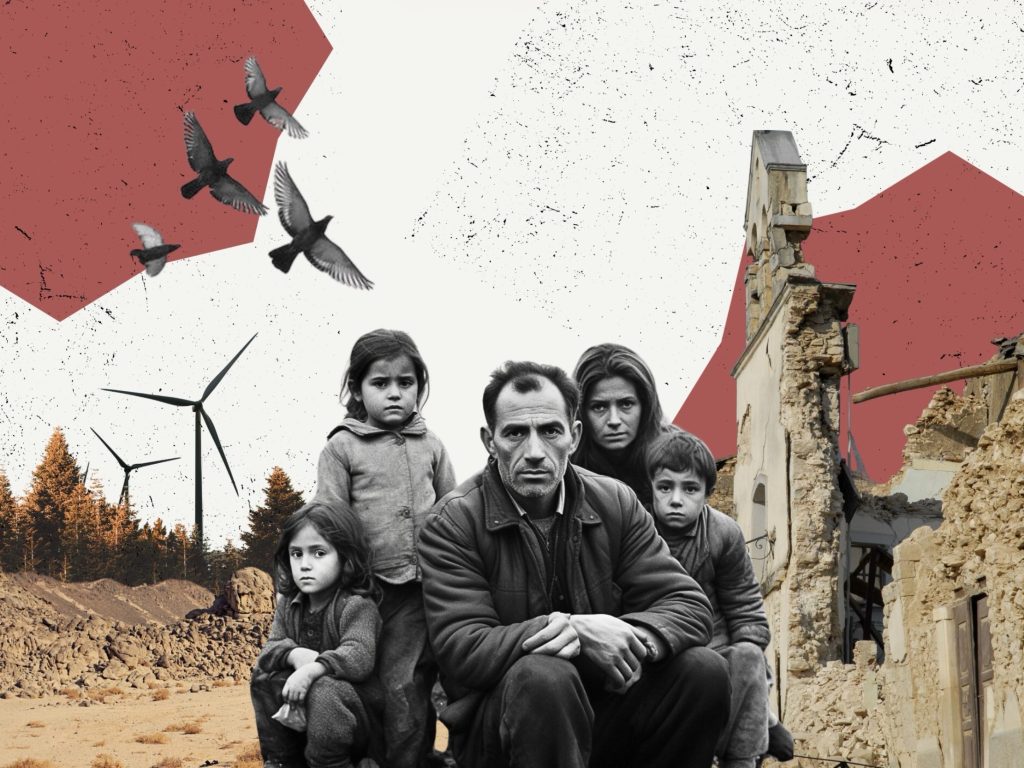
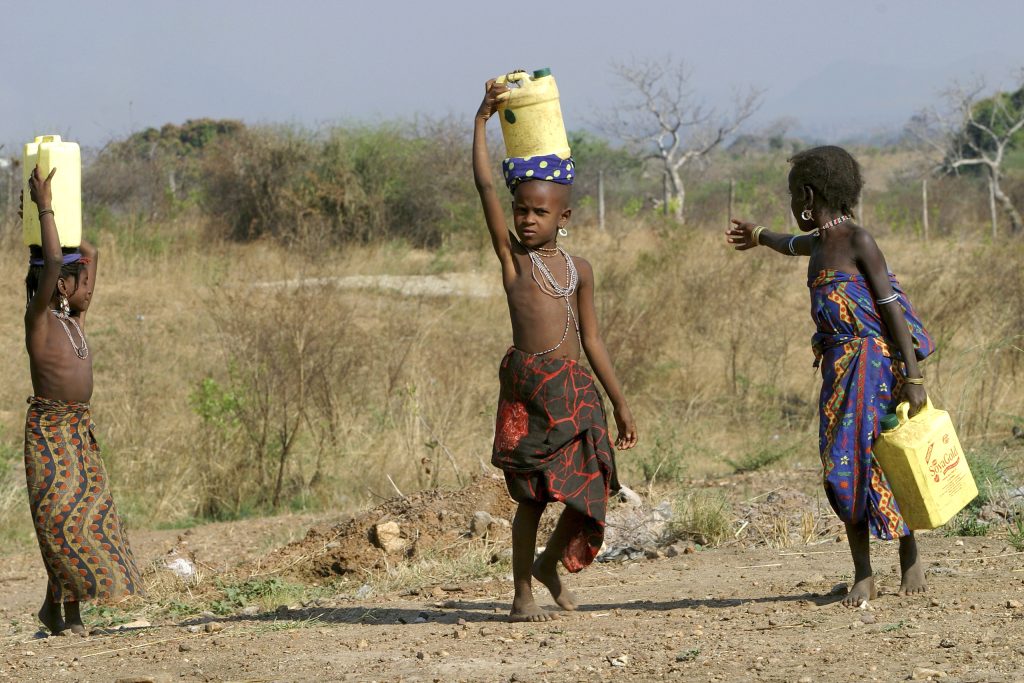
Sudan has become a site where the international system is testing the limits of its tolerance for atrocity in plain sight. The country is not collapsing in obscurity. It is disintegrating under an intense, well documented pattern of violence and deliberate deprivation, while major powers and regional actors adjust their policies at the margins rather than treat the crisis as a central test of their stated commitments to civilian protection and international law.
After more than eighteen months under siege, El Fasher, the last major city in Darfur outside Rapid Support Forces control, fell on 26 October. Humanitarian organisations report entire neighbourhoods levelled, systematic massacres, sexual violence deployed as a tool of coercion, and then a mass flight toward already overwhelmed camps such as Tawila. Field teams in those camps are now registering malnutrition rates among children that exceed seventy percent, with a very high proportion of severe cases. Famine, in the strict technical sense, has been confirmed in El Fasher and in Kadugli in South Kordofan. At least twenty other areas are only a local offensive, a roadblock, or an aid obstruction away from crossing the same threshold. The war that began in April 2023 has killed tens of thousands of people, displaced approximately twelve million inside and beyond Sudan’s borders, and left well over twenty million in crisis levels of food insecurity.
These figures are not the product of clandestine operations. They are drawn from open reporting, satellite imagery, humanitarian assessments, and the testimony of Sudanese citizens posting from battlefields and besieged towns. What is happening in Sudan is fully visible. The fact that it remains politically marginal in most major capitals is the core indictment.
From uprising to autocidal war
The trajectory from the 2018-2019 uprising to the current war runs through a specific institutional failure rather than a sudden descent into chaos. The popular mobilisation that brought down Omar al Bashir did not dismantle the security architecture that had sustained his regime. It exposed its internal fractures and forced a temporary rearrangement.
The Sudanese Armed Forces and the Rapid Support Forces, both implicated in previous episodes of violence in Darfur, agreed to a transitional power sharing arrangement that incorporated civilian figures but did not subordinate military institutions to constitutional control. The armed factions preserved their command structures, their economic interests, and their external alliances. The partnership with civilians was shallow and contingent.
When generals Abdel Fattah al Burhan and Mohamed Hamdan Dagalo, known as Hemedti, moved against the civilian component in October 2021, they did not deviate from the underlying logic of the system. They removed the only actors with a stake in institutional transformation and turned the transitional arrangement into a military condominium. Once civilian pressure was neutralised, rivalry between the two security complexes intensified. Each commanded its own forces, controlled its own companies and revenue streams, and cultivated its own external backers. Neither had an interest in ceding control over profitable sectors of the economy or accepting a restructured chain of command.
The confrontation that broke out in April 2023 was not an unforeseeable tragedy. It was the predictable result of a political settlement that asked two armed networks, both implicated in past atrocities and both deeply woven into the country’s commercial life, to police their own transformation. The war is thus best understood not as a breakdown of a functioning state, but as an autocidal struggle among security elites who refused to accommodate constitutional oversight.
Hierarchies of concern
The relative neglect of Sudan in Washington, Brussels, and other centres of global power does not stem from an absence of information. Rather, it reflects hierarchies of concern that systematically push Sudan below other crises, even when the human cost is comparable or worse.
European war, especially Russia’s invasion of Ukraine, continues to dominate the attention of NATO governments and institutions. In the United States, the Gaza conflict shapes domestic political debate, media coverage, and diplomatic priorities in the Middle East. Sudanese cities under siege do not generate the same feedback loop into domestic politics. They are harder for journalists to access, less familiar to electoral constituencies, and less embedded in narratives about national security.
This asymmetry has concrete consequences. Sudan tends to enter the global conversation episodically, when a particularly shocking event in El Fasher, Geneina, or another city is captured by satellite or verified videos. Once the immediate outrage passes, the war sinks back into the background of the news cycle. In that oscillation between horror and silence, belligerents learn that even extreme abuses rarely sustain sustained pressure.
Institutional responses exhibit a related pattern. The United Nations Security Council has been unable to authorise a robust mandate or enforcement mechanism for Sudan. Some permanent members are at odds on broader security questions, others are implicated in Sudan’s conflict economy and reluctant to invite scrutiny. The African Union’s peace and security architecture has been constrained by financial and political dependence on states that are themselves involved on one side or another of the war. Only now has the UN Human Rights Council agreed to a dedicated fact finding mission on atrocities in and around El Fasher, a step that might have influenced conduct during the siege had it been taken earlier rather than after the city fell.
Sudan is therefore not forgotten in an absolute sense. It is intensely important to those states that have turned it into an arena for their own contests. What is absent is a collective decision that the scale of atrocity warrants serious costs for those driving it.
External patrons and the conflict economy
The war in Sudan is not a closed domestic affair. It is shaped by the decisions of external actors that view Sudan less as a political community and more as a strategic asset base.
On the side of the Sudanese Armed Forces, Egypt has played a central role. From Cairo’s perspective, Sudan intersects with questions of Nile water governance, regime security, and a preference for military dominated orders along its southern frontiers. Turkey has seen in Sudan an opportunity to entrench its presence along the Red Sea and deepen its role in African security markets. Iran has begun to cultivate ties with elements of the armed forces, exploring possible maritime access and signaling interest in complicating United States and Gulf naval dominance in the Red Sea corridor. Russia has maintained links with SAF factions and with business networks associated with the RSF, hedging its bets in the hope of securing a logistics and naval foothold on Sudan’s coastline.
The Rapid Support Forces have relied heavily on the United Arab Emirates. Emirati officials publicly deny direct military support, yet investigations by human rights organisations and open source analysts have documented advanced weapons that originated in Emirati stockpiles and later appeared in RSF arsenals in Khartoum and Darfur. Logistics chains through eastern Chad, financial arrangements involving gold smuggling and cash couriers, and reports about foreign fighters employed under labels such as the Desert Wolves all point to an external infrastructure underpinning RSF operations. Under growing scrutiny after the El Fasher atrocities, Abu Dhabi has acknowledged that its Sudan policy has gone “wrong,” but the business and security networks that link Emirati actors to RSF commanders have yet to be dismantled in any systematic way.
For these external patrons, Sudan is less a polity trying to reconstruct a state than a collection of assets and vectors. It is Nile leverage, a Red Sea coast, gold deposits that can be securitised, a space for raising proxy forces, and a platform for projecting influence across the Sahel and the Horn of Africa. In that framing, a controlled level of instability is acceptable. What matters is that adversaries do not secure decisive gains, not that Sudanese citizens enjoy predictable governance.
Famine as an instrument of control
Within this political and strategic context, famine is not merely collateral damage. It operates as a method of warfare and governance.
The classification of El Fasher and Kadugli as areas in Famine, Phase 5 under the Integrated Food Security Phase Classification, rested on hard indicators. These include extreme levels of acute malnutrition, catastrophic food consumption gaps, and excess mortality that clearly exceed pre conflict baselines. Underlying these indicators is a pattern of deliberate obstruction. Markets have been disrupted or destroyed, agricultural activity has been prevented in front line areas, and humanitarian access has been restricted by both sides.
The siege of El Fasher was deliberately suffocating. Armed actors blocked roads with earthworks, targeted fields and farmers, seized or contaminated water points, and looted or halted aid convoys. After the city fell, civilians fled toward camps such as Tawila that were already operating near their limits. Organisations working there now report levels of acute child malnutrition that correspond to the most severe categories in global emergency thresholds. These outcomes are not random. They reflect a mode of warfare in which the control of movement, time, and basic subsistence is central to the strategy of both main belligerents.
In this environment, starvation becomes a tool that helps to empty contested areas, punish communities associated with perceived rivals, and extract compliance from local authorities. The fact that these practices are plainly prohibited under international humanitarian law has not translated into meaningful accountability for those responsible, which reinforces the perception among armed actors elsewhere that similar methods might be usable at relatively low cost.
The Quad and its limits
Against this backdrop, the United States has sought to design a diplomatic framework that reflects its current preference for indirect engagement. The central instrument is a grouping referred to as the Quad, composed of Washington, Cairo, Riyadh, and Abu Dhabi. Its stated purpose is to coordinate leverage on both the Sudanese Armed Forces and the Rapid Support Forces, with the goal of securing a humanitarian truce and a pathway toward a civilian led political order.
The Quad has issued joint communiques, established a joint committee, and advanced a proposal that combines a three month humanitarian ceasefire with a nine month political process intended to produce a transition roadmap. The RSF has publicly endorsed the outlines of the ceasefire plan, in part to present itself as a more reasonable interlocutor after the devastation in El Fasher. The SAF leadership has rejected any arrangement that does not include the withdrawal and disarmament of RSF forces from major cities, conditions that function in practice as a refusal to accept the current proposal.
On paper, the composition of the Quad reflects a recognition that any viable framework must include the external actors with the greatest direct influence over the belligerents. In practice, the mechanism is constrained by three unresolved contradictions.
First, the United States is asking the very states that have been central to Sudan’s militarisation to serve as guarantors of de escalation, without attaching serious costs to continued support. As long as Egypt and the United Arab Emirates can treat Sudan as one portfolio among many in their broader relationships with Washington, they have little incentive to recalibrate security and business interests in Sudan in response to strictly humanitarian or normative arguments.
Second, American coercive tools have been used selectively and in a way that appears largely symbolic. Sanctions have targeted individual commanders and financiers, but the broader ecosystem of airlines, logistics firms, arms brokers, financial intermediaries, and gold traders that make the war materially sustainable has mostly been left untouched, particularly where it intersects with firms domiciled in partner states.
Third, the structure of talks has repeated a pattern familiar from earlier Sudanese transitions. Civic actors are consulted and photographed but not empowered. Resistance committees, professional associations, women’s networks, and other groups central to the 2018-2019 uprising are invited to dialogues and side forums, while real bargaining takes place among generals and foreign officials. This reproduces a hierarchy that marginalises those Sudanese actors most invested in institutional reform.
The combined effect is paradoxical. The United States is increasingly associated, in Sudanese public debate, with a process that fails to halt atrocities and famine. Yet it has not in fact employed the full range of measures that would be required to change the cost-benefit calculations of its partners and of the armed factions inside Sudan.
Possible trajectories and regional spillover
Current dynamics point toward several possible configurations, none of them benign.
One scenario is the consolidation of a fragmented map in which the Sudanese Armed Forces entrench a reduced state in the northeast, centred on Port Sudan and the Nile corridor, while the Rapid Support Forces control much of Darfur and parts of Kordofan and the west. Additional enclaves would remain under the influence of Islamist networks and local militias. Such an outcome would amount to a de facto partition of Sudan without formal secession, with chronic insecurity along the lines of control and continued displacement.
A second scenario, which some external actors still appear to regard as acceptable, is a victor’s peace. In one version, a militarised SAF regime, backed by Egypt, Turkey, and Iran, asserts control over key cities and institutions. In another, an RSF centred order emerges from a campaign of conquest rooted in the same militia structures that have presided over mass killings in Darfur. Both variations would entrench the principle that armed factions can translate atrocity into political power.
A third scenario, less likely in the short term but crucial over any longer horizon, would be a negotiated settlement in which both SAF and RSF are compelled to yield meaningful authority to civilian institutions and to accept security sector restructuring supported by credible monitoring and guarantees. This would require sustained external pressure, a degree of unity among civic actors, and a readiness by key regional states to lower their direct stakes in Sudanese armed groups.
The effects of Sudan’s collapse are not confined within its borders. South Sudan is already experiencing heightened tensions as factions reposition themselves in anticipation of possible renewed civil conflict, while cross border movements by armed groups and refugees strain local capacities. Chad, hosting large displaced populations, is drawn in more deeply through RSF related networks in its east. The wider Horn of Africa, grappling with the aftermath of Ethiopia’s internal conflicts and long standing rivalries involving Eritrea, must now absorb the security and economic consequences of a large neighbour undergoing violent fragmentation. At sea, the Red Sea corridor is experiencing multiple militarisation dynamics, from Houthi attacks in the north to speculation about possible Russian or Iranian naval access near Sudanese ports.
Implications for United States policy and the international order
For the United States, these developments carry specific risks. A chronically unstable Sudan provides fertile ground for transnational jihadist organisations, mercenary companies, and criminal networks linking the Sahel, the Horn of Africa, and Mediterranean routes. It sits along a maritime corridor that carries a significant share of global trade and hydrocarbon flows at a time when Washington is attempting to prevent the Red Sea from becoming a zone of constant disruption and rival naval deployments.
The Sudan crisis is also a practical test of policy rhetoric. United States officials have placed heavy emphasis on African agency, partnership, and a rules based order in recent strategic documents. If Sudan is allowed to become an example of visible, deliberate starvation and repeated mass killing with only modest rhetorical protest and limited consequences for those directly involved, that language will lose credibility among African governments and societies.
The case matters more broadly for the integrity of humanitarian norms. Prohibitions on starvation as a method of warfare, obligations to protect civilians, and the assumption that atrocities on the scale of past Darfur campaigns would not be permitted to recur were not framed as aspirational ideals. They were articulated as baseline rules. If the siege and fall of El Fasher becomes a template rather than a disgrace, if armed groups elsewhere conclude that they can employ similar tactics under the gaze of international institutions with limited penalty, then the erosion of humanitarian law will not remain confined to Sudan.
A more serious policy from Washington would not rest on the assumption that the United States can dictate outcomes. It would, however, recognise that Sudan is a central test of whether the country is prepared to align its use of influence with its declared priorities. That would involve restructuring relationships with key partners so that cooperation in sensitive domains, including arms sales and advanced technologies, is explicitly linked to measurable changes in their behaviour in Sudan. It would require sanctions that reach beyond individuals to target the logistical and financial systems that sustain the war, even when those systems intersect with entities based in friendly states. It would demand a sustained investment in ensuring humanitarian access, including support for cross border routes and negotiated arrangements that shield aid operations, rather than waiting for comprehensive ceasefires that have repeatedly failed to materialise. Finally, it would entail treating Sudanese civilian actors as the principal interlocutors in any discussion of political transition, not as an audience to be briefed after security actors and foreign sponsors have reached agreement.
Sudan’s war is not forgotten by those who live it. It is present in the everyday lives of displaced families around Tawila, in the ruins of El Fasher, and in the shrinking space for a generation that once imagined a different political future after 2018-2019. What remains uncertain is whether those who speak frequently about a rules based order are willing to act as if Sudan lies within its scope, or whether they have concluded, implicitly, that some parts of the world fall outside the circle of real enforcement.