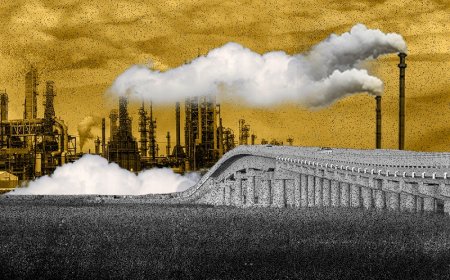
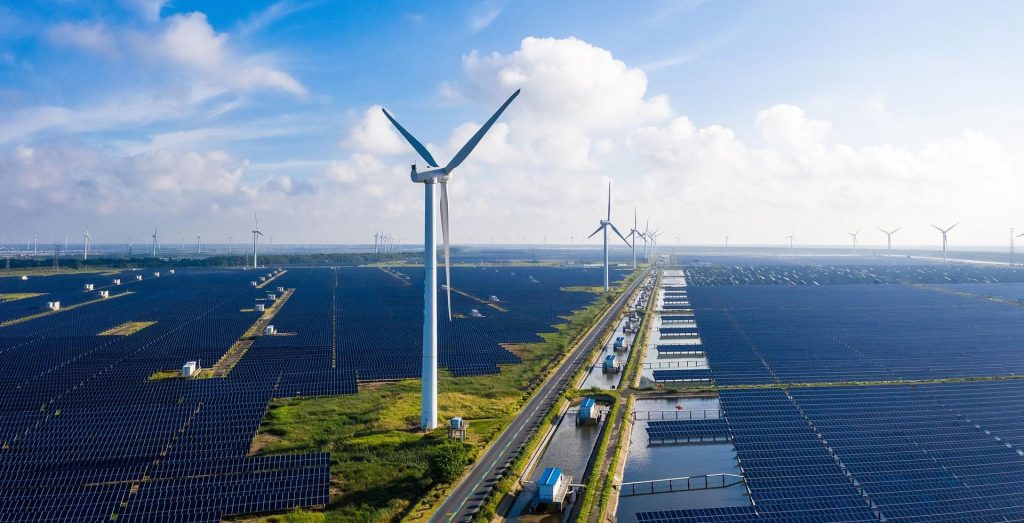
The global energy system is once again at a moment of transition. Nearly ten years have passed since governments endorsed the Paris Agreement. During that time, a specific pattern of investment took shape: cheap capital, rising concern about climate risk, and rapid progress in key technologies pushed low emission energy from the margins into the center of global finance.
That period is now fading. The structures that supported it are shifting at the same time as the underlying energy system itself continues to change. Power systems are becoming more electrified. Renewable capacity is expanding at unprecedented speed. Yet fossil fuels still underpin most of the world economy, and overall demand for energy continues to grow.

The result is not a clean break between an old fossil era and a new green one. Instead, a more complicated picture is emerging. Low emission technologies attract more investment than ever before and are indispensable to any long term strategy for climate stability. At the same time, hydrocarbons remain embedded in transport, industry, and trade. Governments worry about security of supply and industrial competitiveness as much as they worry about emissions. Investors are less willing to treat climate objectives as a stand alone justification for deployment and more inclined to ask hard questions about cost, reliability, and political risk.
This is the context in which a new investment paradigm is forming. It is marked by four broad features.
First, the legacy of the last decade is a powerful surge in electrification and renewables. Electricity is taking a larger share of final energy use, pushed by electric vehicles, heat pumps, digital infrastructure, and advanced manufacturing. Wind, solar, storage, and grids now capture more capital than fossil fuels, and many of those technologies are mature enough to compete on cost without heavy subsidy.
Second, the system is fragmenting. Energy security and strategic rivalry are reshaping cross border flows and value chains. Trade in hydrocarbons is being re routed as sanctions, price caps, and war disrupt traditional patterns. At the same time, the supply chains that underpin low emission technologies are heavily concentrated in a small number of countries and are now subject to tariffs, export controls, and industrial policy.
Third, macroeconomic conditions have tightened. Growth is slower than in the pre crisis years, interest rates are much higher than they were in the 2010s, and public finances are under strain. These trends are particularly challenging for capital intensive low emission technologies that depend on financing with long horizons and relatively modest returns.
Fourth, capital markets are changing. Public equity markets have become more volatile and less forgiving. The cost of debt has risen. Many large incumbents prefer to improve balance sheets, return cash to shareholders, and focus on operational efficiency rather than embark on aggressive expansion. Private capital has stepped into some of the gaps and is now a central player in energy infrastructure, both fossil and low emission.
Across all of this sits a simple reality. The main criteria guiding investment are shifting from climate mitigation as an intrinsic goal toward a broader mix of efficiency, security, and competitiveness. Low emission energy can do well in this environment, and in many places it already does. But outcomes will depend much more on how states and firms reconcile climate objectives with the other pressures shaping their choices.
How the Paris Decade Reshaped Energy Investment?
To understand the current moment, it helps to step back and look at the last full investment cycle in energy. Each major period in the history of energy has been defined by a specific combination of technology, capital, and politics. The emergence of coal as a dominant fuel owed as much to railroads, finance, and industrial policy as it did to geology. Oil took off once internal combustion engines, shipping, and military planners demanded liquid fuels. Gas rose on the back of pipelines, liquefaction, and power sector reform.
The years after the commodities boom of the 2000s and the North American shale expansion saw another turning point. The shock of the global financial crisis was followed by a long stretch of low interest rates and abundant liquidity. At the same time, scientific warnings about climate change became more urgent, and public awareness grew. The Paris Agreement in 2015 did not by itself create these trends, but it gave them political form and a common language.
From the late 2000s through the early 2020s, low emission technologies moved from speculative bets to mainstream investments. Several reinforcing forces drove this movement.
Macroeconomic conditions were favorable to long duration assets. Central banks kept policy rates near zero for much of the period, pushing investors to search for yield in infrastructure, real estate, and energy projects with stable cash flows.
Costs for key technologies collapsed. Utility scale solar module prices fell to a fraction of their earlier levels as manufacturing scaled up, supply chains matured, and experience accumulated. Onshore wind costs declined sharply as turbines became larger and more efficient. Lithium ion batteries benefited from learning in both consumer electronics and electric vehicles, reducing storage costs by an order of magnitude.
Policy frameworks shifted. Feed in tariffs, auctions, renewable portfolio standards, tax credits, and public procurement all provided demand visibility. Central banks and regulators started to ask banks and investors to disclose climate risk. Large asset owners created mandates for environmental, social, and governance performance, and climate related metrics became part of mainstream analysis.
Corporate commitments proliferated. Major industrial firms, technology companies, and utilities set net zero or decarbonization targets and sought projects that could deliver visible progress. Power purchase agreements for renewable electricity grew rapidly as companies looked to green their own consumption.
Together, these factors underpinned a surge of capital into low emission energy. Global investment in renewables, grids, storage, efficiency, nuclear, and cleaner fuels first overtook fossil fuel supply spending around the middle of the last decade and has since grown to be roughly twice as large. Funding for oil and gas did not disappear, but it lost its unquestioned dominance in energy finance.
The real world effects of this investment wave are visible. Renewable capacity additions have reached levels that would have seemed unrealistic fifteen years ago. Electrification is making inroads in sectors that were once assumed to be hard to shift. At the same time, however, the cumulative stock of fossil fuel infrastructure built up over decades continues to provide most of the world’s energy. That tension between new growth and old baselines defines the starting point for the next phase.
One of the defining legacies of the Paris decade is the central role of electricity in energy demand growth. While global population has increased and economic output has expanded, per capita final consumption of fossil fuels has largely plateaued. By contrast, electricity use has risen steadily and quickly.
Since around 2000, global electricity demand has almost doubled. Between 2018 and 2023, more than 60 percent of the additional final energy consumed worldwide was in the form of electricity, while only a small portion of incremental use came from hydrocarbons directly. If present trends continue and power demand keeps rising at roughly 3 percent each year, electricity could absorb the entire net increase in final energy demand by the end of this decade.
Several structural shifts explain this trajectory.
Transport is one. Electric cars have moved from a curiosity to a mass market product in many countries. China has seen particularly rapid uptake of battery electric and plug in hybrid vehicles, including buses and commercial vans. Two and three wheelers are electrifying even faster in parts of Asia and Africa. Freight and long distance transport remains dominated by oil, but the edges are starting to move.
Heating is another. Heat pumps are being installed in homes and commercial buildings in Europe, North America, and parts of Asia at accelerating rates, gradually displacing gas boilers and oil heaters. Electric heating technologies for industry are also gaining ground in some segments.
Digitalization may be the most striking driver. Data centers, cloud services, cryptocurrency mining, and generative artificial intelligence all require large amounts of computing power and cooling, which in turn require electricity. Estimates suggest that global data center consumption, which was on the order of 500 terawatt hours in 2023, could rise severalfold by mid century. In some national markets, including the United States, data centers are projected to account for a very large share of incremental power demand within a few years.
This surge in electricity use has been met increasingly with low emission generation. Since the turn of the century, renewable capacity for power has expanded roughly fourfold, and since 2015 it has roughly doubled again. Wind and solar together are now responsible for a majority of the growth in electricity supply each year. Nuclear reactors and other clean sources have contributed additional low emission output where they have been maintained or expanded.
Costs have followed. Onshore wind costs have fallen by around seventy percent since 2010, utility scale solar by about ninety percent, and battery storage by more than eighty percent over a similar period. These are approximate figures, but they capture the magnitude of change. What was once considered premium or experimental technology is now, in many settings, the lowest cost option for new generation.
In 2024, nearly eighty percent of the global increase in electricity demand was covered by nuclear and renewable sources. Wind and solar alone provided the majority of the additional supply and accounted for most new capacity additions to power systems. In the United States and a number of other markets, combinations of solar and storage have become central to expansion plans and are often chosen because they can be built quickly as well as cheaply.
The current outlook to mid century suggests that renewables are likely to meet more than half of global electricity demand if present policy trajectories hold. That projection is not a climate scenario in itself, but it confirms that the power sector has already moved decisively into a low emission growth path.
Why Fossil Fuels Have Not Disappeared?
At first glance, the displacement of fossil generation by renewables in many power systems might suggest that hydrocarbons are on a simple downward slide. In practice, the picture is more complicated. The global hydrocarbon system is deeply entrenched not only in electricity but also in transport, industry, and food production.
Wind and solar power are intermittent. Even with substantial storage, there are periods of low output that require other sources of flexibility. Gas turbines, hydro reservoirs, biomass plants, geothermal, nuclear, and demand response can all provide balancing services, but the mix varies by region and remains incomplete in many markets.
The attributes that made hydrocarbons dominant are still valuable. Oil is energy dense, portable, and easily traded. Gas is flexible, can ramp quickly, and can serve both power and heat. These fuels can be stored in large volumes and moved across long distances through pipelines and shipping.
To recreate that combination of flexibility, storability, and tradeability with low emission options requires a suite of complementary technologies. Long duration storage at scale is still rare and expensive. Low emission hydrogen and derived fuels such as ammonia or synthetic kerosene could replicate some uses of oil and gas, but current production volumes are tiny relative to demand in hard to abate sectors. Advanced nuclear reactors, geothermal systems capable of high capacity factors, and fossil plants equipped with carbon capture are in various stages of development and deployment but do not yet operate at the scale needed to backstop entire systems.
Grid infrastructure also lags. Many countries face serious constraints in their networks. Transmission lines are congested, interconnections between regions are limited, and permitting new lines can take a decade or more. These bottlenecks limit how much variable renewable capacity can be integrated quickly and increase the value of firm local generation, which often still means gas or coal.
All of this explains why projections for fossil fuel demand show a slow and uneven decline rather than a sudden collapse.
Oil use is expected to fall in road transport as electric vehicles take a larger share, but demand in sectors such as petrochemicals, aviation, and shipping may continue to grow for some time. Plastic production, fertiliser feedstocks, and aviation fuels each have their own decarbonization challenges and timelines.
Coal consumption is expected to decline in most advanced economies as old plants retire and carbon pricing bites, but in parts of Asia and elsewhere coal remains the cheapest and most secure source of power. For some governments facing immediate development pressures and limited access to concessional finance, new coal capacity can still appear rational even if it is inconsistent with global climate goals.
Gas sits in a more ambiguous position. In several scenarios, global gas demand could still climb relative to today, driven by baseload and peaking roles in power systems that are otherwise shifting toward renewables, as well as by industrial and residential uses. In other scenarios, stricter climate policy and faster electrification reduce gas demand substantially.
The key point is that the rise of renewables and electrification does not automatically translate into a rapid, across the board decline in fossil fuel use. The pace and pattern of that decline depend on the combined evolution of storage, firm low emission power, grids, alternative fuels, and policy choices. Until those elements are in place, hydrocarbons retain a strong hold on the system.
Energy has always been bound up with state power. Control over coalfields, oil concessions, shipping lanes, and pipelines has shaped politics and conflict for more than a century. Today, that relationship is evolving again.
As climate concerns, supply shocks, and strategic rivalry accumulate, governments are treating energy and critical materials as core components of national security and industrial competitiveness. This shift is not abstract. It is visible in domestic laws, trade measures, and diplomatic initiatives.
One consequence is the gradual formation of partially distinct energy spheres. These are not neat blocs, but they show recognizable patterns.
In one group of economies, fossil fuels remain central. These countries either possess large oil, gas, or coal reserves or have secured privileged access to such supplies. They see continued fossil production as a source of revenue, influence, and industrial activity. Recent years have seen major new liquefied natural gas projects sanctioned in North America, the Middle East, and parts of Africa. If all of these are completed, global LNG export capacity could rise by roughly one third by 2030. The United States has become a pivotal exporter of both oil and gas, while also using sanctions and regulations to influence flows from others.
In another group, often overlapping with the first, electrification and renewables are used as tools to reduce import dependence and to build domestic manufacturing and service industries. Emerging and developing economies are prominent here. A decade ago, only about half of their power sector capital spending went to low emission sources. In recent years, that share has climbed toward ninety percent for new generation. Many of these countries now have higher levels of renewable penetration and electrification than some advanced economies, even if average energy use per capita remains lower.
The low emission supply chain itself is highly concentrated. China in particular dominates production of solar modules, battery cells, and key components, as well as processing of rare earth elements and several other critical minerals. It is also investing in clean energy projects abroad, creating a web of commercial and political ties around its technology and finance.
These patterns have triggered a wave of policy responses. Tariffs have been imposed on imported electric vehicles, solar panels, and batteries. Export controls have been applied to certain minerals and technology. Local content rules govern support for renewable projects and grids. Standards and certification regimes are being used to delineate which products qualify as low emission, sustainable, or eligible for incentives.
Empirical work has highlighted that mining and energy related trade are among the most exposed to geopolitical risk. As restrictions accumulate and alliances shift, there is a real possibility that trade in both hydrocarbons and clean energy goods will become more regional and more exclusive. That would raise costs, slow deployment in some regions, and deepen the divergence between countries that sit inside preferred supply circles and those that do not.
Fragmentation does not mean that interdependence disappears. Oil and gas will still cross borders in large quantities. Minerals will still move from mines to refineries to factories around the world. But the way those flows are governed and who benefits from them is changing quickly.
All of these structural and geopolitical shifts are unfolding at a time when the global macroeconomic environment is unusually fragile.
Global growth is forecast to be relatively weak in the second half of this decade compared with the previous fifteen years. Demographic shifts, lower productivity growth, and lingering scars from recent crises all contribute. That weaker expansion reduces the overall pool of savings and the willingness of governments and firms to commit to long lived investments.
Interest rates have risen sharply from the ultra low levels of the 2010s. Central banks in major economies implemented the most aggressive tightening cycle in decades to control inflation. Even if policy rates fall from their peaks, market expectations point to both nominal and real rates remaining higher over the long term than they were during the period from 2009 to 2022.
For energy, and especially for low emission projects that depend on large upfront capital, these rate moves matter. Higher discount rates make future cash flows less attractive. Projects that looked viable when capital was cheap can quickly slip below investment thresholds. Developers must negotiate harder with offtakers to secure sufficient returns, which can delay or derail deployment.
Public finances add another layer. Many governments used fiscal policy aggressively during the pandemic and in response to energy price spikes. Debt ratios are elevated in both advanced and developing economies. That constrains the ability of states to offer generous subsidies, guarantees, or direct investment in energy without politically contentious trade offs.
Developing and emerging economies face particular difficulties. Many already live with higher borrowing costs because of sovereign and currency risk. Their domestic capital markets are shallow, and they are more exposed to swings in global risk appetite. Tariffs, sanctions, and volatility in exchange rates can damage their fiscal positions and balance of payments, making it harder to import equipment or repay foreign currency debt.
In this environment, both fossil and low emission projects face headwinds, but the pain is uneven. Mature oil and gas projects that can be brought to cash flow quickly and share in commodity upside can remain attractive. Low emission technologies whose economics depend on low financing costs and stable regulation are more vulnerable to interest rate shocks and policy swings.
Capital markets have not been immune to these changes. The combination of cost inflation, higher rates, and policy uncertainty has reshaped investor behavior across the energy sector.
Listed renewable developers and manufacturers have felt the impact directly. Delays in permitting and interconnection, higher input costs, and shifting rules have led to project cancellations, renegotiations, and lower margins. Equity markets have responded with sharp corrections in clean technology indices, at least until a partial rebound this year. That volatility feeds into decisions about new issuance. Raising equity becomes more expensive and more dilutive just when firms need more capital to build out their pipelines.
Oil and gas companies, by contrast, have enjoyed periods of strong cash flow in recent years. Many have chosen to use that cash to strengthen balance sheets, retire debt, and return funds to shareholders rather than pursue aggressive expansion in upstream spending. Memories of the last price collapse, concerns about future climate policies, and a desire to avoid stranded assets all reinforce this cautious approach.
Debt markets tell a similar story. Total issuance of bonds and loans linked to energy supply projects has fallen since peaks earlier in the decade. Fossil related debt and equity issuance dropped sharply in 2023. Issuance for low emission projects also declined, though somewhat less steeply. Banks are more selective, regulators are more focused on risk, and spread levels are higher.
Against this backdrop, private capital has become more important. Infrastructure funds, private equity, sovereign wealth funds, and private credit providers are now central actors in energy finance. They can structure transactions in ways that public markets cannot, combining equity, quasi equity, and debt in tailored packages. They can take assets private when they believe markets undervalue them, hold them through periods of volatility, and then exit when conditions improve.
Private investors have shown strong interest in contracted renewable projects, regulated networks, gas pipelines, storage facilities, and similar assets that offer long term, relatively stable cash flows. They have also backed some emerging low emission technologies that do not fit easily within traditional bank lending parameters. Reported returns for low emission focused private funds have been high enough to sustain enthusiasm, even if headline valuations in some segments have been revised downward.
At the same time, private capital has become more willing to acquire fossil assets under specific conditions. A number of large utilities and integrated energy companies have sold stakes in pipelines, midstream infrastructure, and mature upstream assets to private funds, using the proceeds to reduce debt or finance new investments. Major North American utilities, for example, have used minority stake sales to private equity as a way to fund grid upgrades and generation capacity linked to data center growth.
This shift does not mean that public markets no longer matter. For many technologies and firms, listing remains an essential path to scale. But the balance of power is changing. Energy infrastructure is increasingly owned and controlled by actors that operate outside daily market scrutiny and can take a different view of risk and return. That can be positive if it enables long term investment in networks and clean projects. It can also complicate policy if politically sensitive assets move out of the public eye.
Taken together, these shifts in technology, geopolitics, macroeconomics, and capital markets are giving rise to a new investment logic. The simple narrative of a global march toward net zero, with capital flowing steadily from brown to green, no longer describes reality.
In many boardrooms and investment committees, the dominant questions today revolve around three themes: can a given project deliver efficient use of capital, can it enhance security of supply, and can it contribute to the competitive position of the firm or the country. Climate considerations are not absent, but they are folded into these broader concerns.
For low emission technologies, this creates both risks and opportunities. Mature renewables that can be built quickly at low cost, backed by robust contracts and operating in supportive policy environments, fit well into this pragmatic framework. They can reduce exposure to fuel price volatility, lessen import dependence, and create jobs in construction, manufacturing, and services.
Evidence suggests that investors recognize this. Global investment in renewable power continues to grow, reaching record levels in 2025. Clean technology equities, after a difficult period, have outperformed many other sectors in recent months. Large private funds are still raising sizable transition and climate themed vehicles, even if the pace has slowed compared with earlier peaks.
The same pragmatic logic is reviving interest in other low emission options that had fallen out of favor. Nuclear power, for example, is being reconsidered in several advanced economies as a source of firm low carbon capacity. Some governments are revisiting previous moratoria or exploring small modular reactor designs, motivated less by abstract climate goals and more by concerns about security, reliability, and industrial capability.
At the same time, fossil fuel projects that meet key criteria can remain attractive. Gas developments that feed into markets with tight supply and durable demand, pipelines that serve multiple users, and oil projects with low lifting costs can all provide strong cash flows and diversification benefits.
The crucial distinction is not between green and brown but between investments that can survive and perform under a wide range of scenarios and those that are highly exposed to single policy or price assumptions. In this environment, investors look closely at cash flow profiles, contract structures, local system conditions, and political alignment.
Several factors tend to shape capital allocation decisions.
Commercial maturity matters. The overwhelming majority of low emission investment today flows into technologies that are technically proven and commercially established: wind, solar, batteries, established grid equipment, and mature efficiency solutions. These can attract debt financing at scale and fit within familiar project finance structures. By contrast, nascent technologies such as advanced biofuels, some hydrogen applications, and certain carbon capture projects struggle to secure sufficient debt. Their capital stacks lean heavily on equity, grants, or public guarantees, which limits the pace at which they can scale.
Local system needs are increasingly influential. In some markets, the priority is the lowest possible cost per kilowatt hour. In others, reliability and resilience rank higher than marginal cost. Regions with constrained grids may favor investments that relieve congestion, provide ancillary services, or offer long duration storage rather than simply adding more capacity. Markets with high import dependence might prioritize projects that use domestic resources, even if levelized costs are slightly higher.
Alignment with policy priorities also guides decisions. Investments that sit squarely within a government’s declared strategy, benefit from clear regulations, and are backed by durable incentives or procurement programs are more likely to attract capital. In a volatile macroeconomic and geopolitical context, investors value clarity and consistency as much as short term returns. Projects that help build supply chain security, support strategic industries, or reduce vulnerability to climate impacts often enjoy an additional layer of political protection.
Portfolio diversification is another lens. Institutional investors rarely bet everything on a single category of assets. They look to combine fixed return, contracted assets with merchant or price exposed ones. Both fossil and low emission energy can fit into either bucket. A contracted solar farm resembles a regulated gas pipeline in its cash flow profile, while a merchant peaking plant can be as volatile as an uncontracted wind farm. Effective diversification strategies aim to balance these profiles across interest rate cycles, commodity price swings, and policy changes.
In a world of fragmented supply chains and divergent policies, diversification also has a geographic dimension. Some investors will deliberately spread exposure across different regulatory regimes and political systems. Others will focus on a smaller set of jurisdictions where they believe they understand the rules and have relationships. Both approaches will shape how and where capital is available.
For governments, this emerging investment paradigm presents a difficult challenge. On one hand, aggregate energy investment is likely to remain high. Private capital is available and eager to deploy into assets that meet its criteria. On the other hand, there is no guarantee that market outcomes will align with social objectives or national strategies.
There are several reasons for this misalignment.
Some strategic projects or industries do not offer an attractive risk return profile for private investors. They may involve high upfront costs, long lead times, uncertain revenue, or technology risk. Even when interest exists, financing structures may be inadequate. Developers can struggle to assemble the right mix of grants, concessional capital, equity, and commercial debt in the correct sequence. This is particularly true for enabling infrastructure such as transmission lines, interconnectors, gas storage, and pipelines that have diffuse benefits. They are essential for system reliability and for integrating more low emission capacity, but monetizing those benefits in a way that supports bankable projects is difficult.
Market participants are inherently focused on financial performance over relatively short horizons. They will tend toward caution when demand is soft and margins are under pressure. That can create underinvestment in critical supply just when long term planning would call for more capacity. The recent backlog in gas turbine manufacturing and the tightness in certain equipment and service markets illustrate how persistent capital discipline can produce future shortages. The mirror image also holds: when prices spike and optimism returns, overinvestment can lead to gluts and stranded assets.
Cross border supply chains add further complications. In sectors dominated by foreign incumbents, local firms can find it hard to attract capital to new ventures that challenge established suppliers. Conversely, aggressive attempts to localize production too quickly by shutting out imports and limiting knowledge flows can trigger immediate price spikes, supply disruptions, and implementation risks.
Regulatory and policy uncertainty can undermine even commercially sound projects. Complex permitting processes, shifting standards, unclear tariff regimes, or sudden changes in incentives can all erode investor confidence. When that happens, capital tends to flow toward jurisdictions perceived as more predictable, regardless of their climate performance or strategic importance.
Addressing these market gaps and frictions requires more than ad hoc measures. It calls for a coherent approach to economic statecraft that combines industrial policy, regulation, and trade strategy.
States will have to decide where they want to maintain or build deep strategic interdependence and where they prefer to diversify or partially decouple. In some sectors, partnering with other countries that have complementary resources, technology, or capital will remain the best way to achieve scale and resilience. This is particularly true for critical minerals, advanced components, and large cross border infrastructure. In other sectors, such as selected manufacturing or grid equipment, governments may judge that building domestic capacity is worth the higher upfront cost.
Public financing institutions are central to this effort. Development banks, export credit agencies, green banks, and similar bodies provide some of the most direct links between policy intent and investment outcomes. They can offer risk sharing instruments, contracts for difference, guaranteed offtake, or concessional loans that make difficult projects viable. They can also help sequence capital so that early stage, higher risk investments are followed by commercial finance once concepts are proven.
Coordinating these instruments across domestic and international institutions is important. A project to produce low emission fuels, for example, may require domestic grants for early technology deployment, concessional international finance for infrastructure, and export credit support for equipment, all aligned around a common strategy.
Ultimately, the central test for policy makers is whether they can translate high level objectives into credible signals and stable conditions that guide private capital in the desired direction. That involves clarity about long term priorities, patience in implementation, and consistency over political cycles. It also demands a realistic understanding of what markets can and cannot do on their own.
In the new energy investment landscape, governance quality has become a competitive advantage. Countries that can align their industrial policy, regulatory frameworks, and trade measures in a way that gives investors confidence are likely to secure more of the capital needed to modernize their systems and strengthen their economies. Those that rely on erratic interventions or send conflicting signals risk higher costs, larger supply shortfalls, and missed opportunities.
The last decade showed how quickly energy investment can change when technology, finance, and politics line up. The next decade will test whether that transformation can be sustained and redirected under much tougher conditions.
Electrification and renewables will remain at the heart of demand growth and power sector expansion. Fossil fuels will continue to play a substantial role, even as their share gradually declines, particularly where other technologies lag. Geopolitics will keep pressing energy into the service of national strategy. Higher interest rates and tighter fiscal space will make every investment choice harder. Private capital will have more influence over what gets built and where.
Navigating this landscape will require clear thinking and practical choices. States that treat energy as an integrated question of security, competitiveness, and climate, and that build institutions capable of executing on that view, will be better positioned. Investors that understand local system dynamics, policy trajectories, and the interplay between different asset types will find opportunities across the spectrum from renewables to gas.
The emerging paradigm does not mark the end of the energy transition. It marks the transition entering adulthood, with fewer illusions, more constraints, and a sharper focus on what works.