The world economy did not fall off a cliff after the pandemic. It did something more politically complicated. It slowed, fractured and became more financial at the same time that trade wars returned. That mix is now reshaping who benefits from globalisation and who writes its rules.
Since 2022 global output has grown, but on a permanently lower path than before the global financial crisis. UN and World Bank data show that average world growth in the mid-2000s ran near 4.5 percent. The 2011–2019 cycle settled around a little above 3 percent. Current projections for 2023–2026 sit closer to 2.5–2.6 percent, with 2025 and 2026 expected to underperform that already modest pace. Trade still expands in nominal terms: in 2024 global trade in goods and services reached about 32 trillion dollars, up 4 percent after a decline in 2023. Goods flows grew only 2 percent but services jumped 10 percent, lifting services to more than a quarter of world trade. Behind those headline numbers, however, trade volumes are losing momentum even as financial markets rally on expectations of cheaper money and artificial intelligence profits.
That combination – weak real growth, choppy trade volumes and buoyant asset prices under a cloud of tariffs – is not a passing anomaly. It is the structure of the next phase of globalisation. Understanding it means treating trade and finance as a single system, not as separate policy domains.
Trade in a world of tight money
For most of the post-war period, trade policy and monetary policy inhabited different institutional worlds. Tariffs, quotas and rules of origin were argued over in Geneva. Interest rates and capital flows were the domain of central banks and finance ministries. The division was never complete, but it was real enough for diplomats to treat trade as a largely technical question of market access.
The past fifteen years have erased that comfort. Research on the global financial cycle, led by economists such as Silvia Miranda-Agrippino and Hélène Rey, has shown that a common factor in global asset prices, leverage and capital flows moves with United States monetary policy and shifts in risk appetite. When the Federal Reserve eases and investors seek yield, credit conditions loosen from São Paulo to Johannesburg. When it tightens and risk sentiment turns, currency values, equity prices and sovereign spreads move together with startling speed.
UN trade data now make visible how closely world trade tracks that same cycle. Detrended trade volumes align with the ups and downs of the financial factor. The mechanism is straightforward. More than ninety percent of global trade is underpinned by finance: letters of credit, supply chain finance, factoring, hedging and cross-border payments. As conditions in global credit markets tighten, the cost of insuring shipments rises and the availability of trade finance shrinks. Firms with strong balance sheets and access to internal liquidity can ride out that squeeze. Small and medium exporters in low and middle income economies cannot.
This channel matters more today than in earlier cycles because supply chains are longer, more fragmented and more reliant on just-in-time production. A disruption in working-capital credit can halt production for export long before consumer demand shifts. Global trade is no longer simply a function of tariffs and demand; it is a leveraged structure resting on the risk models of banks and non-bank intermediaries.
Yet the international architecture has not caught up. Trade agreements still assume that credit is an exogenous background condition. Financial regulation still treats trade finance as a niche product. When the global financial cycle turns sharply, as it did in 2008, 2020 and again during the inflation shock of 2022–23, the joint impact on trade and production is still treated as an afterthought.
For developing economies the consequences are harsh. The World Bank now warns that higher trade barriers and the current cycle of tariffs and retaliatory measures will depress growth in nearly two thirds of developing countries in 2025. Per capita income growth in that group is projected to fall below 3 percent. At the same time, net private capital flows to many of those economies remain well below their pre-2008 peaks, and external public debt has become more expensive as interest rates have risen. Trade and finance are amplifying each other’s shocks.
Tariffs as macro policy
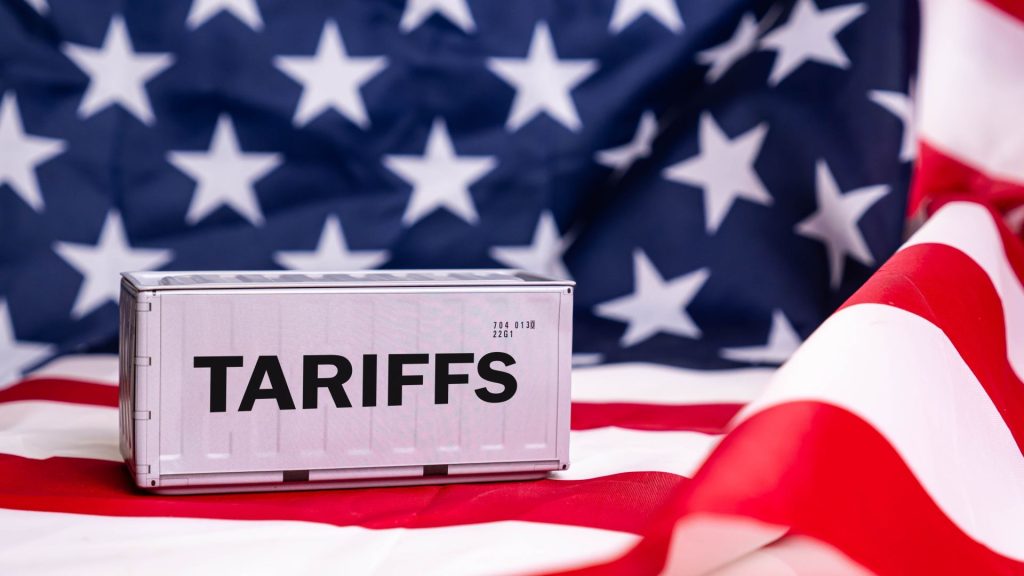
The return of tariffs is usually described as a symptom of political anger, not as macroeconomic policy. That misses the scale of what has happened. The United States has steadily expanded its tariff coverage since 2018, targeting allies and rivals alike, but the focus has shifted decisively toward China and clean-technology sectors.
Under Section 301 of the Trade Act, Washington has raised duties on a wide range of Chinese goods. A round of increases finalised in late 2024 set tariff rates of 100 percent on electric vehicles, 50 percent on solar cells and modules, and 25 percent on lithium-ion batteries, steel, aluminium and selected critical minerals and cranes. Additional hikes on polysilicon, solar wafers and tungsten products take effect in early 2025. These measures sit on top of earlier tariffs and export controls on semiconductors and related manufacturing equipment.
The practical impact on US imports of finished Chinese electric vehicles is modest for now, because volumes were already low after earlier tariffs. The symbolic and strategic impact is larger. The aim is to slow China’s expansion in future-defining industries, to protect domestic industrial policy programs such as the Inflation Reduction Act, and to force global firms to diversify production away from China.
Those tariffs land in a world where merchandise trade volumes are already slowing. The World Trade Organization estimates that global goods trade volume grew by 2.8 percent in 2024 and will grow by only 2.4 percent in 2025 and 0.5 percent in 2026, barring major shocks. The recent uptick in 2025 reflects front-loading ahead of expected tariffs and a wave of investment in AI-related equipment, not a fundamental acceleration of demand. Once that one-off surge fades and higher tariffs bite, trade growth is likely to fall back toward the structural trend.
In effect, tariffs now function as one more macro instrument layered onto monetary and fiscal policy. They reallocate demand across borders, influence the composition of investment, and shape inflation paths. They do so in a way that is inherently asymmetric. Large economies can deploy them with some insulation from retaliation; smaller ones cannot. For developing countries that rely heavily on access to major markets and on imported inputs, the new tariff landscape complicates every decision about where to locate production and how much to borrow for export-oriented investment.
This is why the term “weaponised interdependence” has moved from academic debates into policy memos. Trade links and financial channels are no longer regarded as neutral backdrops to diplomacy. They are treated as levers through which states can exert pressure on rivals and, in some cases, on allies whose policies diverge.
The uneven rise of the South
The story of trade and finance in the past two decades is not only about the rich world and China. The global South has increased its weight on nearly every dimension of the world economy, but in ways that are uneven and politically fragile.
Between 2007 and 2023, trade among developing economies – so-called South-South trade – more than doubled in value from about 2.3 trillion to 5.6 trillion dollars. South-South trade now accounts for roughly a third of world trade, up from single-digit shares in the mid-1990s. The share of the South in global GDP has also risen significantly, with estimates for 2024 putting it above 40 percent in current dollar terms. Stock-market capitalisation tells a similar story: emerging market firms now command a much larger share of global equity value than they did before the financial crisis.
These shifts reflect the rise of large emerging economies such as China, India, Indonesia, Brazil and others, as well as the proliferation of regional production networks in Asia, parts of Latin America and, more tentatively, Africa. They have given developing countries more options: they are less tied to a narrow set of Northern markets and can bargain across multiple partners.
At the same time, the rise is concentrated and incomplete. A handful of emerging economies capture most of the gains, while many low-income and small economies remain dependent on commodity exports, worker remittances and aid. Foreign direct investment into the broader group of developing countries has fallen sharply from its pre-2008 peak, and in many cases revenues from commodities have not translated into diversified productive capacity.
In financial markets the asymmetry is sharper. The currencies of major emerging economies play a larger role in regional trade invoicing and finance than they did twenty years ago, but the dollar remains dominant as the unit for commodity pricing, trade invoicing and cross-border liabilities. That means the global financial cycle still runs heavily through US monetary policy, even as trade reorients toward the South.
This mismatch is at the heart of calls for a more inclusive financial architecture. South-South trade and production are no longer marginal, yet the institutions that backstop liquidity, provide emergency finance and shape regulatory norms remain dominated by advanced economies. Regional arrangements – from Asian currency swaps to African and Latin American development banks – have expanded, but they do not yet match the scale of demand.
The political risk is that rising South-South integration coexists with vulnerability to Northern financial conditions. That combination is fertile ground for grievances about double standards and for efforts by China and others to present alternative institutional offers, such as the New Development Bank or bilateral swap lines, as substitutes for the Bretton Woods framework rather than complements.
Financial architecture as trade policy by other means
If trade and finance are now one system, then debates over liquidity backstops, capital controls and debt restructuring are inescapably about trade.
Consider a low-income country that wants to rebuild after the pandemic and invest in export capacity. It faces higher global interest rates than at any point in the past decade, a more volatile exchange rate environment and more uncertain market access because of the current tariff wave. If that country borrows in hard currency to finance port upgrades or industrial parks and the global financial cycle turns, its debt service can spike just as export earnings fall. Without access to affordable emergency finance or reliable mechanisms to restructure unsustainable debt, the rational response is to under-invest and to seek short-term deals rather than long-term integration.
The same logic operates at the regional level. Deepening regional integration so that firms can build supply chains within South-South markets is one way to reduce exposure to Northern tariffs and demand fluctuations. But regional trade agreements cannot deliver their promised benefits if participating economies repeatedly find themselves in crisis whenever the global financial cycle turns.
That is why proposals for new global liquidity instruments, enhanced roles for regional development banks and more predictable sovereign debt workouts are not technocratic sideshows. They are preconditions for any sustainable reconfiguration of trade. Without them, the next downturn in the financial cycle will once again translate into a disproportionate shock for economies that had little say in setting global monetary conditions.
The politics here is difficult. Advanced economies remain wary of creating mechanisms that might encourage what they see as fiscal or monetary excess in debtor countries. Emerging creditors, including China and Gulf states, resist institutional arrangements that they fear would dilute their leverage. Private bondholders lobby against changes that would weaken their legal position. The result has been slow, case-by-case debt negotiations and partial reforms rather than a coherent architecture.
In the meantime, the vacuum is filled by ad hoc coalitions. Currency swap agreements between major emerging economies, bilateral credit lines tied to commodity exports, and conditional lending linked to geopolitical alignment all proliferate. Each might solve a short-term problem, but together they risk producing a more fragmented and politicised financial landscape that mirrors the tariff map.
Strategic choices in a slower world
The slower pace of global growth sets the backdrop for all of this. In a world where global output is expanding at 2.5 percent rather than 4.5 percent, relative performance matters more. Gains in market share or in financial clout come less from the overall pie growing and more from changes in distribution.
Advanced economies are responding by tying industrial, trade and climate policy together. The United States uses tariffs, subsidies and export controls to slow Chinese advances in strategic sectors, while using the Inflation Reduction Act and related laws to draw investment into domestic clean-energy and semiconductor plants. The European Union uses its own green industrial programs and its carbon border mechanism to influence production patterns beyond its borders.Both rely on the stability of their financial systems and currencies to absorb the shocks that their trade and industrial measures generate.
China responds with its own combination of industrial upgrading, export promotion and financial statecraft. It channels credit from an overbuilt property sector into manufacturing, uses export rebates and state support to maintain global market shares and deploys development finance and swap lines to build influence in regions where traditional Western lenders have pulled back.
The rest of the global South must navigate between these strategies. Governments in Africa, Latin America and parts of Asia see opportunities to attract investment as firms diversify supply chains away from China and as rich countries seek reliable suppliers of critical minerals, green hydrogen and mid-tech manufactured goods. They also see the risks of anchoring their future on volatile capital flows and contested trade routes.
Their strategic space depends on whether trade and financial governance evolve beyond the current patchwork. A world in which the dollar retains its dominance, tariffs proliferate and the main response to shocks is to tighten belts in debtor countries will compress that space. A world in which liquidity backstops are broader, debt relief more predictable and regional financial and trade institutions stronger would widen it.
The choices that will decide between those worlds are not made at a single summit. They will emerge from cumulative decisions: how central banks in advanced economies weigh global spillovers when setting policy; whether major economies are willing to accept a more plural financial system without relying on sanctions as a routine tool; whether emerging creditors accept common frameworks for debt workouts; whether trade negotiators treat access to finance as part of market access.
What is clear by 2025 is that the separation between trade policy and financial policy has become untenable. Tariffs now behave like macro instruments, global credit cycles drive trade volumes, and the rise of the South in trade and production is not matched by its influence over the rules of finance. Any serious attempt to reshape globalisation has to start from that reality rather than from the institutional map of the 1990s.