Tanzania is approaching the 64th anniversary of its independence on 9 December in an atmosphere of fear rather than celebration. Instead of a proud commemoration of liberation from colonial rule, the date is overshadowed by the most severe political crisis the country has experienced in many years. A presidential election held on 29 October, widely regarded by Tanzanians and outside observers as fundamentally unfair, has been followed by a brutal campaign of repression in which security forces are reported to have killed thousands of citizens and detained many more.
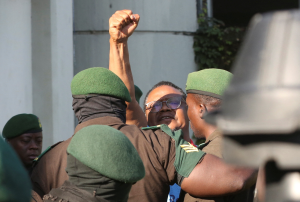
Public anger has not subsided. Activists are calling for fresh demonstrations on 9 December. The authorities have responded by cancelling official Independence Day events and warning people not to gather, fuelling concern that any attempt by citizens to exercise their right to protest could be met with the same violence that followed the vote. Preventing a renewed cycle of killings is the most urgent task, but the crisis also exposes deeper structural problems in Tanzania’s political system that can no longer be ignored.
From “island of stability” to coercive rule
For decades Tanzania was often cited as an example of relative calm in a troubled region. Much of that image derived from the legacy of the country’s first president, Julius Nyerere. He tolerated little dissent and imprisoned critics, yet he also promoted a civic nationalism that discouraged ethnic and religious mobilisation and cultivated a sense of unity. Personally, he kept a distance from the conspicuous self-enrichment that characterised many of his contemporaries and stepped down voluntarily in 1985, a rare move at the time.
The ruling party that emerged from the independence movement, Chama Cha Mapinduzi (CCM), has remained in power ever since. Over time, however, the contrast between Nyerere’s austere reputation and the behaviour of later leaders became stark. Under President Jakaya Kikwete, who governed from 2005 to 2015, high-level corruption scandals multiplied and public trust eroded.
In 2015, CCM chose John Pombe Magufuli as its presidential candidate. He presented himself as a tireless worker determined to tackle graft and launch large infrastructure projects, and he initially enjoyed wide popular backing. Alongside this image, however, came an unmistakable authoritarian streak. Opposition rallies were banned, critics and journalists were jailed, and there were reports of enforced disappearances, particularly in coastal areas where the authorities claimed to be combating Islamist cells.
Magufuli then presided over a deeply flawed general election in 2020, in which he was officially credited with more than four-fifths of the vote. His death in March 2021, apparently from COVID-19, elevated his vice president, Samia Suluhu Hassan, to the presidency. Many Tanzanians hoped she would use that position to dismantle the repressive machinery that had been built under her predecessor.
Suluhu’s consolidation of power
Those expectations soon faded. Facing internal resistance from factions close to Magufuli, Suluhu initially relied on allies such as former president Kikwete to stabilise her position. Once she strengthened her control, she moved to assert dominance over the party and the state. Senior figures from the previous administration were sidelined.
The break with past practice became clear in January, when Suluhu unilaterally declared herself CCM’s candidate for the 2025 presidential election, bypassing the traditional internal contest and effectively preventing rivals inside the party from putting their names forward. She also took a very hands-on role in vetting parliamentary candidates. The process signalled not only her intention to remain in power but also the narrowing of space for pluralism even within the ruling party.
Dissent began to surface among CCM heavyweights. The case of Humphrey Polepole, a prominent party ideologue turned critic, encapsulated these tensions. After resigning as ambassador to Cuba, he publicly denounced what he described as state repression and poor leadership. When he returned to Tanzania in early October, a disturbing video showed armed men dragging him, injured and bleeding, from his home. He has not been seen since. His disappearance, along with other abductions, was a grim prelude to what would happen around the elections.
Closing down electoral competition
Tanzania has never been a fully functioning electoral democracy, but since the introduction of multiparty politics in 1992, opposition parties at least had some room to campaign and win parliamentary seats. These footholds in the legislature allowed them to question government policy and push for reforms. That limited space shrank under Magufuli and has now been largely eliminated under Suluhu.
By mid-2024, the security services and administrative machinery were being deployed systematically to weaken the opposition. CHADEMA, the main opposition party, bore the brunt of this pressure. Its cadres disappeared or were found dead. Human rights organisations documented arbitrary arrests of hundreds of opposition supporters, restrictions on internet use and media activity, and the extrajudicial killing of outspoken government critics. Local elections held later in 2024 produced a virtually total victory for CCM, with officials announcing results that attributed more than 99 per cent of seats to the ruling party. This outcome sent a clear message that a genuinely competitive presidential election was not on the cards.
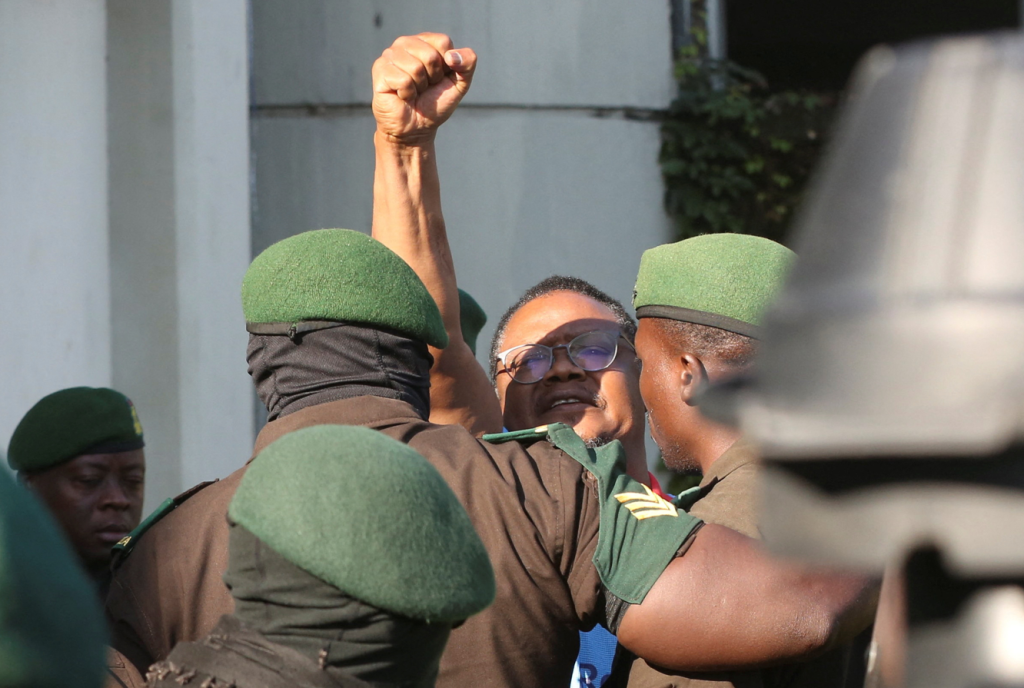
Faced with this landscape, CHADEMA leader Tundu Lissu announced in April that his party would not participate in the forthcoming presidential and parliamentary polls. Under the slogan “No Reforms, No Elections”, he argued that without significant changes to the electoral framework, including an independent management body, a fair contest was impossible. He also highlighted the conflict of interest involved in having local elections administered through a department located in the president’s office and headed by Suluhu’s son-in-law, Mohamed Omary Mchengerwa.
The state responded with repression rather than dialogue. Lissu was arrested and charged with treason, an offence that can carry the death penalty. He remains in detention while his trial proceeds. Courts then barred CHADEMA from carrying out political activities, making it impossible for the party to organise or campaign. Authorities also disqualified the presidential nominee of ACT-Wazalendo, Luhaga Mpina, an ex-CCM figure who had broken with the ruling party in 2024, citing procedural defects in his nomination.
By the time the 29 October vote approached, much of the organised opposition had been neutralised and public space heavily policed.
The path to the massacre
The weeks leading up to the election were marked by an escalation of arrests and disappearances. From 1 to 9 October, at least thirteen CHADEMA officials were seized from their homes and never produced before a court. Hundreds of young people suspected of involvement in antigovernment mobilisation were also detained. Altogether, around 600 opposition members, activists and youths were reported to be in custody on various public-order charges by election day.
The ruling elite appears to have assumed that these measures, together with the weakened condition of the opposition, would ensure a smooth, largely symbolic vote delivering Suluhu a strong mandate. They misread the mood of the country.
Youth networks and other activists, many organising online, urged citizens to boycott the polls and take part in peaceful demonstrations. When 29 October arrived, images of largely deserted polling stations circulated widely. Young people took to the streets in Dar es Salaam and other major cities such as Arusha, Mwanza and Mbeya, as well as in Tanga and smaller towns, and even at border points like Namanga on the frontier with Kenya. Numerous rural areas that had rarely, if ever, witnessed political unrest saw marches and gatherings. The breadth of this mobilisation showed how deep dissatisfaction with the government had become, crossing age and geographic lines.
As some protesters attacked polling stations, police posts, government buildings and property linked to powerful figures, the security forces responded with live ammunition in crowded urban areas. A curfew imposed in Dar es Salaam failed to restore calm. Demonstrations continued into the next day even as schools were shut and public employees instructed to work from home.
The situation then took an even darker turn. A national internet blackout created an information vacuum that lasted several days. During this period, beginning on the night of 30 October, reports indicate that the police embarked on a campaign of retribution in neighbourhoods associated with protest activity. Officers went from house to house, targeting mostly young men and shooting them either at their doors or inside their homes. When connectivity slowly returned from 3 November onward, Tanzanians and outside observers began to piece together what had occurred. Videos and photographs geolocated by international media showed bodies in the streets, in clinics and hospitals, and in rural areas.
Witnesses described trucks removing corpses from morgues to unknown sites, raising fears of mass graves. Families often had to search through graphic images shared via social media to establish whether their relatives were among the dead. One widely shared picture showed a father burying his son’s favourite clothes and shoes in the absence of a body. A football coach recounted losing seven young players from his team and being able to recover only one. Human rights organisations estimate that around 3,000 people were killed in what they describe as a massacre orchestrated by agents of the state.
Against this backdrop of horror, the electoral commission announced that Suluhu had secured 98 per cent of the vote on a reported turnout of 87 per cent, figures that stood in obvious contradiction to photographic evidence of empty polling stations and the opposition-led boycott.
National shock and regional condemnation
The scale and cruelty of the killings have shaken Tanzanians’ sense of who they are as a political community. With the partial exception of the Zanzibar archipelago, where elections have often been contentious and sometimes violent, mainland Tanzania has long been regarded by its own citizens and by neighbours as relatively calm. That self-image has been severely damaged.
Domestic voices spoke out quickly. Catholic bishops issued a public statement denouncing what they called the murderous treatment of young people and other citizens and demanding a credible investigation. Human rights organisations, lawyers and medical professionals began documenting cases, even though many witnesses remained fearful of speaking openly.
Continental bodies that tend to avoid confronting member states also expressed rare criticism. An observer mission from the Southern African Development Community concluded that Tanzania’s election management institution was deeply compromised and that in many areas voters were unable to express their will. Some SADC observers reported being harassed by security personnel who forced them to delete photographs taken at polling sites. The African Union’s observer mission later stated that the election did not meet AU standards and recounted that its monitors had been expelled from polling stations before the counting of ballots.
Neighbouring heads of state from Kenya, Uganda, Rwanda and South Africa did not attend Suluhu’s swearing-in ceremony on 3 November, which took place at a military ground in Dodoma that was closed to the public. Former South African president Thabo Mbeki, a veteran of the anti-apartheid struggle who spent part of his exile in Tanzania, said through his foundation that the country could not be regarded as having a legitimate government in its current circumstances.
Western reactions were initially cautious but are becoming more pointed. Legislators in the United States and Europe, as well as officials in institutions such as the UN Office of the High Commissioner for Human Rights, have publicly voiced concern. The United States has announced a review of its relations with Tanzania in light of the violence. Some European states that have longstanding ties as donors and tourism partners, such as Ireland and Denmark, have also spoken out.
A leadership struggling to regain control of the narrative
In the weeks since the election, Suluhu has tried to restore a sense of normality and authority. After initially blaming unrest on foreign influence, with a clear nod toward activists and influencers in neighbouring Kenya who helped push calls for protests, she later promised to establish a commission to investigate abuses related to the election.
However, the composition and mandate of the nine-member body she appointed have inspired little confidence. It is made up almost entirely of former officials and appears to be designed as a fact-finding committee without clear powers to recommend prosecutions. Many Tanzanians worry that it will function as a mechanism to deflect criticism rather than secure accountability.
At the same time, Suluhu announced a new cabinet that further entrenched perceptions of nepotism. Her son-in-law was appointed health minister, her daughter took the post of deputy education minister, and the son of her ally Kikwete became a minister in the president’s office. These decisions intensified public frustration, especially given the already visible influence of her son Abdul Halim Hafidh Ameir, who holds no formal position but is widely believed to wield considerable power.
The government has released 139 detainees, yet hundreds more remain behind bars on charges that appear political rather than criminal. Opposition leader Tundu Lissu is still imprisoned solely for his role in mobilising against an election that lacked credibility. Many of those who disappeared in the last two years remain unaccounted for, with families left in limbo.
The danger of renewed violence on 9 December
Activists are calling for peaceful protests across the country on 9 December, the date that normally marks Tanganyika’s independence from British rule and which has since become a symbolic national day for the wider union. In response, the authorities have cancelled official celebrations and are seeking to discourage any form of gathering.
There is a real risk that the security forces might once again meet demonstrations with lethal force. Preventing such an outcome is the most urgent priority. Responsibility rests first with the Tanzanian government, which must send explicit instructions to the police and intelligence agencies that excessive use of force will not be tolerated and that individual officers and commanders will face consequences if they violate the law. These instructions should not remain rhetorical. If particular units engage in abuses, they should immediately be stood down and subjected to credible judicial processes.
Neighbouring states that maintain close political and economic relationships with Tanzania, including South Africa, Uganda and Kenya, can play a constructive role by delivering frank private messages to Suluhu and her advisers. Their argument should be simple: another episode of mass killing would deepen domestic anger, further undermine the leadership’s legitimacy at home, and make Tanzania an increasingly uncomfortable partner abroad.
For their part, protest organisers have a responsibility to keep demonstrations peaceful, avoid damaging property, and resist the temptation to attack state institutions. A clear commitment to non-violence would make it harder for the authorities to justify repression and would strengthen the moral and political case of those calling for reform.
Beyond crisis management and the case for structural reform
Even if 9 December passes without bloodshed and some form of accountability begins to take shape, the roots of the crisis will remain. Tanzania’s current political architecture centres power in the presidency to an extreme degree. Almost all top constitutional office holders, including those who manage elections and interpret the law, are appointed by the president. In practice, this arrangement leaves citizens with very few avenues to challenge abuses or contest official results.
Tanzania stands out on the continent for having a legal framework that bars judicial review of presidential election outcomes. In other words, no matter how flawed the process, there is no formal route for aggrieved candidates or voters to ask the courts to examine the result. This prohibition must be revisited if citizens are to regain any faith in the ballot box.
Debate on constitutional change is not new. Civil society groups, religious organisations and opposition figures have been advocating revisions for years. In 2012, growing pressure prompted President Kikwete to establish a commission chaired by respected jurist Joseph Warioba to consult widely and draft a new basic law. After extensive work and public hearings, a draft constitution was produced, but political manoeuvring within the ruling party ensured that it never came into force. The failure of that process has contributed to the profound scepticism many Tanzanians now feel toward formal political institutions. It also helps explain why so many young people were willing to risk their lives on the streets instead of relying on the ballot.
Reviving and updating constitutional reform would be one way to channel political conflict back into institutional frameworks. Reforms could include an independent electoral commission, term and power limits checked by a stronger parliament, genuine safeguards for judicial independence, and protections for media and civil society. Other African countries that have experienced traumatic post-election crises, such as Kenya after 2007–2008, have undertaken difficult but meaningful reforms that offer useful lessons, even if contexts differ.
External partners have levers they can use to encourage such change. The European Union and its member states, for example, are important sources of tourism, aid and investment. They should make clear in private diplomatic exchanges that continued cooperation will be shaped by whether the Tanzanian authorities halt abuses and take steps toward a more accountable system. Targeted sanctions directed at individuals credibly implicated in serious violations could be considered if the situation deteriorates.
A generation losing patience
At the heart of the current turmoil is a generational reckoning. Tanzania is rich in natural resources, yet many young people face persistent unemployment and limited prospects. They watch a small political elite accumulate wealth while asking citizens to accept an unresponsive and increasingly coercive state. The protests that preceded and followed the election were not merely about a single vote; they were an expression of anger at a political order that no longer offers hope of gradual improvement.
CCM has been in power since independence and has played a central role in building the Tanzanian state. For many citizens, however, the party now appears primarily as a vehicle for protecting the privileges of those at the top. Unless its leadership proves willing to rethink the concentration of power, open space for meaningful competition, and accept that genuine accountability is unavoidable, cycles of protest and repression are likely to continue.
Tanzania still has assets that can support a different future: a history of civic nationalism, influential religious institutions, an active civil society and a young population determined to be heard. Whether those resources will be used to build a more inclusive and law-bound political system, or whether they will be stifled by deeper repression, depends on choices being made now in Dodoma and in the ruling party’s inner circles, as well as on the clarity and persistence of pressure from citizens and international partners.