The brief appearance of Hezbollah and Yemen’s Ansarullah movement on an Iraqi terrorist-finance list, and the speed with which the authorities then attempted to walk the decision back, can only be understood by situating the episode at the intersection of Iraq’s fragile institutional order, its fragmented Shiite politics, and the escalating contest between the United States and Iran.
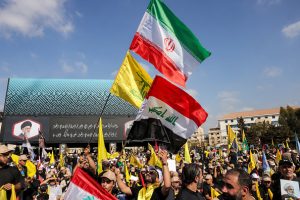
On 28 October 2025 the Committee for Freezing Terrorist Funds approved Decision No. 61, a measure that, in line with United Nations security council resolutions and a request from Malaysia, was meant to target individuals and entities linked to the so-called Islamic State group and Al Qaida. The decision ordered a freeze of assets belonging to twenty-four persons and organizations and was published in the Official Gazette (issue 4848) on 17 November, the point at which such acts normally become final under Iraqi practice. What turned an otherwise technical financial-compliance step into a political crisis was the appearance in the published list of two additional items that named Lebanese Hezbollah and Yemen’s Ansarullah and accused them of participation in terrorist acts, subjecting all of their funds and resources in Iraq to freezing.
For more than two weeks this passed without major public comment. Only on 4 December did journalists and analysts begin to circulate images of the Gazette pages, prompting a torrent of criticism from parties and militias aligned with Iran. The committee responsible issued a clarification that the list had been released using an earlier draft, that some entries had no connection to terrorism and would be deleted, and that the measure was never meant to apply to Hezbollah or the Houthis. Prime Minister Mohammed Shia al-Sudani’s office echoed this line, describing the inclusion as an error, ordering an urgent investigation and promising to hold negligent individuals accountable. The presidency in turn publicly denied any knowledge of or consent to the designations. The Central Bank of Iraq then instructed banks and regulators to treat two specific paragraphs as void on the grounds that they had been inserted by mistake.
The legal ambiguity that follows from this sequence is crucial. In formal terms the Gazette is not a draft bulletin but the final channel for promulgating binding decisions and laws. Iraqi jurists interviewed in regional media have pointed out that the normal way to correct a serious flaw in a published decision is through a new act, whether administrative or judicial, not through a press note that simply asserts the error. When a member of parliament close to the Shiite Coordination Framework insisted that what appears in the Gazette cannot be erased by media statements, he was not only scoring a political point against Sudani but also hinting at a genuine rule-of-law problem: for several days at least, Iraq had designated Hezbollah and the Houthis in a way that appears to meet its own formal criteria for a terrorist-finance listing, and the route by which that status is now to be unwound remains uncertain.
This uncertainty draws attention to the character of the Committee for Freezing Terrorist Funds itself. On paper it is a technical body housed within the Central Bank and cabinet structure, tasked with ensuring that Iraq’s domestic regime on terrorist financing remains aligned with UN resolutions and foreign requests, so that the Iraqi banking system is not penalized by global watchdogs. In practice the committee now appears as a political battlefield. Once the Gazette pages circulated, media aligned with armed groups such as Asaib Ahl al-Haq published the names of committee members, a move some observers described as a direct threat to their safety. Parliamentary figures linked to Kataib Hezbollah and other militias accused Sudani’s government of humiliating Iraq to please Washington and framed the episode as proof that key regulatory institutions had been captured by hostile influences.
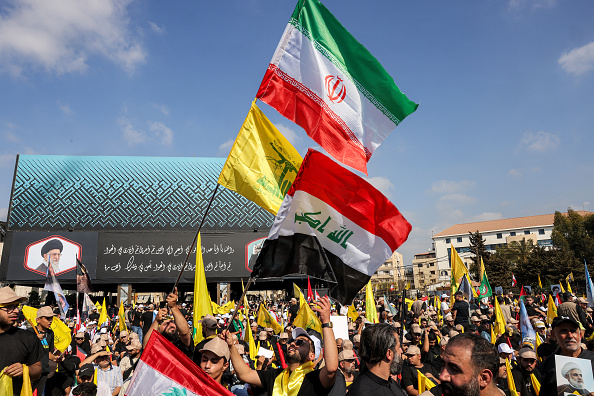
To understand why these accusations resonated, it is necessary to recall that Hezbollah and the Houthis are not abstract foreign actors in Iraq’s political imagination. Iraqi armed groups that are part of the so-called Axis of Resistance often depict Hezbollah as an older sibling and the Houthis as a partner engaged in the same regional confrontation with the United States and Israel. The Gaza war and the subsequent Houthi attacks on commercial shipping in the Red Sea and on targets linked to Israel have further elevated both groups as symbols of defiance for sections of Iraqi Shia opinion. Within that frame, for Baghdad to list Hezbollah and the Houthis under the same legal category as Al Qaida or Islamic State is not a mere technicality, even if the practical value of any Iraqi asset freeze is limited. It is read as an adoption of the American and Israeli narrative on who constitutes a terrorist, with direct implications for the legitimacy of Iraqi militias that identify with those groups.
The episode unfolded precisely when the domestic balance of power was again in flux. Parliamentary elections held on 11 November 2025 left no single bloc with a majority but confirmed Sudani’s Reconstruction and Development coalition as the largest, with forty-six out of 329 seats. The Shiite Coordination Framework, the alliance of Iran-aligned parties and militias that had backed Sudani’s first term, quickly asserted that it remained the largest force in parliament when its components were counted together and signalled that it would again control the process of nominating the next prime minister. Yet that alliance is not unified: some of its key figures have become wary of Sudani’s relative pragmatism on relations with the United States and his attempt to present himself as a technocratic manager rather than a pure product of the resistance camp.
Against that background the Hezbollah–Houthi designations offer an excellent instrument with which Sudani’s rivals can weaken him. By amplifying the Gazette publication, framing it as a deliberate move to implement American terrorism designations, and then portraying the government’s retreat as proof of incompetence, these factions can argue that the prime minister is both politically disloyal and administratively incapable. The doxxing of committee members serves a second function, namely to send a signal to the wider bureaucracy that any future move which appears to align Iraq more closely with US or UN sanctions regimes against Iranian allies will be met with personal pressure. The cumulative effect is to politicize an institution that, to be credible to foreign partners, should operate with some insulation from partisan struggle.
External dynamics are equally important. For several years the US Treasury and other agencies have focused intensely on Iraq’s financial sector, especially dollar auctions and local banks suspected of helping Iran and Hezbollah circumvent sanctions. American measures against Iraqi banks and Lebanese financial institutions have already demonstrated that Washington is willing to bypass Iraqi institutions entirely when it judges local enforcement to be inadequate. Seen from this angle, the inclusion of Hezbollah and the Houthis in Decision 61 appears entirely consistent with US preferences. It signals that Iraqi authorities are prepared to align their own terrorist-finance lists with the US view that these are Iranian-backed terrorist organizations, not merely regional resistance movements. This is almost certainly why a spokesperson for the US State Department, speaking to Iraqi media, expressed disappointment at Baghdad’s retraction and urged all states to ensure their territory is not used by these groups to raise funds, train fighters or acquire weapons.
The Iranian side reads the situation very differently. Tehran has relied heavily on Iraqi trade, banking channels and currency flows to mitigate the impact of sanctions and to support partners such as Hezbollah and the Houthis. An Iraqi decision that explicitly lists these actors as terrorists threatens the normative basis on which Iranian and Iraqi elites justify their cooperation and provides a legal hook for external pressure against networks that span the two countries. For factions inside Iran that already view engagement with global financial standards as a trap, the Iraqi designations confirm suspicions that compliance is a mechanism for dismantling the Axis of Resistance by legal means. For Iraqi actors close to those factions, forcing a reversal on Baghdad becomes a way to demonstrate that such efforts can be resisted.
At the level of interpretation, three broad readings of the episode have circulated in Iraqi and regional commentary. One sees the affair primarily as a case of bureaucratic mismanagement in an overburdened state. On this view, technocrats responsible for aligning Iraq’s lists with UN and foreign requests mistakenly allowed a draft to be published that still contained controversial names. The government’s insistence on the language of error and negligence, and the Central Bank’s attempt to surgically remove two paragraphs from an otherwise valid decision, are consistent with this narrative.The problem with this explanation is that it underestimates the layers of review that normally precede publication in the Gazette and does little to dispel the suspicion that at least some officials knew the political significance of what they were authorizing.
A second reading treats the designations as a deliberate, if clumsy, attempt by parts of the state to signal seriousness to Washington and international watchdogs. In this account, the committee and its political patrons decided to include Hezbollah and the Houthis to show that Iraq is ready to move beyond minimal compliance and genuinely target groups accused of terrorism, regardless of their alignment with Iran. Only after the Gazette entry became widely known, and the domestic costs became clear in the form of protests and denunciations from militia leaders, did the government decide to retreat and recast the move as an administrative oversight. This reading fits with the timing of the decision, coming amid heightened American scrutiny of Iraqi banks and just weeks after elections in which Sudani’s camp emphasized its capacity to maintain balanced relations with both Washington and Tehran.
A third possibility is that the affair has been shaped from the outset by internal manoeuvring within the Shiite Coordination Framework. Some components of that bloc might have encouraged or quietly allowed the designations to proceed, anticipating that they could later be used to sandbag Sudani’s bid for a second term by portraying him as either responsible for or complicit in an act that betrays the resistance. Others might have seized on an unplanned error as an opportunity to force a confrontation over his leadership. In either case, the aggressive rhetoric from figures linked to Kataib Hezbollah and kindred groups suggests that the issue is being used not only to defend Hezbollah and the Houthis but also to stake out red lines over who within the Shiite camp is trustworthy on strategic alignment with Iran.
Whatever mixture of these explanations turns out to be correct, the consequences for Iraq’s institutional credibility are already visible. Foreign banks, investors and regulators observing this sequence will draw the conclusion that Iraq’s implementation of terrorist-finance measures is contingent not only on technical criteria but also on the immediate balance of power among domestic factions and on the reactions of external patrons. For their part, Iraqi technocrats will have learned that decisions with real content cannot be insulated from the threat of public vilification and even physical danger if they touch the interests of armed groups. In the long run this is likely to produce a more risk-averse and politicized bureaucracy, in which committees tasked with sensitive financial matters seek cover from powerful parties before making any move that could be construed as a concession to US or UN demands.
For Sudani, the crisis has narrowed an already limited margin for manoeuvre. Election results confirmed that his coalition enjoys considerable popular support, yet also that he remains dependent on a broader Shiite alliance whose most influential components are deeply invested in the Axis of Resistance. By treating the designations as an error and disavowing any intent to target Hezbollah or the Houthis, he has tried to reassure these partners that Iraq’s alignment has not shifted. At the same time this posture risks disappointing Washington and undermining his claim to be a reliable interlocutor capable of delivering on financial-governance reforms. The investigation he has ordered into the committee’s work may allow him to sacrifice lower-level officials and present himself as responsive, but it is unlikely to resolve the structural contradiction that produced the crisis in the first place.
In that sense the brief life of Decision 61 as it appeared in the Gazette is less important than the pattern it reveals. Iraq is embedded in a global financial and legal order that requires cooperation on counterterrorism and sanctions enforcement, and it is also embedded in a regional security architecture built around Iranian-backed armed networks whose legitimacy rests on their rejection of Western designations. Each time Baghdad tries to adjust its position to one pole, the other reacts. Because its institutions are weak and its political class is fractured, the result is not a stable compromise but repeated public crises in which the basic coherence of the state is called into question. The Hezbollah and Houthi affair is one such crisis, and it will not be the last.