
Artificial intelligence is no longer a contained “tech sector.” It sits at the center of energy policy, industrial strategy, labor markets, great-power competition, and national security. The public conversation still spends a lot of time on chatbots, copyright disputes, and whether students are cheating on essays. Beneath that surface, the real story is about who controls the underlying stack: power, chips, data centers, software ecosystems, talent, and physical deployment in factories, logistics, health care, and defense.
What follows is a self-contained analysis of that stack and where it is heading, drawing on public arguments that leading industry figures have made in recent months, but recast here in our own terms for a policy and strategy audience.
The AI stack starts with power, not prompts
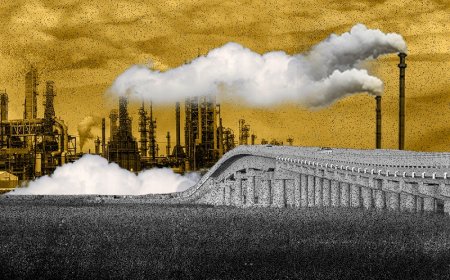
AI is often treated as something abstract, living in the cloud. In practice it starts with electricity. Training and running large models is one of the most energy-intensive activities any modern economy can undertake. Large accelerator clusters draw hundreds of megawatts, and the global appetite for AI compute is rising far faster than efficiency improvements in chips.
That creates three hard constraints.
First, grids. In the United States and Europe, power systems were shaped by a decade of efficiency gains and slower demand growth. Utilities and regulators assumed relatively flat load. Now they face data center build-out, electrification of transport, and new industrial policy initiatives at the same time. In many regions there is simply not enough transmission capacity or generation queued up to accommodate the AI pipeline. Projects that are technically and financially viable hit walls at permitting and interconnection.
Second, cost differentials. Where power is cheap, predictable, and supported by long term industrial policy, AI infrastructure will follow. Where it is expensive, volatile, or gridlocked in local opposition, investment will go elsewhere. That already shapes where fabs, hyperscale data centers, and “AI factories” are being sited. Countries that treat energy purely as a climate or environmental issue, without integrating it into industrial planning, will find themselves constrained. Climate targets and AI growth are not inherently incompatible, but they require serious build-out of low carbon baseload, flexible generation, and transmission.
Third, time. Chips can iterate on yearly cycles. Software can ship weekly. Grid upgrades and new plants can take most of a decade in advanced democracies, especially when large projects are litigated and blocked at regional level. That mismatch between digital tempo and physical tempo is one of the biggest strategic risks in AI. Ambitious national AI strategies that ignore permitting and power are not strategies; they are wish lists.
Chips: where advantage is real but not permanent
At the heart of the current AI wave are accelerators designed for massively parallel compute. The leading providers still come from a small set of firms headquartered in advanced economies. They design at the cutting edge, exploit the most advanced process nodes, and rely on extremely sophisticated supply chains that run through East Asia, Europe, and North America.
It is tempting to treat that lead as permanent. It is not.
Semiconductors are a manufacturing business. Design excellence matters, but so do scale, yield, packaging, and relentless iteration. States that combine heavy subsidies, low energy costs, and large internal markets can climb the ladder faster than optimistic incumbents expect. In other industries the pattern is familiar: foreign firms hold the frontier for a time, domestic champions absorb know-how through joint ventures, supply contracts, talent flows, and reverse engineering, and eventually domestic manufacturers dominate large parts of the value chain.
Export controls on high-end accelerators are an obvious tool to slow that process, especially in sensitive use cases such as military AI, signals intelligence, and nuclear modeling. They can be effective at disrupting specific projects or keeping an adversary out of the very top tier of performance for some period. They cannot, on their own, freeze a major industrial power in place.
This raises a tension that is rarely addressed clearly. On one hand, there is a legitimate national security argument for denying certain chips and design tools to strategic competitors. On the other, there is an economic argument that cutting off a huge market will accelerate the creation of a rival ecosystem, remove leverage, and compress profit pools that fund research. If the restricted country then doubles down on domestic semiconductor capacity, the long term result may be a more autonomous competitor rather than a dependent one.
The realistic conclusion is not that controls are futile, but that they are a delaying instrument, not a permanent moat. They need to be paired with aggressive investment at home: advanced fabs, packaging facilities, memory, substrates, and the skilled workforce to run them. Without that, controls buy time and little else.
Infrastructure: data centers, capital, and time-to-build
Above chips sits the physical infrastructure that actually delivers AI capability: data centers, supercomputers, fiber, cooling systems, and increasingly, campus-scale “AI factories” dedicated to training and inference.
Two asymmetries are emerging.
The first is velocity. In some countries large projects go from decision to commissioning in a few years. In others the same project is trapped in layers of zoning fights, environmental lawsuits, and local political vetoes. The difference is not technical competence, but governance. Where national and regional authorities are aligned on timelines and priorities, infrastructure appears quickly. Where process and veto points dominate, investors hesitate or give up.
The second is blended finance. Modern AI infrastructure often relies on complex capital structures that mix corporate balance sheets, vendor financing, sovereign support, long term cloud contracts, and sometimes development bank money. Environments with predictable regulation and clear state priorities tend to mobilise that capital more easily. Environments where policy swings sharply with elections, or where industrial policy is ad hoc and personalised, create uncertainty that raises required returns and slows build-out.
For governments, the implication is uncomfortable. Ambitious speeches about AI leadership achieve nothing if planning and permitting cannot deliver concrete shells, substations, and cooling towers on a realistic schedule. A serious AI strategy requires an infrastructure strategy, including reforms that reduce bottlenecks without abandoning environmental and safety standards.
Models and open ecosystems: where innovation really diffuses
Above infrastructure lie the models themselves. Much of the public discussion focuses on a small set of branded systems. That focus misses the real story. Millions of models exist across domains and sizes. Many are open, many are fine-tuned for particular sectors, and many do not interact with natural language at all.
Open models and open tooling are critical. They allow startups with limited capital to experiment. They enable universities to train students and test new architectures without negotiating proprietary licenses. They let hospitals, manufacturers, and small states adapt systems to local languages, regulatory constraints, and niche applications. If open ecosystems are throttled in the name of safety or proprietary advantage, the result will be fewer people capable of using and scrutinising AI, and more concentration of power in a small set of closed providers.
In some countries, open source is treated primarily as a commercial threat. In others, it is viewed as a strategic asset. The latter view has a simple logic: a broad base of capable developers, researchers, and small firms creates resilience. It also creates an innovation pipeline that no central planner could design. When half the world’s AI talent can tinker freely and the other half is constrained by licensing, legal fear, or overbroad regulation, the open side will move faster, even if the closed side holds a brief lead at the frontier.
There is a separate question of whether open diffusion of very large, capable models raises national security risks. That risk exists, particularly for automated cyber operations, disinformation, and assistance to weapon development. It is legitimate to draw lines around specific weights and tools. But if the pendulum swings so far that whole research communities are hampered while rivals continue to build, the long term cost will be strategic.
Applications and adoption: where power and productivity are decided
The top layer of the stack is where AI stops being an abstract technology and becomes embedded in daily life and industrial processes. Here the key questions are not about raw model scores, but about who actually uses these systems, how, and at what scale.
Societies differ sharply in their attitudes. In some, AI is embraced as a driver of national strength and efficiency. In others, it is framed primarily as a cultural and economic threat. Those attitudes shape regulation, corporate risk appetite, and the willingness of public institutions to experiment.
History suggests that the countries that apply a general purpose technology most broadly, and not necessarily those that invent every piece, reap the largest gains. Electricity, computing, and the internet all followed that pattern. The early advantage in invention faded; the advantage in deployment persisted.
AI appears to be following the same logic. The largest long term gains will likely come from widespread, incremental improvements in logistics, manufacturing, administration, medicine, and education, not from a few spectacular consumer applications. Automation of routine tasks, decision support, predictive maintenance, and optimisation of complex systems are less glamorous than chat interfaces, but they drive real productivity. Countries that are able to move beyond debate and integrate AI throughout their physical and institutional infrastructure will compound those gains.
If, instead, political and cultural systems treat AI as primarily a risk to be contained, and deploy only cautiously and defensively, the result may be a long period of underutilisation. That will matter for growth, tax revenues, and relative influence.
Robots and “physical AI”: the next frontier of competition
Current AI deployment is still heavily skewed toward software, text, images, and code. The next decade will see much more emphasis on embodied systems: robots, autonomous vehicles, warehouse automation, field equipment, and other physical platforms controlled by models.
The underlying reason is straightforward. The same learning systems that generate realistic video from text can, in principle, generate sequences of motor commands instead of pixels. Once an AI can predict what ought to happen in a scene, it is a short conceptual step to having it act on the scene. The hard parts are sensors, actuators, reliability, safety, and integration with legacy industrial systems. That is where traditional strengths in mechanical and electrical engineering matter.
Countries that combine three elements will have an advantage in this phase: demand for automation, excellence in mechatronics, and strong AI software capabilities. Some already tick all three boxes. Others are strong in one or two and weak in the rest. Where industrial bases have been hollowed out, and engineering education has shifted heavily toward pure software, there is work to do. The risk is that even if some countries lead in frontier models and cloud services, they may find that the real productivity and export gains accrue to those who dominate physical automation.
The implications for labor markets are complex. Some tasks will be replaced entirely. Others will be transformed into supervisory and maintenance roles. New tasks will emerge around installation, integration, and oversight of complex systems. The distribution of gains and losses will depend heavily on how education systems, unions, companies, and governments respond. Ignoring robotics while focusing entirely on digital AI is not a serious option.
Jobs, skills, and social stability
Public anxiety about AI often takes the form of sweeping statements about job destruction. The reality is more granular. AI systems excel at specific tasks: classification, prediction, drafting, translation, pattern recognition. Most jobs consist of bundles of tasks, some of which are ripe for automation and some of which are not.
Evidence from fields such as radiology, software development, and finance suggests a pattern. Tasks like preliminary image reading, boilerplate code generation, or basic spreadsheet modeling can be accelerated dramatically. The jobs themselves do not vanish overnight. Instead, the nature of the work changes. Professionals spend more time on complex cases, interaction with clients or patients, system design, and higher level judgment. Headcounts may stabilise or even increase if demand rises because services become cheaper and more accessible.
That is not a guarantee. There will be roles where automation does reduce total employment. The risk is highest where the job is already narrow, highly structured, and measured mainly by throughput. The policy question is not whether disruption will occur, but whether workers will have paths into adjacent roles, retraining, or new sectors. That in turn depends on the broader health of the economy. If AI coincides with weak aggregate demand, high debt burdens, and limited public investment, displaced workers will struggle more. If it coincides with strong investment, growing industries, and targeted support, transitions will be less painful.
Social stability also hinges on perceived fairness. If citizens experience AI as something that amplifies the income and power of a small group while eroding security for the rest, backlash is likely. That will feed into regulatory harshness and political fragmentation, which in turn harm long term competitiveness. For governments, it is not enough to treat AI as a growth driver; they must also manage distributional effects.
Geopolitics, standards, and the risk of bifurcation
Different states are pursuing AI as a strategic asset. They are doing so not only through military programs and export controls, but through standards bodies, regional partnerships, education, and diplomatic outreach. Offers to help other countries “join an AI ecosystem” are not neutral technology transfers. They are propositions about long term dependence.
If one bloc succeeds in exporting its chips, frameworks, cloud platforms, and regulatory templates across the developing world, it will accumulate influence that is hard to dislodge. Local developers will learn its tools. Local firms will build on its APIs. Local governments will shape data policy around its defaults. Over time, switching costs will rise.
The danger is a bifurcated global AI environment where countries are forced to choose between incompatible stacks. That outcome would reduce interoperability, complicate cross border research, and give powerful providers leverage over smaller states. It would also heighten security risks as each bloc tries to monitor and counter the systems of the other with less transparency.
Avoiding that outcome while still protecting legitimate security interests is not straightforward. It requires a mix of competitive export strategies, engagement in standards setting, and nuanced control regimes that distinguish between clearly dangerous uses and general purpose tools. Retreating from markets altogether, or focusing only on restriction, would leave the field to others.
The real AI risk: not just overuse, but misallocation
The loudest debates around AI often revolve around extreme scenarios: runaway systems, total job automation, information collapse. Those possibilities should not be dismissed, but they can distract from a more immediate and structural risk.
That risk is misallocation. It has several dimensions.
Capital misallocation occurs when extraordinary sums chase prestige projects or speculative valuations instead of durable productivity gains. That leaves economies vulnerable to painful corrections and reduces public patience for long term investment.
Attention misallocation occurs when policy focuses almost entirely on edge cases and headline applications, while neglecting the unglamorous work of building grids, training technicians, reforming planning systems, and modernising institutions.
Strategic misallocation occurs when countries mistake short term restrictions for long term strategy, or when they conflate owning one layer of the stack with controlling the whole. An economy can lead in models and still lose ground in manufacturing and robotics. It can have the best chips but insufficient power or infrastructure to deploy them broadly.
If AI is to support broad based prosperity and security rather than deepen existing vulnerabilities, these misallocations have to be corrected. That is not an argument for hype or panic, but for sober, grounded policy.
The technology will continue to advance. Market cycles will come and go. The question is whether states can build the physical, institutional, and human foundations that turn that raw capability into sustained, widely shared gains, while managing the genuine risks. That work is less spectacular than announcing a new model, but it is where leadership is really decided.