Ukraine enters the final stretch of 2025 with two overlapping crises. One is visible on the battlefield, where a positional war has locked the country into a slow, destructive contest of attrition. The other is unfolding inside its institutions, where corruption probes have reached the highest levels of government and have exposed systemic weaknesses that foreign partners hoped would be addressed during the country’s wartime transformation. These two fronts have become inseparable. Security, diplomacy, reconstruction, and foreign investment all rely on the trustworthiness of the Ukrainian state. The recent scandal inside Energoatom, the state nuclear operator, has complicated Ukraine’s diplomatic position at a moment when negotiations over a potential peace deal have accelerated.
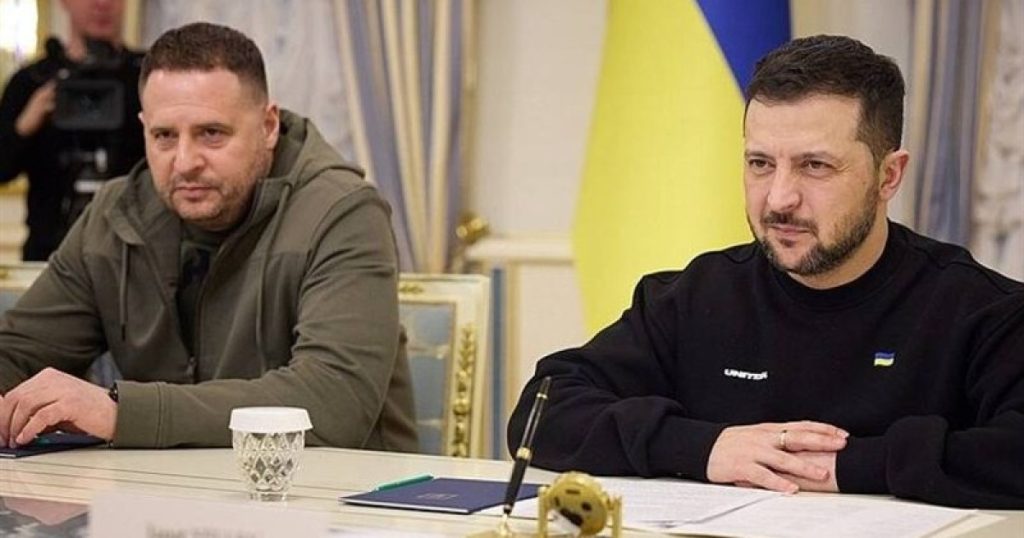
The investigation into Energoatom may become a defining event for Ukraine’s political future. Ukrainian anti-corruption agencies have alleged that a sprawling network of shadow managers and procurement intermediaries took control of parts of the nuclear sector and extracted bribes from contractors. The scandal forced the resignation of a key presidential aide and raised questions about how deeply political patronage has shaped decisionmaking inside a government that has otherwise built its international reputation on resistance, transparency, and democratic resolve. This episode arrived at a time when war has magnified the stakes of governance. Every misused dollar and every compromised appointment now influences Ukraine’s political credibility and its negotiating position.
The international context is shifting just as sharply. Since early 2025, the United States has reduced its commitment to supporting anti-corruption investigations abroad. Policies that once defined American engagement in Europe and the former Soviet region have been dismantled or paused. Key enforcement mechanisms inside the Department of Justice have been weakened. Units devoted to recovering stolen assets or enforcing anti-bribery laws have been shut down or deprioritized. The result is a narrower and more selective US approach. What had once been a bipartisan pillar of American diplomacy has dissolved at a moment when Ukraine’s internal reforms require external reinforcement.
Ukraine’s anti-corruption agencies were built with strong support from the European Union and the United States. The idea was to create institutions insulated from political interference that could survive Ukraine’s volatile political cycles. After Russia’s full-scale invasion, Kyiv presented these agencies as proof that the country was committed to modern governance and EU accession. Yet the pressures of wartime decisionmaking have tested that system. The need to move resources quickly, the concentration of authority in the executive branch, and the demands of emergency procurement have created opportunities for old networks to reappear. The Energoatom scandal is not just another corruption case. It is a warning that wartime urgency cannot replace institutional discipline.
These governance challenges appear alongside a peace process that seems closer to a political deadline than a strategic conclusion. Washington’s recent push for a settlement reflects a desire to reduce the costs of long-term support and to stabilize relations with major powers. The pace has unsettled Kyiv and surprised European allies who fear that premature concessions could erode Ukraine’s security and undermine future deterrence in Europe. The United States is pursuing a diplomatic opening that presumes Ukraine can secure acceptable terms in the near future. Yet the internal political fragility exposed by the Energoatom case weakens Ukraine’s capacity to negotiate from strength.
For Ukraine, corruption threatens more than international goodwill. It affects military readiness, the pace of reconstruction, and the trust of the population. Public opinion remains firmly committed to national sovereignty, but patience with political mismanagement is limited. Ukrainians have endured bombardment, displacement, economic loss, and severe infrastructural damage. Their willingness to fight depends on the belief that their sacrifices support a future that is just and secure. If corruption within state institutions becomes normalized, the social contract that sustains Ukraine’s war effort will erode.
The global environment into which this crisis unfolds adds further tension. Strategic competition between the United States and China has intensified across technology, energy, manufacturing, and global supply chains. Ukraine is caught inside this larger contest. Russia’s war remains the primary threat, but Ukraine’s long-term security will depend on how Western institutions adapt to a world marked by shifting alliances, divergent economic strategies, and the rapid growth of new technologies that reshape warfare and industrial capacity. Drones, automation, and artificial intelligence are already altering Ukraine’s battlefield and industrial priorities. Energy infrastructure has become a target and a bargaining chip. Nuclear security, once a technical domain, is now inseparable from political influence and institutional integrity.
Energoatom lies at the heart of this transformation. Its work on nuclear fuel storage, reactor safety, and long-term energy resilience is essential to Ukraine’s sovereignty and economic survival. Any sign of financial misconduct inside this sector extends beyond a legal matter. It touches on nuclear security standards, the integrity of procurement processes, and the confidence foreign partners need before investing in Ukraine’s recovery. The scandal has forced Kyiv to confront the fragility of its institutional safeguards at a moment when the country must present a unified, credible stance in international negotiations.
The reaction from Europe has been more consistent than that from Washington. European governments have defended Ukraine’s anti-corruption agencies and pressed Kyiv to reverse legislative changes that weakened their independence. For the European Union, these institutions are prerequisites for accession. They are also essential for guaranteeing that European funding, which reaches tens of billions of euros, is used effectively. Europe’s response reflects not only concern for Ukraine’s governance but also recognition that the credibility of European security depends on Ukraine’s ability to stand as a stable state.
Yet Europe itself is divided. Slow decisionmaking, disputes over financing, and hesitation over defense production have weakened collective resolve. Several EU members maintain ambiguous or outright obstructive positions regarding sanctions and long-term commitments to Ukraine. The delay in approving major financial packages has created uncertainty at home and opportunity for Moscow. Russia has used every diplomatic gap, every political division, and every instance of Western hesitation to reinforce the narrative that time is on its side.
Russia’s own position remains precarious but not yet desperate. Its economy has absorbed heavy sanctions through state control, redirected energy exports, and external support from China, Iran, and North Korea. Public opinion inside Russia has softened but has not turned decisively against the war. The Kremlin’s strategy relies on sustaining pressure until the West fractures or Ukraine becomes too exhausted to resist political conditions that lock in territorial losses. A Ukraine weakened by internal scandals offers Moscow a clearer path to that outcome.
The emerging diplomatic landscape suggests that the war is not close to a stable resolution. The peace discussions underway are shaped by political calendars rather than military realities. The risks are high. A settlement that appears to offer calm in the short term could destabilize the region in the long term if it leaves Ukraine vulnerable or fails to impose costs on future aggression. The credibility of Western deterrence in Europe depends on ensuring that any agreement supports Ukraine’s sovereignty and security.
Ukraine must now manage three parallel imperatives. The first is to maintain battlefield resilience in a war defined by drones, attrition, and industrial capacity. The second is to restore political trust by addressing corruption decisively and transparently. The third is to negotiate from a position that reflects the long-term interests of the Ukrainian state, not the immediate preferences of foreign governments seeking de-escalation.
The future of the country will be shaped as much by institutional integrity as by military strength. The war has created a moment in which Ukraine can redefine its political culture and align its governance with the aspirations of its citizens and its Western partners. Failure to act decisively risks undermining the very foundations of the state that Ukrainians have fought so hard to defend.
The intersection of corruption, geopolitics, and wartime diplomacy illuminates a deeper truth. Ukraine is not only fighting for territory. It is fighting for the credibility of its institutions and for a place within a future European security architecture that requires stability, trust, and rule of law. The world is watching not only how Ukraine defends itself, but how it governs itself. In this sense, the Energoatom scandal may become a turning point. Whether it becomes a catalyst for reform or a symbol of unresolved problems will shape Ukraine’s trajectory long after the war ends.